Posted on Leave a comment

🌿 7 Extraordinary Amazon Animal Stories That Will Change the Way You See the Rainforest

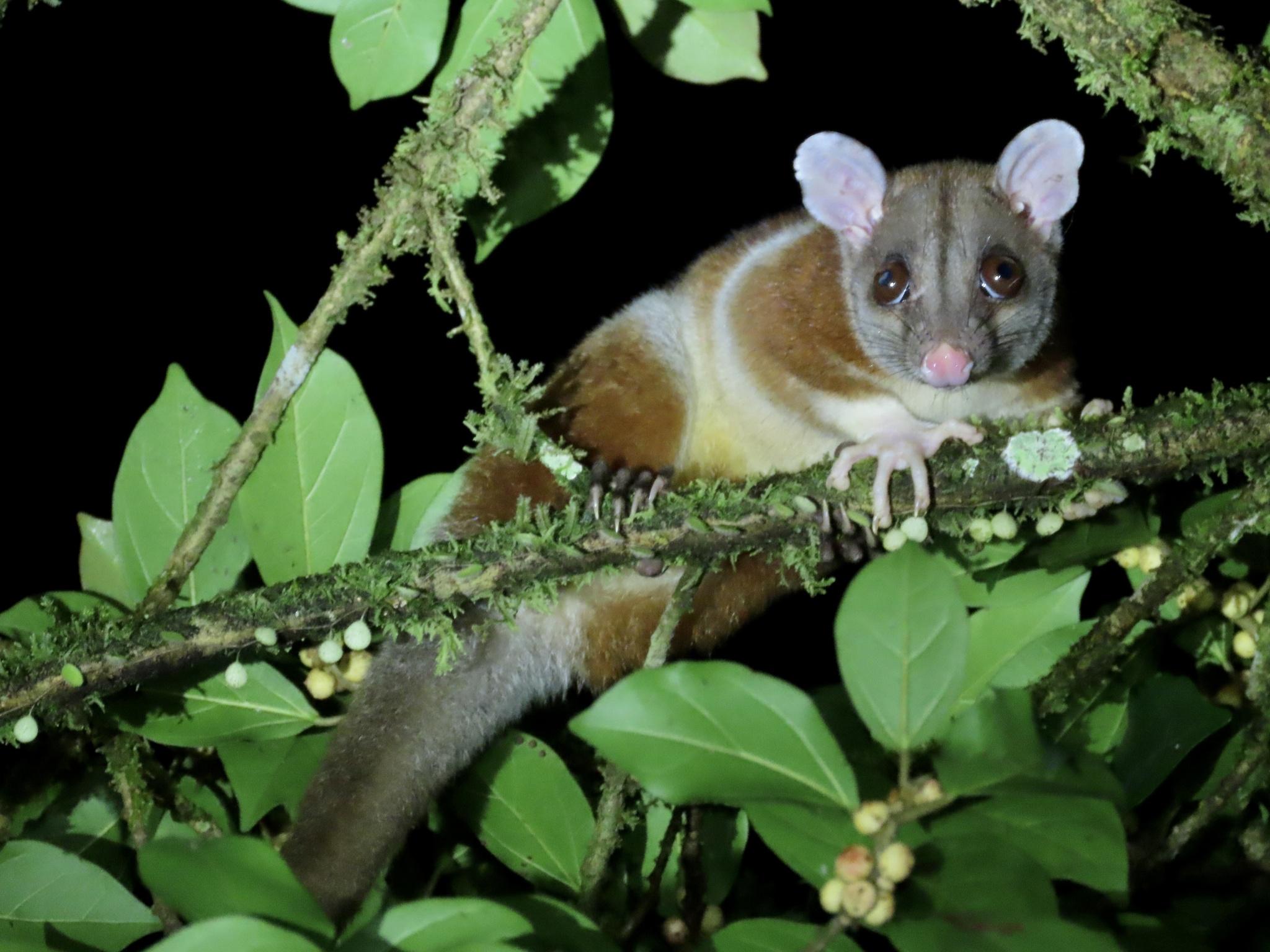
Woolly opossum climbing through rainforest branches at night
Image
Image
Image
Image

🌿 7 Extraordinary Amazon Animal Stories That Will Change the Way You See the Rainforest

Category: Wildlife | Nature | Amazon Rainforest

Tags: Amazon Rainforest, Amazon wildlife, rainforest animals, wildlife stories, biodiversity, South America, jungle creatures, exotic animals, conservation, nature facts

Meta Description:
Explore seven brand-new true stories from the Amazon Rainforest, featuring leaf fish, jacanas, woolly opossums, giant katydids, hoatzins, and other fascinating rainforest wildlife.


7 Extraordinary Amazon Animal Stories That Will Change the Way You See the Rainforest

The Amazon Rainforest is often described as the lungs of the planet, but it is also one of Earth’s greatest wildlife sanctuaries. Every day, thousands of remarkable interactions take place among animals that have adapted to life in dense forests, winding rivers, and flooded wetlands.

While famous species like jaguars and anacondas capture headlines, many lesser-known creatures have evolved survival strategies that are equally astonishing. Here are seven fresh stories that reveal the hidden brilliance of Amazon wildlife.


1. The Tiny Monkey That Never Lets Go of Its Baby

Alt Text: Adult tamarin carrying its baby through the Amazon canopy.

Many tamarin species are devoted parents, but one unusual behavior stands out—fathers carry newborn babies for most of the day.

The infants cling tightly to their father’s back while the mother rests and feeds. She usually takes the babies back only for nursing before returning them to the father.

This teamwork allows the family to travel, forage, and protect the young more efficiently, making tamarins one of the Amazon’s most cooperative primates.


2. The Fish That Looks Exactly Like a Dead Leaf

Alt Text: Amazon leaf fish perfectly camouflaged among underwater leaves.

The Amazon leaf fish is an extraordinary master of disguise.

Its flattened body, mottled colors, and slow drifting movements make it almost indistinguishable from a floating dead leaf.

Instead of chasing prey, it patiently drifts with the current until a small fish swims close. Then, with lightning speed, it opens its mouth and creates a suction powerful enough to capture its meal.


3. The Bird That Walks Across Floating Plants

Alt Text: Wattled jacana walking across giant Amazon water lilies.

The wattled jacana appears to perform magic as it walks across floating vegetation.

Its secret lies in its exceptionally long toes, which spread its weight across broad leaves such as giant Amazon water lilies.

This adaptation allows the bird to search for insects, seeds, and aquatic plants without sinking into the water.


4. The Night Explorer With Soft Woolly Fur

Alt Text: Woolly opossum climbing through rainforest branches at night.

The woolly opossum is rarely seen because it spends its life high in the trees after sunset.

Its thick fur protects it from cool nighttime temperatures, while its long tail helps maintain balance as it searches for fruit, nectar, insects, and small animals.

By feeding on flowers and fruits, woolly opossums also contribute to pollination and seed dispersal throughout the rainforest.


5. The Bird That Builds Nests Above Rivers

Alt Text: Hoatzin nest built above a calm Amazon river.

Hoatzins often build their nests directly above slow-moving rivers and flooded forests.

This unusual location offers an escape route for chicks.

If danger approaches, young birds can leap safely into the water, swim toward nearby vegetation, and climb back using the small claws on their wings.

Few birds possess such an extraordinary survival strategy.


6. The Giant Insect That Pretends to Be a Leaf

Alt Text: Giant green katydid blending into rainforest foliage.

The giant katydid has wings that closely resemble fresh green leaves.

Even tiny veins on the wings mimic real plant structures.

This remarkable camouflage protects the insect from birds, reptiles, and mammals that hunt by sight.

Remaining motionless during daylight makes the disguise even more convincing.


7. Every Sunrise Starts a New Rainforest Symphony

Alt Text: Sunrise illuminating mist over an Amazon rainforest river.

As dawn breaks over the Amazon, the rainforest awakens in stages.

Frogs gradually fall silent.

Birds begin singing.

Monkeys call across the canopy.

Butterflies emerge into warm sunlight.

This daily chorus signals another day in one of the most biologically diverse ecosystems on Earth.


Scientists Continue Discovering New Wonders

Researchers describe dozens of new Amazon species every year, including frogs, insects, fish, orchids, and fungi.

Modern technologies such as drone surveys, environmental DNA sampling, and remote camera systems are helping scientists explore previously inaccessible regions of the rainforest.


Why Protecting the Amazon Matters

The Amazon supports an extraordinary network of life.

Monkeys disperse seeds.

Fish maintain aquatic food webs.

Birds pollinate flowers.

Insects recycle nutrients.

Every species contributes to the long-term health and resilience of this globally important ecosystem.


Final Thoughts

The Amazon Rainforest continues to surprise the world with its incredible wildlife.

Whether it is a fish disguised as a leaf, a monkey father carrying its baby, or a bird walking across floating plants, each story reveals another remarkable example of nature’s creativity.

Protecting this extraordinary rainforest ensures that these amazing animals—and the countless discoveries still waiting to be made—will continue to inspire future generations.


WordPress Image SEO

ImageFile NameAlt Text
1tamarin-carrying-baby.jpgAdult tamarin carrying its baby through the Amazon rainforest canopy
2amazon-leaf-fish.jpgAmazon leaf fish camouflaged among underwater leaves
3wattled-jacana-water-lily.jpgWattled jacana walking across giant Amazon water lily leaves
4woolly-opossum-night.jpgWoolly opossum climbing through rainforest branches at night
5hoatzin-nest-river.jpgHoatzin nest built above a calm Amazon rainforest river
6giant-katydid-leaf-camouflage.jpgGiant green katydid blending perfectly with rainforest leaves
7amazon-river-sunrise-mist.jpgSunrise over a misty Amazon River surrounded by lush rainforest
Posted on Leave a comment

🌿 7 Rare Amazon Animal Stories That Reveal Nature’s Hidden Genius

Paca standing beside a rainforest stream
https://images.openai.com/static-rsc-4/XR4fv3LgtaqV_HFazJsSg5J1N7eukv1dt5CugQfjMhICfPKR7nvuXIhI3rJYpliF2sgUzMZRalRoLpwpB3K2OGgK3Ukxz6VoQICxhABTwpGGnXgLb3tdL1ekWynKLXKIpoRiOybbtCJhCuwq03qVqlJ2okafnq8_7TEmiV02JD_qLPiH6XUVEnfVqHSlYuxB?purpose=fullsize
https://images.openai.com/static-rsc-4/SIBjFfYGWv5U49vSJqBAUusrP9uFduxtH_O3u8MKr06kiSMQf4upSn0vBwp3Y51MkgkbGKUPpwsbig7XU3S9QSa-7J8y9elaT-aSRa3FJnmaqv_5PRVMD6P4hwyXTSjQGGoE0laHyNZwr0OCwPzjACUw6_9Q9RDS-dVRbEyqwAGvDJEMhP6AG5-wHFmXhy7m?purpose=fullsize
https://images.openai.com/static-rsc-4/86RG7ePCzoehqqp56gVaUiz4CH6oNEtkU751PXwxNdHrpj2rT8S2eJ81QoNBW5SjG9lqxTXkiYXDIFaE16MX1qpFC-ovbz9Az_D_RyAa1-Tqtk2gPVisqPzXZxBaJ3_13ICZtP-m0NFbShBdIhZtA4J2lkGqQwmERuWVIS0iLHzBxmsEu0F6inlOOgZT_0p-?purpose=fullsize

4

🌿 7 Rare Amazon Animal Stories That Reveal Nature’s Hidden Genius

Category: Wildlife | Nature | Amazon Rainforest

Tags: Amazon animals, rainforest wildlife, strange animal stories, Amazon biodiversity, wildlife facts, South America, jungle creatures, exotic animals, rainforest ecosystem, nature

Meta Description:
Explore seven fascinating new stories from the Amazon Rainforest, featuring owl butterflies, pacas, anhingas, coral snakes, leaf frogs, and other incredible animals with amazing survival strategies.


7 Rare Amazon Animal Stories That Reveal Nature’s Hidden Genius

The Amazon Rainforest is home to millions of living creatures, many of which are rarely seen by people. While famous species like jaguars and macaws often dominate wildlife documentaries, countless lesser-known animals possess extraordinary adaptations that help them survive in one of the world’s most competitive ecosystems.

From butterflies that frighten predators to birds that hunt underwater, these remarkable creatures demonstrate the endless creativity of evolution.

Here are seven completely fresh Amazon wildlife stories for nature enthusiasts.


1. The Butterfly That Pretends to Have Giant Eyes

Alt Text: Owl butterfly displaying large eye-like patterns on its wings.

When an owl butterfly closes its wings, enormous circular markings become visible.

These patterns resemble the eyes of a large owl.

Many birds hesitate for just a moment when they encounter these markings, giving the butterfly enough time to escape.

When it opens its wings, brilliant blue colors flash before disappearing again as it lands.

This clever illusion has helped owl butterflies survive for millions of years.


2. The Tiny Monkey That Drinks Tree Sap

Alt Text: Tamarin feeding on tree sap in the Amazon rainforest.

Many Amazon tamarins enjoy fruit and insects, but tree sap is also an important part of their diet.

Using sharp lower teeth, they carefully cut small holes into tree bark.

As sap slowly flows out, they return again and again to feed.

This reliable food source is especially valuable when ripe fruit becomes scarce during certain seasons.


3. The Forest Rodent That Can Outswim Predators

Alt Text: Paca standing beside a rainforest stream.

The paca is a shy nocturnal rodent that spends much of its life near rivers.

If threatened, it immediately dives into the water.

Pacas are excellent swimmers and can remain underwater for surprisingly long periods before quietly surfacing far from danger.

Their spotted coats blend beautifully with patches of sunlight filtering through the forest, providing additional camouflage.


4. The Bird That Hunts Like a Spear

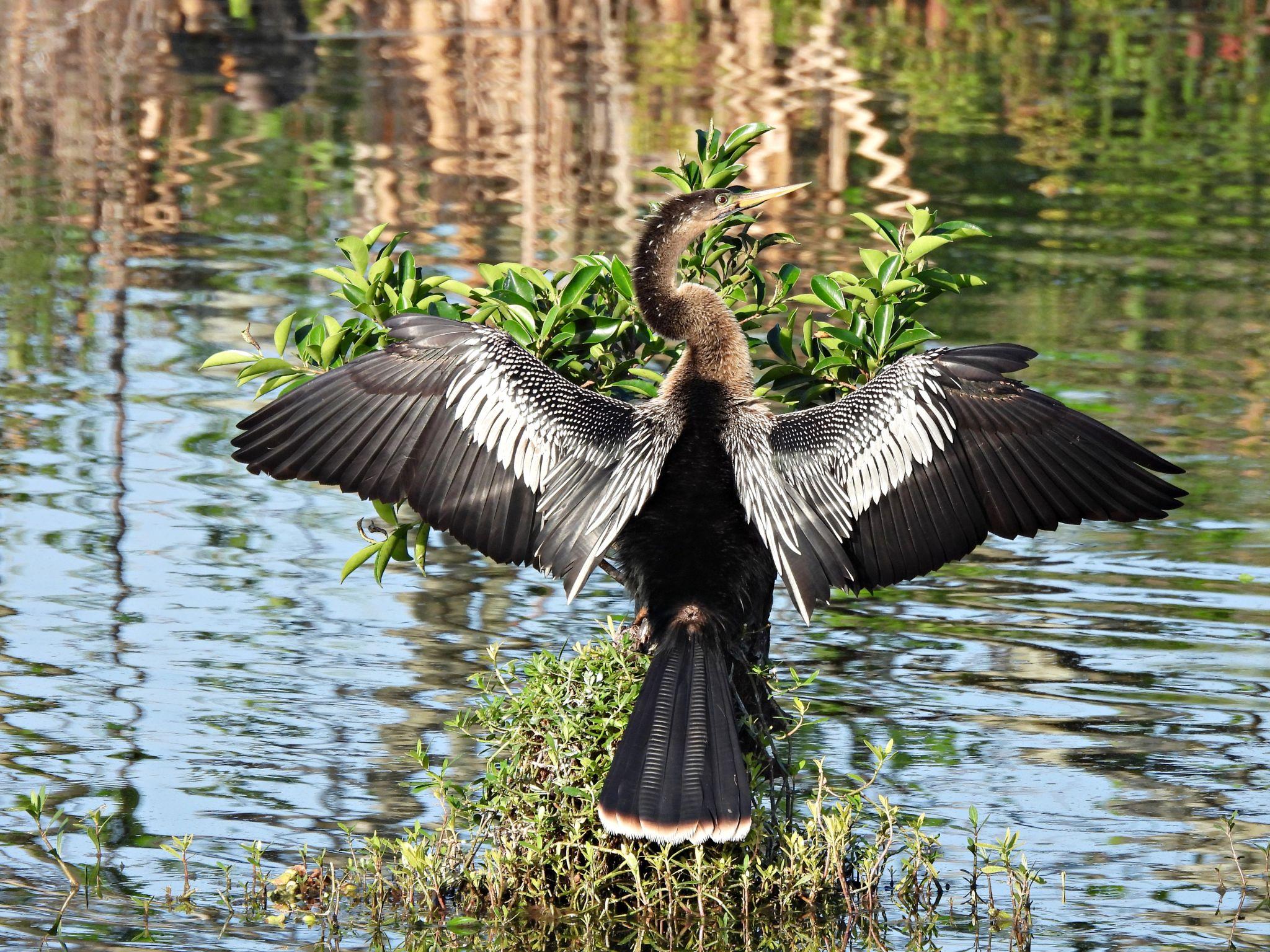
Alt Text: Anhinga drying its wings beside an Amazon river.

The anhinga is often called the “snake bird” because its long neck rises above the water while the rest of its body remains submerged.

Unlike ducks, its feathers absorb water, reducing buoyancy and allowing it to dive easily.

Swimming underwater, it silently approaches fish before striking with its sharp bill.

After hunting, it spreads its wings in the sun to dry before flying again.


5. The Beautiful Snake That Warns Everyone

Alt Text: Brightly banded coral snake crossing the rainforest floor.

The Amazon coral snake displays vivid bands of red, black, and yellow.

These bold colors warn predators that it should be left alone.

Interestingly, several harmless snake species have evolved similar color patterns, gaining protection by resembling the coral snake.

This fascinating survival strategy is known as Batesian mimicry.


6. The Frog That Sleeps Like a Leaf

Alt Text: Green leaf frog resting on a tropical leaf.

Many Amazon leaf frogs spend the daytime sleeping on broad leaves.

Their bright green bodies blend almost perfectly with surrounding vegetation.

At night they become active, feeding on insects throughout the rainforest.

Some species even fold leaves into protective shelters where their eggs develop safely above streams.


7. Rain Changes Everything

Alt Text: Fresh rainforest canopy covered in water droplets after tropical rain.

Heavy rain transforms the Amazon within minutes.

Temporary pools appear across the forest floor.

Frogs begin calling almost immediately.

Insects emerge in huge numbers.

Birds take advantage of the sudden abundance of food, while fish enter newly flooded areas searching for fallen fruit and seeds.

Each rainstorm briefly reshapes the rainforest into an entirely different world.


Nature’s Endless Innovation

The Amazon contains countless examples of animals solving survival challenges in extraordinary ways.

Camouflage, mimicry, teamwork, specialized diets, and seasonal adaptations allow millions of species to share the same environment.

Scientists continue discovering new behaviors every year, reminding us how much remains unknown.


Why Conservation Matters

Healthy Amazon forests protect not only iconic wildlife but also thousands of lesser-known species that quietly maintain ecosystem balance.

Every conserved forest supports pollinators, seed dispersers, predators, amphibians, reptiles, birds, and mammals working together in one of Earth’s greatest natural systems.


Final Thoughts

The Amazon Rainforest is filled with hidden stories waiting to be discovered.

Butterflies imitate owls.

Birds become underwater hunters.

Rodents escape by diving into rivers.

Tiny frogs disappear among leaves.

These remarkable adaptations show that the greatest wonders of the rainforest often belong to animals few people have ever heard of.

Posted on Leave a comment

🌳 7 Incredible Amazon Animal Stories Hidden Deep in the Rainforest

https://images.openai.com/static-rsc-4/BT_y9Pw5rdhF9QdFgg7n8EDMUmyyQHfZ810XQobU4emIJztwHBn95H5XDTrF5Bos9_etfm9aVnnMr9WqZasHG44IWuHOctdCgMJYrR8hKNbjrSVmwqGLaxE4aJHchFMv7kEpvRTQ13eoNfKOqFzVolEoHLRHUip6CIx1XQM8FlVsDfLa2qR3sxMXgroBYFUU?purpose=fullsize
https://images.openai.com/static-rsc-4/B0tA8JuNesh5ay_TL-yzTcEq1fpG8cALKauUmtgOtdUJ0JfOThSfsTcHwnMGcyT0lxwpipoNvZmZmFeJdCUdGt3fexr_jzn1zH2H5uZOFga94Vk6cuqorIZnJASAWkGW4W50_TYd8B4s5xwkNRGm4M8KJglJHDqKoWy-iuRh3mdr-7XTGa_WawSFRbMNLg2D?purpose=fullsize
https://images.openai.com/static-rsc-4/69NfjJ8kYkvay8v9vXjMzgcy6xC_K2WhrSalxc4L70mjvy-l9HNEX7n0zHRiNSnri0M00YQPnMG8Q6S2zZgaEM0fu0EZ451upULeSJJSqblxVyIYE5jzkyEouVL8X9JVieicVR_DtqIFHv0by0IiWCkO00Bd7QO6uhvF5T39BA2hutulIcCfLiOncl8N3BmH?purpose=fullsize

6

🌳 7 Incredible Amazon Animal Stories Hidden Deep in the Rainforest

Category: Wildlife | Nature | Rainforest Stories

Tags: Amazon rainforest, Amazon wildlife, wildlife facts, strange animal stories, jungle animals, rare rainforest animals, South America, biodiversity, conservation, nature, exotic animals

Meta Description:
Discover seven fresh Amazon wildlife stories featuring the Brazil nut’s secret partner, the elusive bush dog, giant centipedes, saddleback tamarins, and other remarkable rainforest animals.


7 Incredible Amazon Animal Stories Hidden Deep in the Rainforest

The Amazon Rainforest is often called the greatest wildlife sanctuary on Earth. While iconic species like jaguars and macaws receive worldwide attention, hundreds of remarkable animals quietly shape the rainforest every day.

Some help grow giant trees. Others hunt in family groups or survive using extraordinary adaptations developed over millions of years.

Here are seven completely different stories from the Amazon that reveal just how amazing this ecosystem truly is.


1. The Small Rodent That Plants Giant Forests

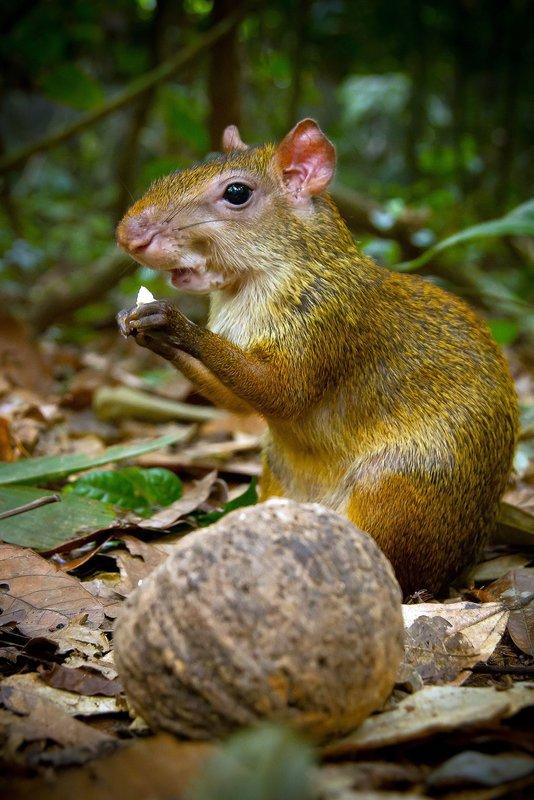
Alt Text: Agouti carrying a Brazil nut across the Amazon forest floor.

The agouti may resemble a large guinea pig, but it performs one of the Amazon’s most important jobs.

Brazil nut trees produce extremely hard fruits that very few animals can open.

Agoutis use their powerful front teeth to crack open the shell. Instead of eating every seed, they bury many of them as food stores for later.

Some hidden seeds are forgotten and eventually grow into enormous Brazil nut trees that can live for centuries.

Without agoutis, natural regeneration of these giant trees would be greatly reduced.


2. The Bat That Helps Keep Animals Healthy

Alt Text: Common vampire bat drinking from a shallow puddle in the rainforest.

The common vampire bat often has a frightening reputation, but its social behavior is surprisingly complex.

Individuals that successfully feed sometimes share food with hungry colony members that were unsuccessful the previous night.

Scientists have documented long-term social bonds within colonies, where bats remember helpful companions and return the favor later.

This cooperative behavior is one reason vampire bats are frequently studied by animal behavior researchers.


3. The Bird With a Voice Like a Trumpet

Alt Text: Southern screamer standing beside an Amazon wetland.

The southern screamer is impossible to ignore once it begins calling.

Its loud, trumpet-like voice echoes across wetlands and flooded forests, allowing pairs to communicate over great distances.

Unlike many large birds, screamers mainly eat aquatic plants and spend much of their lives near marshes and shallow lakes.

Their powerful calls help strengthen pair bonds and defend territories.


4. The Mysterious Wild Dog Few People Ever See

Alt Text: Bush dog exploring a rainforest trail.

The bush dog is one of South America’s rarest carnivores.

Short-legged and compact, it looks unlike any other wild dog.

Bush dogs hunt cooperatively in small packs, often pursuing rodents and other small mammals through dense vegetation.

Because they are shy and inhabit remote forests, even experienced wildlife researchers may spend years without seeing one in the wild.


5. The Giant Centipede That Rules the Forest Floor

Alt Text: Giant Amazon centipede crawling across leaf litter.

The Amazon giant centipede is among the rainforest’s most efficient nighttime predators.

Using dozens of legs, it moves rapidly across fallen leaves searching for insects, spiders, frogs, and other small prey.

Its speed and powerful venom allow it to capture animals much larger than many people would expect from an invertebrate.

Despite its fearsome appearance, it plays an important role by helping regulate populations of smaller forest animals.


6. The Tiny Monkey That Never Travels Alone

Alt Text: Saddleback tamarin family moving together through the Amazon canopy.

The saddleback tamarin lives in close family groups.

Members constantly communicate with whistles, chirps, and scent markings while moving through the forest.

Adults cooperate to carry babies, giving mothers valuable time to feed and rest.

Their teamwork allows the group to stay alert for predators while searching for fruit, insects, and tree sap.


7. A Tree That Depends on Animals to Survive

Alt Text: Massive Brazil nut tree rising above the Amazon rainforest canopy.

The towering Brazil nut tree cannot thrive alone.

Its flowers rely on large native bees for pollination.

Its seeds depend on agoutis for dispersal.

Healthy forests provide habitat for both species, creating a remarkable ecological partnership.

This relationship shows that even the tallest trees in the Amazon depend on much smaller animals for their future.


Why the Amazon Is a Web of Connections

The Amazon is more than a collection of individual species—it is a network of relationships.

Small rodents help forests grow.

Bees pollinate towering trees.

Predators maintain balanced ecosystems.

Family groups cooperate to raise young.

Every animal contributes to the health of the rainforest in ways scientists are still discovering.


Conserving the Amazon’s Wildlife

Protecting the Amazon means preserving these intricate natural relationships.

Conservation efforts support healthy forests, clean rivers, and thriving wildlife populations while also benefiting local communities and the global climate.

Every protected habitat helps safeguard thousands of extraordinary species that cannot be found anywhere else.


Final Thoughts

The Amazon continues to surprise researchers with new discoveries and fascinating behaviors. Whether it’s a rodent planting future forests, a shy wild dog hunting in packs, or tiny monkeys sharing parenting duties, each species plays an important role in this extraordinary ecosystem.

These hidden stories remind us that some of nature’s greatest wonders are often the least well known.


Posted on Leave a comment

7 Incredible Animal Stories from the Amazon Rainforest | Amazing Wildlife Facts

Jaguar walking silently through the Amazon rainforest.

7 Incredible Animal Stories from the Amazon Rainforest | Amazing Wildlife Facts

7 Incredible Animal Stories from the Amazon Rainforest: Nature’s Most Amazing Survivors


7 Incredible Animal Stories from the Amazon Rainforest: Nature’s Most Amazing Survivors

The Amazon Rainforest is often called the “lungs of the Earth,” but it is also one of the greatest wildlife sanctuaries on the planet. Stretching across nine South American countries and covering more than 5.5 million square kilometers, the Amazon is home to an estimated 10% of all known species. Hidden beneath its towering trees and winding rivers are remarkable animals with extraordinary survival stories that continue to fascinate scientists and nature lovers alike.

From tiny frogs carrying poison powerful enough to stop predators to intelligent river dolphins that navigate muddy waters using sonar, every creature in the Amazon has evolved unique adaptations to survive in one of Earth’s most competitive ecosystems.

Here are seven incredible animal stories that showcase the wonder, intelligence, and resilience of Amazon wildlife.


1. The Jaguar: The Silent King of the Jungle

Image
Image
Image
Image
Image
Image
Image

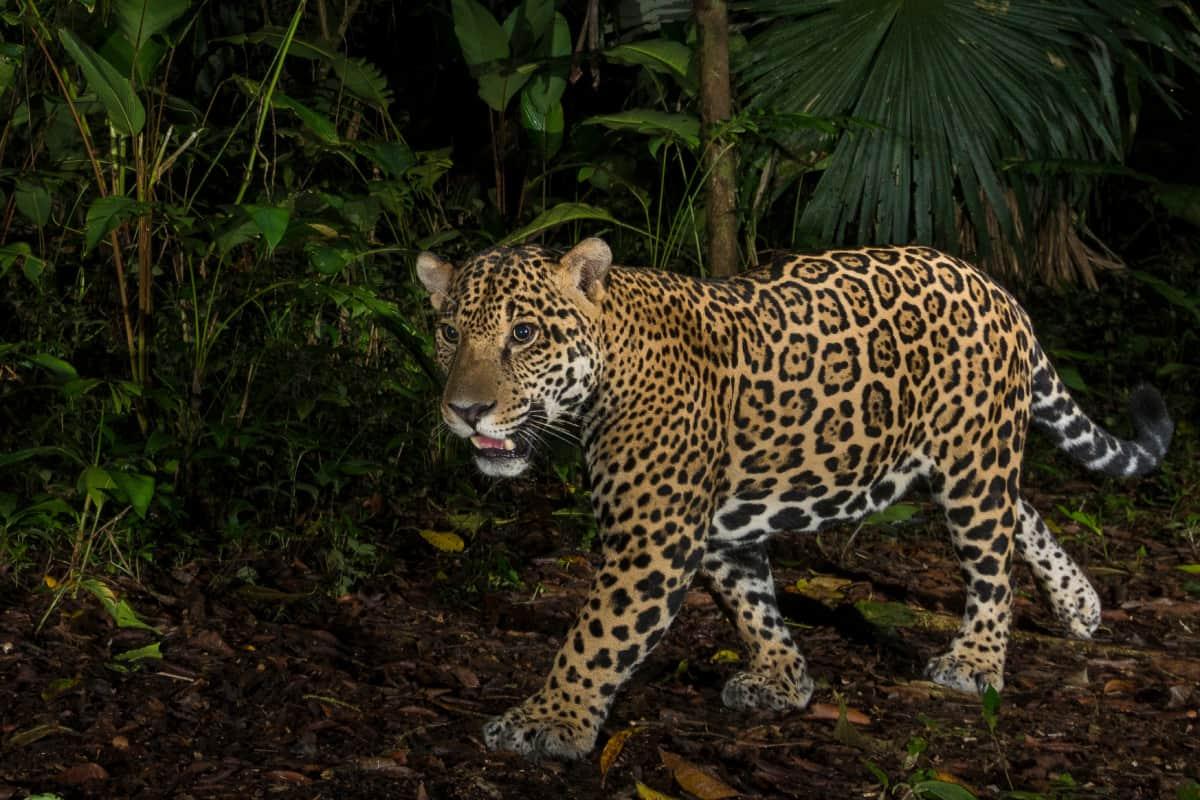
Alt Text: Jaguar walking silently through the Amazon rainforest.

The jaguar is the largest cat in the Americas and the undisputed apex predator of the Amazon. Unlike most big cats, jaguars are exceptional swimmers and often hunt in rivers and wetlands.

Their incredibly powerful bite can pierce turtle shells and even the skulls of caimans. Rather than chasing prey over long distances, jaguars rely on patience and stealth, quietly stalking animals before launching a lightning-fast ambush.

These magnificent cats play an essential role in maintaining ecological balance by controlling populations of deer, capybaras, and other mammals. Unfortunately, habitat destruction and illegal hunting continue to threaten their future.


2. The Pink River Dolphin: The Amazon’s Gentle Mystery

Image
Image
Image
Image
Image
Image
Image
Image

Alt Text: Pink river dolphin swimming through the Amazon River.

One of the Amazon’s most unusual residents is the pink river dolphin, also known as the boto. Unlike ocean dolphins, these freshwater mammals have flexible necks that allow them to maneuver through flooded forests during the rainy season.

Young dolphins are gray, gradually turning pink as they mature. Scientists believe their pink coloration develops from age, scars, and increased blood flow near the skin.

Local folklore tells stories of dolphins transforming into handsome humans at night, but their real-life abilities are equally magical. Using echolocation, they can locate fish in muddy water where visibility is almost zero.

Sadly, pollution and accidental capture in fishing nets are reducing their populations throughout the Amazon Basin.


3. The Poison Dart Frog: Tiny but Powerful

Image
Image
Image
Image
Image
Image
Image

Alt Text: Brightly colored poison dart frog resting on a rainforest leaf.

Despite measuring only a few centimeters long, poison dart frogs are among the most toxic animals on Earth.

Their brilliant blue, yellow, orange, and red colors warn predators to stay away. Some species produce toxins capable of causing paralysis or even death.

Interestingly, frogs raised in captivity lose much of their toxicity because they no longer consume the wild insects responsible for producing these chemicals.

Indigenous communities have historically used the frogs’ toxins on hunting darts, giving the animals their famous name.


4. The Leafcutter Ant: The Farmer of the Rainforest

Image
Image
Image
Image
Image
Image
Image

Alt Text: Leafcutter ants carrying pieces of green leaves.

Leafcutter ants are among the hardest-working insects in the Amazon.

Every day, millions of ants march through the forest carrying leaf fragments much larger than themselves. Surprisingly, they do not eat the leaves directly.

Instead, they use them to cultivate underground fungus gardens that serve as their primary food source. This sophisticated farming system evolved millions of years before humans developed agriculture.

A single colony may contain several million ants working together with incredible organization and efficiency.


5. The Green Anaconda: Master of the Amazon Waters

Image
Image
Image
Image
Image
Image

Alt Text: Massive green anaconda resting in shallow Amazon water.

The green anaconda is one of the world’s largest and heaviest snakes.

Although often portrayed as aggressive in movies, these giant reptiles generally avoid humans whenever possible.

They spend most of their lives in rivers, swamps, and flooded forests, waiting patiently for prey to come within striking distance. Their muscular bodies allow them to overpower animals such as capybaras, caimans, and even deer.

Anacondas are excellent swimmers and can remain submerged for long periods, with only their eyes and nostrils visible above the water.


6. The Harpy Eagle: The Sky Hunter

Image
Image
Image
Image
Image
Image
Image

Alt Text: Harpy eagle perched high in the Amazon rainforest canopy.

The harpy eagle is one of the world’s largest and most powerful birds of prey.

Its massive talons are comparable in size to a grizzly bear’s claws and are strong enough to capture monkeys and sloths directly from the treetops.

Harpy eagles require vast areas of undisturbed forest for hunting, making them vulnerable to deforestation.

Despite their fearsome appearance, these majestic birds are shy and rarely seen in the wild, making every sighting a remarkable experience for researchers.


7. The Glass Frog: Nature’s Transparent Wonder

Image
Image
Image
Image
Image
Image

Alt Text: Transparent glass frog resting beneath a rainforest leaf.

Glass frogs are among the Amazon’s most extraordinary amphibians.

Their undersides are almost transparent, allowing observers to see their internal organs. This remarkable adaptation helps camouflage them against leaves, making it harder for predators to detect them.

Male glass frogs are devoted fathers. After females lay eggs on leaves above streams, males remain nearby to guard them from insects and other predators until they hatch.

Their dedication significantly increases the survival chances of the next generation.


Why Amazon Wildlife Matters

The Amazon Rainforest is much more than a collection of remarkable animals. It regulates global climate, stores enormous amounts of carbon, and supports millions of people who depend on its natural resources.

Unfortunately, illegal logging, mining, wildfires, and expanding agriculture continue to threaten this irreplaceable ecosystem. Every species—from the mighty jaguar to the tiny glass frog—plays a vital role in maintaining the delicate balance of rainforest life.

Protecting the Amazon means protecting one of Earth’s greatest natural treasures for future generations.


Final Thoughts

The Amazon Rainforest reminds us that nature is filled with extraordinary stories waiting to be discovered. Whether it’s a jaguar silently stalking its prey, a pink dolphin navigating muddy rivers, or millions of ants farming fungus beneath the forest floor, each animal has evolved incredible adaptations that inspire wonder.

As conservation efforts continue around the world, learning about these fascinating creatures is one of the first steps toward protecting them. By appreciating the Amazon’s rich biodiversity, we can all play a small part in ensuring these amazing wildlife stories continue for generations to come.


Discover seven incredible animal stories from the Amazon Rainforest, featuring jaguars, pink river dolphins, poison dart frogs, harpy eagles, anacondas, and more. Learn how these remarkable creatures survive in one of Earth’s richest ecosystems.

Posted on Leave a comment

Capybara calmly resting among different animal species near water.

Capybara surrounded by small animals without conflict.
https://images.openai.com/static-rsc-4/FDZbmNweharnjBGgOe0jxPDeU9jreozRCbHm5cEyvZYcty4Fl-ENYHuKq-VqAE6IC6CsIbCaK5V46ehY8CkyqHetJ-ZAc70-yZjSijlc0jRe4lN_bquIx4qiWziyrCIqG_VnbOjTA8wmmlyFZZuwrS_nwofRTW8ItS809mkZZHaWQ0lSgNAgKYqlbmxVK7Tv?purpose=fullsize
https://images.openai.com/static-rsc-4/Tc2O4w8DlSb_xeB82pAwPToC5CINwf2hLOWe3-zgGBr71-3QeAOCdAg9UU8nN7KNLvmcCgrQ7KHAfGnIdHNkUh-BYhmFsUpjdFCun8R7ODDn48lGKhetZcb45m0uSUkGpwk_GdgcvVqD-EZ7bVOTzBslDmvuHXmwZhLx4HSQlbj6i2YcOfhhT1Nbf5jYnrRi?purpose=fullsize
https://images.openai.com/static-rsc-4/26jr76nzJgE0nntfcmwboxz1nrlBjK-8IYenzbQYIQOTGgdQ1wjcQg-GJ_tYYndUm6WuhGbw30fndXEB8hex7PUXJUrTqdha4GdDhdS-u-wPlaXDKx1DaAmPd-bFRcfbYQo0MDq9vG82BBs0_tBS9zAJDw4Tm22F6fZ89GGrhNSQGafieeE8gntnHJxhuqJ1?purpose=fullsize

Category: Wildlife / Strange Animal Stories / Nature
Tags: capybara, friendly animals, unusual animal behavior, wildlife stories, peaceful animals, animal friendships, nature facts, strange animal stories

Featured Image Alt Text:
Capybara calmly resting among different animal species near water.

The Animal That Makes Friends With Everyone: Why Even Crocodiles Rarely Fight With the Capybara

Most animals have enemies.

Some defend territory. Others compete for food. Many avoid strangers entirely.

But one animal seems to ignore all those rules.

Meet the capybara—the world’s largest rodent and possibly one of nature’s most peaceful creatures.

Across South America, capybaras have become famous for something unusual: they are regularly seen relaxing beside birds, sharing space with monkeys, tolerating cats and dogs, and sometimes even sitting surprisingly close to crocodilians without conflict.

It almost looks impossible.

How does one animal seem to get along with nearly everyone?


A Giant Rodent With an Unexpected Personality

Capybaras live in wetlands, rivers, and grassy areas where many other species gather.

Unlike highly territorial animals, capybaras are social and calm.

They usually live in groups and spend much of their day eating grasses, resting, swimming, and staying alert for danger.

Because they are herbivores, they do not compete with predators for food.

That alone reduces many possible conflicts.

Their relaxed body language also appears to make other animals less defensive.


Why Birds Love Capybaras

One of the most common wildlife scenes shows birds standing directly on capybaras.

Small birds often search for insects around their bodies or simply use them as safe resting places.

Capybaras rarely react aggressively.

Instead of chasing visitors away, they usually continue resting.

This creates the appearance of an open invitation.


The Strange Relationship With Crocodilians

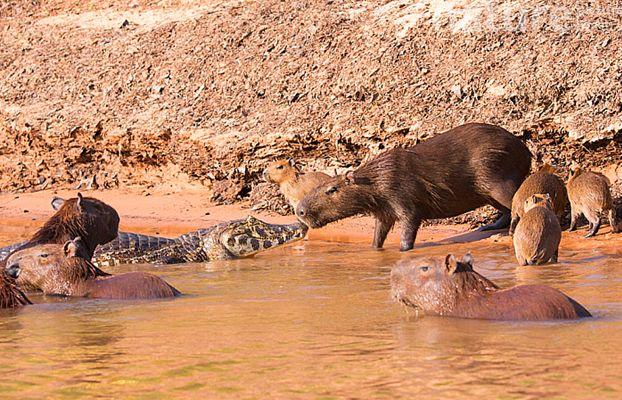
Perhaps the most surprising images show capybaras sitting near crocodilians.

In South America, capybaras sometimes share water environments with caimans.

To people, it looks like an impossible friendship.

But reality is more complicated.

Capybaras remain cautious and stay aware of danger.

At the same time, crocodilians do not attack constantly. Predators conserve energy and often ignore animals unless hunting conditions are favorable.

Because capybaras are calm and predictable, peaceful moments can happen—and photographers capture them.

That does not mean capybaras are immune from predation.

It simply means nature is often more peaceful than people expect.


Friends Across Species

Capybaras have become famous for accepting company from many animals.

Photographs frequently show them alongside:

• Ducks
• Monkeys
• Turtles
• Birds
• Rabbits
• Domestic animals

Their quiet behavior and lack of aggression make them unusually tolerant neighbors.


Nature’s Most Relaxed Animal?

Capybaras still face dangers in the wild.

They must watch for predators and remain alert.

But compared with many animals, they appear remarkably calm.

Maybe that is why people around the world love them.

In a world where survival often means competition, the capybara became famous for something different.

Not speed.

Not strength.

Not size.

Just getting along.

And somehow, that made this giant rodent one of the internet’s favorite animals.

Posted on Leave a comment

Not Photoshop: 7 Animals Born in Colors So Strange Scientists Had to Look Twice

Rare animals showing unusual natural coloration including orange, white, black, yellow, and red color variations.
Image
Image
Image
Image
Image
Image
Image

Not Photoshop: 7 Animals Born in Colors So Strange Scientists Had to Look Twice

If someone showed you an orange penguin or a black flamingo, you might assume the image had been edited.

But nature occasionally produces animals with colors so unusual that even researchers stop and stare.

Most species develop colors that help them survive—camouflage, warning signals, temperature control, or attracting mates. Yet every so often, genetics creates something unexpected.

These animals are not new species.

They are simply extraordinary versions of familiar ones.

Here are seven real examples of animals born with colors that made them look almost impossible.


1. The Orange Penguin That Shocked Wildlife Photographers

Penguins are famous for their black-and-white appearance.

That’s why photographers were stunned when an unusually orange-colored penguin appeared.

Scientists believe rare pigment abnormalities can reduce darker feather colors and create lighter golden or orange tones.

The result looked less like a penguin and more like a tropical bird.

Alt Text: Rare orange-colored penguin standing among ordinary penguins.


2. The White Crow That Lost Its Darkness

Crows are symbols of glossy black feathers.

But occasionally, a crow appears almost completely white.

This unusual appearance often results from leucism—a condition that reduces pigment while preserving normal eye color.

White crows attract enormous attention because they break one of nature’s most recognizable color patterns.

Alt Text: Rare white crow perched outdoors with pale feathers.


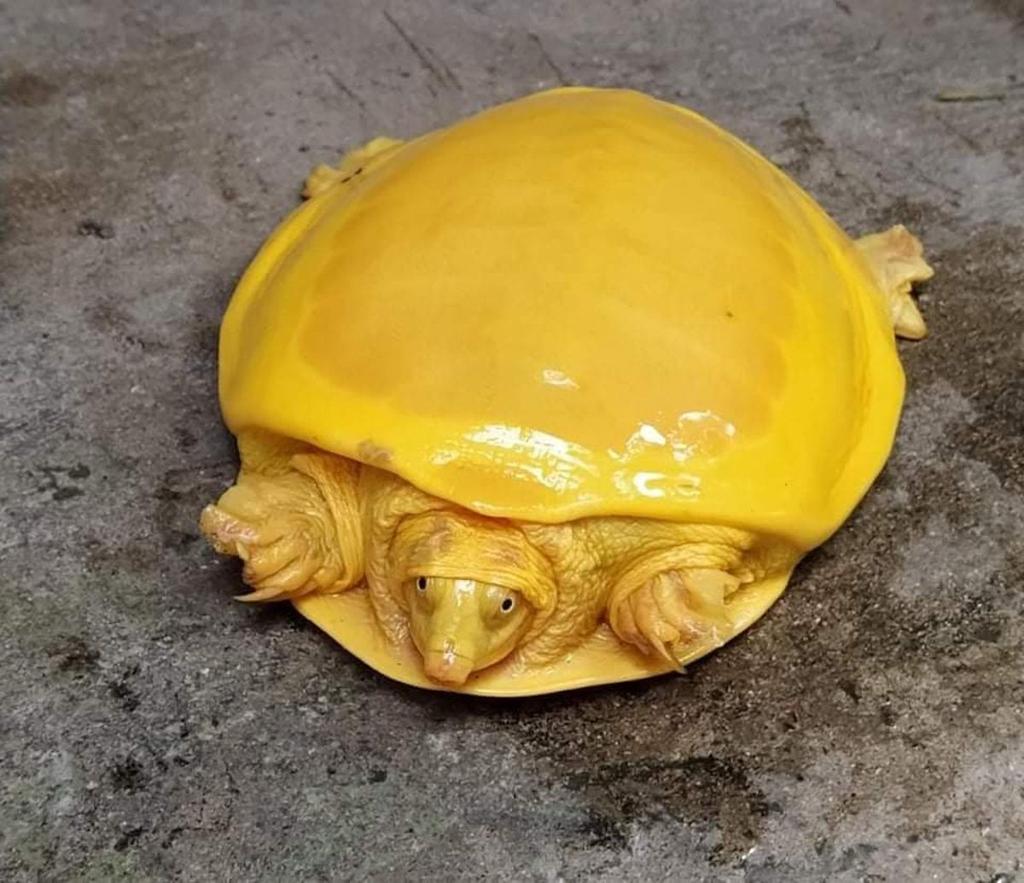
3. The Golden Turtle That Looked Metallic

Most turtles disappear into mud, rocks, and vegetation.

Then there are the rare yellow or golden individuals.

Their shells can appear bright enough to look painted.

Researchers study these rare color changes to better understand reptile pigmentation.

Alt Text: Golden-colored turtle with unusual bright shell.


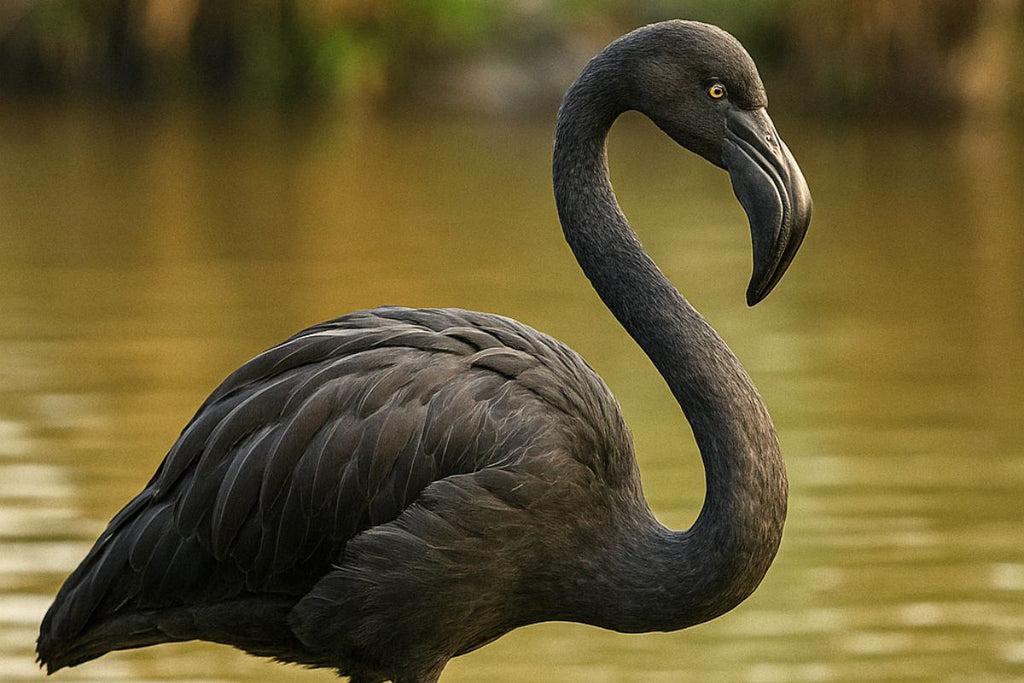
4. The Nearly Black Flamingo

Flamingos are famous for pink feathers.

A black flamingo sounds impossible.

Yet rare individuals with unusually dark pigment have been documented.

The contrast creates one of the strangest sights in bird watching—a bird known for brightness appearing almost shadow-colored.

Alt Text: Rare dark flamingo standing among pink flamingos.


5. The White Moose That Became a Legend

Moose are usually dark brown and blend into forests.

But rare white moose can appear almost glowing between trees.

Unlike albino animals, many retain normal eyes and are believed to carry reduced pigmentation rather than complete pigment loss.

People who see one often describe the experience as unforgettable.

Alt Text: Rare white moose walking through woodland.


6. The Yellow Cobra That Looks Unreal

Cobras usually rely on darker colors for protection and concealment.

Occasionally, rare yellow individuals appear because of unusual genetic traits.

Their bright color transforms one of the world’s most recognizable snakes into something that seems almost fictional.

Alt Text: Yellow cobra displaying unusual bright coloration.


7. The Red Banana Slug

Slugs may not sound exciting—until one appears bright red.

Some banana slug color variations develop intense orange or red shades that stand out dramatically against forest floors.

These strange colors remind us that unusual pigmentation is not limited to large or famous animals.

Alt Text: Bright red banana slug moving across a forest surface.


Why Does Nature Create These Color Surprises?

Color mutations usually happen because pigment-producing cells behave differently during development.

These changes can create animals that are:

• Lighter than normal
• Darker than normal
• More colorful than expected
• Completely unlike their own species

Many unusual color variations reduce camouflage, making survival harder.

But for people lucky enough to see them, they become unforgettable reminders that nature still creates surprises no one expects.

Sometimes the rarest animal is not the rarest species—

it is simply the wrong color..

Posted on Leave a comment

Born Different: 7 Animals With Stunning Color Mutations That Made Them Look Like Another Species

Rare yellow turtle displaying unusual bright shell and skin coloration.

Born Different: 7 Animals With Stunning Color Mutations That Made Them Look Like Another Species

Image
Image
Image
Image

Born Different: 7 Animals With Stunning Color Mutations That Made Them Look Like Another Species

Nature usually follows familiar patterns. Zebras wear black-and-white stripes. Lobsters appear dark green or brown. Penguins arrive in classic tuxedo colors.

But sometimes, nature surprises everyone.

Across the world, a tiny number of animals are born with unusual pigments that transform their appearance completely. Some turn pure white. Others become golden, blue, pink, or nearly black. These color differences can make them look like entirely different species.

Scientists often link these unusual appearances to rare genetic mutations affecting pigment production. While these animals may look magical, their strange colors can bring both advantages and challenges in the wild.

Here are seven remarkable examples of animals born unlike the rest of their species.


1. The White Alligator That Looked Like a Mythical Creature

Image
Image
Image

At first glance, a white alligator barely looks real.

Most alligators develop dark olive skin that helps them hide in muddy water. But a rare genetic condition called leucism reduces normal pigmentation, leaving the animal with pale or nearly white skin.

Unlike complete albinism, leucistic animals may still retain some normal eye coloration.

White alligators face major survival challenges in the wild. Their bright appearance makes camouflage difficult, leaving them easier to spot by predators and prey alike.

Because of this, many documented white alligators live under protected conditions rather than surviving independently in nature.

Image Alt Text: Rare white alligator resting near water with pale scales and light eyes.


2. The Pink Grasshopper That Looks Digitally Edited

Image
Image
Image
Image

Imagine walking through a green field and spotting a bubblegum-pink grasshopper.

It sounds impossible—but pink grasshoppers are real.

Their unusual appearance is often linked to a rare pigment condition called erythrism, which causes excessive red or pink coloration.

While ordinary grasshoppers blend easily into vegetation, pink individuals stand out dramatically.

Scientists believe these unusual insects may appear only once in hundreds of thousands of individuals, making every sighting memorable.

Unfortunately, visibility can also become a disadvantage because camouflage is essential for survival.

Image Alt Text: Bright pink grasshopper sitting on a green leaf in natural sunlight.


3. The Blue Lobster That Defies Ocean Expectations

Image
Image
Image
Image
Image
Image
Image

Blue lobsters have become internet celebrities—but they are genuinely rare.

Most lobsters carry dark shell colors that help them remain hidden along the ocean floor. In rare cases, genetic changes cause an overproduction of certain proteins linked to shell pigmentation.

The result is a brilliant electric-blue shell.

Some estimates suggest blue lobsters appear only once in millions of individuals.

Fishermen occasionally discover them and choose to donate them to aquariums rather than sell them.

Their unusual appearance has helped turn them into symbols of rare natural beauty.

Image Alt Text: Rare blue lobster with vivid shell coloration underwater.


4. The Golden Zebra That Lost Its Signature Stripes

Image
Image
Image
Image
Image
Image
Image
Image
Image
Image
Image
Image
Image
Image
Image
Image
Image
Image
Image
Image
Image
Image
Image
Image
Image
Image
Image
Image
Image
Image
Image
Image
Image
Image
Image
Image

Zebras are famous for one thing: bold black stripes.

But a few rare individuals are born with reduced dark pigmentation, creating pale gold or blond coloring.

These animals still retain stripe patterns—but the colors appear softer and much lighter than usual.

Researchers believe unusual pigment expression during development may alter stripe intensity.

Because zebras depend partly on visual group patterns, scientists continue studying whether these color differences affect social behavior.

To observers, however, they look almost unreal.

Image Alt Text: Rare golden zebra standing in grassland with pale stripe coloration.


5. The Dark Penguin Wearing a Reverse Tuxedo

Image
Image
Image

Penguins are icons of black-and-white contrast.

Yet some are born with melanism, a condition that produces excessive dark pigment.

Instead of white bellies and balanced patterns, these individuals appear dramatically darker.

Scientists have observed melanistic penguins in several species, creating birds that almost look redesigned.

Color changes may influence heat absorption and recognition within colonies, although research continues.

Their appearance reminds us that even one of the world’s most recognizable animals can break its own rules.

Image Alt Text: Dark-colored penguin with unusual black plumage standing among normal penguins.


6. The Snow-White Deer That Became a Local Legend

Image
Image
Image

White deer have inspired legends for centuries.

Many owe their appearance to albinism or leucism—conditions that reduce normal pigment production.

With bright coats and striking appearances, these deer often become local celebrities whenever spotted.

But life can be difficult.

Reduced camouflage and, in some cases, vision sensitivity may create additional survival pressures.

Even so, their graceful appearance continues to fascinate photographers and wildlife enthusiasts.

Image Alt Text: White deer standing quietly inside a forest clearing.


7. The Yellow Turtle That Looked Like It Was Painted

Image
Image
Image

Most turtles rely on muted greens, browns, and dark patterns.

Occasionally, however, a turtle emerges with unusually bright yellow coloring caused by pigment abnormalities.

These turtles immediately attract attention because their shells and skin can appear almost glowing.

Scientists view such cases as valuable opportunities to understand how genes influence coloration across reptile species.

To the public, they simply look unforgettable.

Image Alt Text: Rare yellow turtle displaying unusual bright shell and skin coloration.


Why Do These Strange Colors Happen?

Unusual animal colors usually result from changes in pigment-producing cells or inherited genetic variations.

Some common causes include:

  • Albinism – little or no melanin production
  • Leucism – reduced overall pigmentation
  • Melanism – excess dark pigment
  • Erythrism – increased red or pink coloration
  • Unique genetic mutations affecting color proteins

While these differences can make animals famous, survival in the wild often becomes harder because camouflage plays such an important role.

Still, every rare-colored animal offers a reminder that nature never repeats itself perfectly.

Sometimes the most extraordinary creatures are not new species at all—they are simply familiar animals born in colors nobody expected.

Posted on Leave a comment

Nature’s Rarest Wonders: 7 Animals Born With Astonishing Colors That Defy Their Species

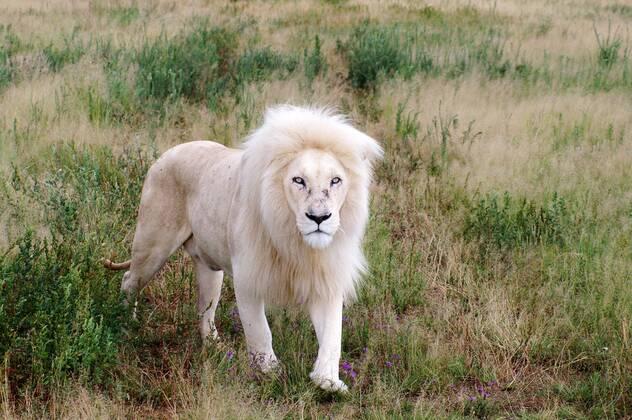
Rare white lion displaying an unusual genetic color variation.

Nature’s Rarest Wonders: 7 Animals Born With Astonishing Colors That Defy Their Species


Image
Image
Image
Image

Nature’s Rarest Wonders: 7 Animals Born With Astonishing Colors That Defy Their Species

Nature is full of surprises. While most animals are born with colors that help them survive in their environments, some are born with extraordinary appearances that make them look completely different from others of their species.

These unusual colors are often caused by rare genetic mutations that affect pigmentation. In some cases, the mutation removes color entirely. In others, it creates darker, brighter, or even completely unexpected shades.

Although these animals may appear magical, their unique coloration can make life more difficult. They often struggle to camouflage themselves, avoid predators, or find mates.

Here are seven fascinating examples of animals born with colors so unusual that they seem almost unreal.

1. The White Lion: A Ghost of the Savannah

Lions are normally golden-brown, allowing them to blend into dry grasslands while hunting.

However, a rare genetic condition sometimes produces white lions.

Unlike albino animals, white lions still have normal eye and skin pigmentation. Their pale appearance is caused by a recessive gene known as leucism, which reduces pigment in the fur.

White lions are incredibly rare in the wild. Their bright coats make camouflage difficult, especially during hunts.

Despite these challenges, white lions remain among the most beautiful and mysterious animals ever documented.

Many people mistake them for mythical creatures when they first see photographs.

2. The Pink Grasshopper That Looks Like a Toy

One of the strangest color mutations ever recorded occurs in grasshoppers.

While most grasshoppers are green or brown, a tiny percentage are born bright pink.

Scientists believe the unusual color results from a genetic condition called erythrism, which causes excessive red pigmentation.

Pink grasshoppers are extremely rare, with some estimates suggesting only one in several hundred thousand develops this coloration.

Because they stand out dramatically against vegetation, they are easier for birds and predators to spot.

Even so, every time a pink grasshopper is discovered, photographs quickly spread across the internet because of its incredible appearance.

3. The Black Penguin That Shocked Researchers

Penguins are famous for their black-and-white coloring.

Occasionally, however, a rare condition called melanism causes some penguins to develop unusually dark feathers.

Instead of displaying the classic tuxedo appearance, melanistic penguins may appear almost entirely black.

Wildlife researchers have documented a small number of these unusual birds in Antarctica and South America.

The condition occurs when the body produces excessive amounts of melanin, the pigment responsible for dark coloration.

These rare penguins often attract attention from both scientists and wildlife photographers due to their extraordinary appearance.

4. The White Giraffe That Became a Legend

Few animals have attracted as much global attention as the rare white giraffes discovered in East Africa.

Their pale appearance is caused by leucism, a genetic condition that reduces skin pigmentation while maintaining normal eye color.

Unlike ordinary giraffes, these animals appear almost completely white.

When one of these giraffes was first photographed, many people believed the images had been digitally altered.

However, the animals were real.

Conservationists reported several sightings over the years, turning the white giraffe into an international wildlife sensation.

Their unusual appearance made them easy to recognize, but unfortunately, it also made them vulnerable to human threats.

5. The Golden Zebra That Looks Nothing Like a Zebra

Zebras are known worldwide for their distinctive black-and-white stripes.

Yet rare genetic mutations can dramatically alter this familiar pattern.

A condition known as amelanism reduces dark pigmentation, creating zebras with golden-brown stripes instead of black ones.

The result is a striking animal that appears almost golden under sunlight.

These rare zebras have been observed in parts of Africa and occasionally in wildlife reserves.

Researchers believe the mutation is extremely uncommon.

To many observers, golden zebras look more like a completely different species than a variation of an ordinary zebra.

6. The Albino Deer That Seems Almost Magical

White deer have fascinated people for centuries.

Legends and folklore often describe them as symbols of luck, mystery, or spiritual significance.

In reality, albino deer owe their appearance to a genetic mutation that prevents the production of melanin.

Unlike leucistic animals, albino deer typically have pink eyes and pink noses.

Because their coloration makes camouflage difficult, they face greater risks from predators.

Despite these challenges, sightings of albino deer continue to captivate wildlife enthusiasts around the world.

Many communities even consider them local treasures.

7. The Bright Orange Lobster That Defied the Odds

Most lobsters are dark green, brown, or bluish while alive.

A bright orange lobster is extraordinarily rare.

Scientists estimate the odds of finding one may be as low as one in 30 million.

The unusual coloration results from a genetic mutation that alters pigment production.

Because orange lobsters are highly visible, they would struggle to hide from predators in the wild.

Fortunately, many discovered orange lobsters are transferred to aquariums rather than being sold for food.

Their vibrant color makes them instant attractions wherever they are displayed.

Why Do These Strange Colors Happen?

Most unusual animal colors result from genetic mutations affecting pigmentation.

Some of the most common conditions include:

• Albinism – Complete absence of melanin, producing white skin, fur, feathers, and often pink eyes.

• Leucism – Partial loss of pigmentation while maintaining normal eye color.

• Melanism – Excessive dark pigmentation, causing animals to appear much darker than normal.

• Erythrism – Increased red pigmentation, producing reddish or pink coloration.

These conditions are usually rare and occur naturally in wild populations.

The Challenges of Being Different

Although these animals look extraordinary, their unusual appearance often creates survival challenges.

Camouflage is one of the most important defenses in nature.

Animals with unusual colors frequently stand out against their surroundings.

This makes them easier for predators to locate.

In some species, unusual coloration can also affect social interactions and mating opportunities.

However, many of these animals survive and thrive despite the challenges they face.

Their existence demonstrates the incredible diversity of life on Earth.

Nature’s Living Masterpieces

From white lions and white giraffes to pink grasshoppers and orange lobsters, these remarkable animals remind us that nature is capable of producing astonishing surprises.

Every rare color mutation tells a unique story about genetics, evolution, and survival.

Although many of these animals are seen only rarely, their photographs continue to amaze millions of people around the world.

They serve as living reminders that even in a world filled with familiar creatures, nature still has the power to surprise us.

And sometimes, the rarest wonders are the ones that look completely different from everyone else around them.

Additional Images for the Article

Image 1 – White Lion

Image
Image
Image
Image
Image
Image
Image
Image
Image
Image
Image
Image
Image
Image
Image
Image
Image
Image
Image
Image
Image
Image
Image
Image
Image
Image
Image
Image
Image
Image
Image
Image
Image
Image
Image
Image
Image
Image
Image
Image
Image

Alt Text: Rare white lion displaying an unusual genetic color variation.

Image 2 – Pink Grasshopper

Image
Image
Image
Image
Image

Alt Text: Rare pink grasshopper caused by a genetic pigmentation mutation.

Image 3 – Black Penguin

Image
Image
Image

Alt Text: Unusual melanistic penguin with mostly black feathers.

Image 4 – White Giraffe

Image
Image
Image
Image

Alt Text: Extremely rare white giraffe standing in the African savannah.

Image 5 – Golden Zebra

Image
Image
Image
Image
Image
Image

Alt Text: Rare golden zebra with brownish stripes instead of black.

Image 6 – Albino Deer

Image
Image

Alt Text: Albino deer with white fur and pink eyes in a forest.

Image 7 – Orange Lobster

Image
Image

Alt Text: Extremely rare orange lobster caused by a genetic mutation.

Posted on Leave a comment

🌍 Introduction: A World Where Nature Pushes Back

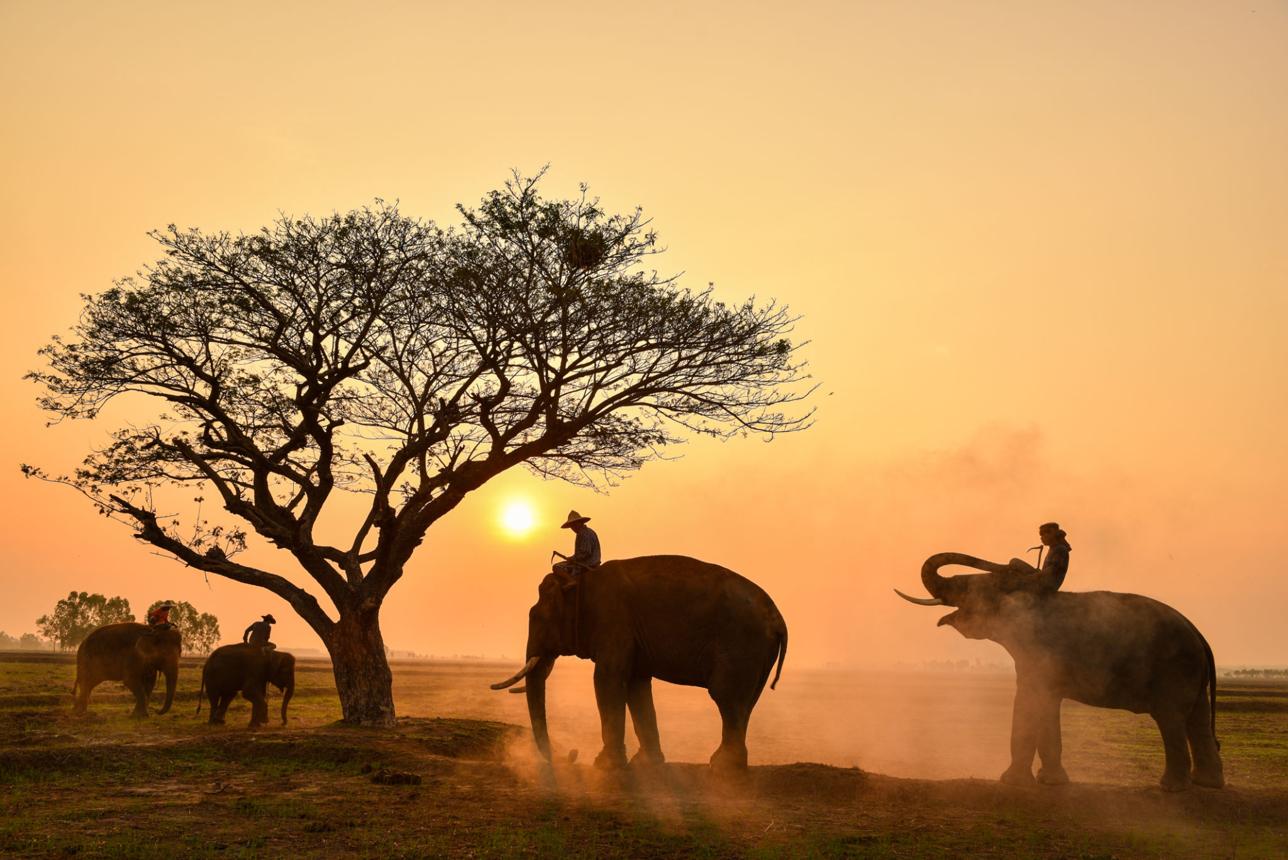
Alt-text: Wild elephants entering villages and farmland in Asia at night

🌍 Introduction: A World Where Nature Pushes Back

In recent years, the relationship between humans and wildlife has entered a new and unpredictable phase. Across continents, wild animals are appearing in places where they were rarely seen before—villages, farms, and even urban neighborhoods. These encounters are not just isolated incidents; they are becoming a global pattern.

From elephants roaming through rural communities in Asia to crocodiles showing up in suburban streets, the natural world seems to be pushing back against human expansion. At the same time, there are also positive stories—like the recovery of endangered species such as the Giant Panda.

This article explores some of the most shocking and fascinating wildlife events happening around the world today, revealing what they mean for our future.


🐘 Elephants Invading Villages in Asia

https://images.openai.com/static-rsc-4/Pj6zyLCHMh5PNViFoHWFZ9zkfRUhOXIZGGdoQpyczgmH-mAF7ntQJSu_9aXRpVklFxkF2QFOa-Pigz1uPHx8lRWRO2sZkwIKnTlVCEWrgD-zJ7FRSqevhOdfjb-b1ddbGF5cqn9DnRgXflbI2HJ-eKqIb5hg29h8trGUyxRtGHrw0aW3N0yTrBdZPmUceYiC?purpose=fullsize
https://images.openai.com/static-rsc-4/UMsfW5sgX8RDdn8vriky9dJdm5g3iQEIiAekyGKCHBX2ZMv7_vwSs4XYrMDLyTF95WHnoxWAuzhEs0Bzm8MAVN68dbOglyj54COC5qKfSbtSLfg6oNkqHqCWXBQI_Jc_ntSZ_jRfDzo2A6xtPYnjV0_vCcc4ago34zYojMP8gOW-EvRSpX_WKhdt5wlt9Nb2?purpose=fullsize
https://images.openai.com/static-rsc-4/3KUCqotUyxCuPkjB5ESOsXiGdlJezemBws2LIEGPgdpPcGYxEwRKS759RXZQ8eULWu8e9ON6QiFtM0_uDbg5fv-kAjf5NKcZg1r4Yc_a15cSX3Jhkk8Dlq10tfxfT6gY7iBWlY2Ei88qFSXF4ra3mniRmp5dAlH7UVROa1xiho4HYsWMflEQauYI2Ox5ZoGT?purpose=fullsize

6

Alt-text: Wild elephants entering villages and farmland in Asia at night

Across countries like India and Thailand, reports of elephants entering villages have increased dramatically. These massive animals often travel in herds, moving through farmland and destroying crops in search of food.

For local communities, these encounters can be terrifying. Homes are damaged, livelihoods are lost, and in some cases, lives are at risk. But the root cause of this issue lies deeper—deforestation and habitat loss.

As forests shrink due to agriculture and development, elephants are forced to find new sources of food. Villages located near forests become easy targets. Experts warn that unless sustainable solutions are implemented, these conflicts will continue to rise.


🐺 The Return of Wolves in Europe

https://images.openai.com/static-rsc-4/BojUEGfw4j8TvlX-xLz5wrNEaRRClnJdjPfwNEh4KFY91HOMOOnFn1CPMIezYTFyIffJVxn0JpNnsoa_PCWUrhpno0rtXcSErPmE7dmfjN_oLt9BOqkSQhW7bagYPeGIcNNzI53OUWPMJXctZll1G8IUocCFuAA9qT3c2E9mo9vKWcJ2NDqWKnUslrJpdO5x?purpose=fullsize
https://images.openai.com/static-rsc-4/VMbuDAJWJo3x8kBIXu2OlYi5_9a0ZQOyI9k2WYgyHpBQWvRUlpQQ2AYRAckko-OWWbxuExyWbJD5y7rGG_GmKdR-Bh6NnOmuSdk7Qs6SqrlEHLa6YBbm86bv9f0jq8ZKiF-iGHg71LuqFuLjeXPcSWb9m5lIeWHNTnw93G53lQMSmCfaKnIWOxyLyH9EmXHn?purpose=fullsize
https://images.openai.com/static-rsc-4/iaXvhM3Dq0TLIS8jrzNEFpHcL1F4BD89sCakCLeJyAHV04xjc5j3dGd8oYmPlyqP4zMlu2SCel1pOzaanULWtXDD6HHCELbQ-lya3qSCbeXtBRXQiUUOyHVHwXpSWb06O8MaS5057Rebwx66COPROxctv3PugyqPfa8ANBzsPQNA85uyZVg2Iz28tsuricLs?purpose=fullsize

6

Alt-text: Wolves roaming forests and countryside in Europe

In a surprising turn of events, wolves are making a comeback across Europe. Countries like Germany and France are witnessing a steady increase in wolf populations after decades of decline.

This is largely due to conservation efforts and legal protection. While environmentalists celebrate this as a major success, not everyone is happy.

Farmers are concerned about the safety of their livestock, as wolves sometimes attack sheep and other animals. This has led to debates about how to balance conservation with human interests.

Despite the controversy, the return of wolves is a sign that ecosystems can recover when given the chance.


🐊 Crocodiles Appearing in Cities

https://images.openai.com/static-rsc-4/c15KLd3atKNKvuOdxENDbBzOktx3HW_kn32mbBs39ud1MGMc7eg9diNhAcz_AUHdUZYQhGym1uz1-aZCYZ21x_RbOtqrVB4YRicpv5z33X9PTdTdUFzvxY50jf3jnG_0vNaAMvrXeQGjfUgoT-k1FMqagbbCDWwHHBOVjR3gcxj-03WemA1kj69SGFAx9yaf?purpose=fullsize
https://images.openai.com/static-rsc-4/o9Khtfx09As8LGHBA8oxF9YgQOSQzToyNFBWNCMiUtrsb7P8niNV_MF1otEi3GPoTDyTzuTAwN0SNrHWdBYcUm_Zc8W5IlPRex71Lrnx0ic5lj1h93QIOjHfGIBnPswoHh67A87zYRAx1Fd1liUEGXf7Cy4NPdiMLDVJQt7aeJ0SlMSpbEx_Ezbp1R-G7QIS?purpose=fullsize
https://images.openai.com/static-rsc-4/sDJdRtyDguzvHZjOZYCT-s5j-jjmGLcXWeb3eFvltJcZ_pUH0WYBu4l0lGpOZRujBMmZL23X_EbC4galaDXymfoZeYJ1ivPqCe27mIdZRdm8mdahEu-3t2ye9L65YBvyHE9xvmZgeGmgUgyIuLTD9I1Q_XBmxe36apkCmcuN_4oGA2PQ42FM03O3Obe_CxrJ?purpose=fullsize

7

Alt-text: Crocodiles and alligators spotted in urban neighborhoods

In places like the United States and Australia, crocodiles and alligators are increasingly being spotted in urban areas. In Florida, it is no longer unusual to see an alligator in a backyard, swimming pool, or even crossing the street.

These sightings often occur after heavy rains or flooding, which push these reptiles out of their natural habitats. Urban expansion also plays a role, as cities continue to grow into wetlands and coastal areas.

While attacks on humans are rare, the presence of such dangerous animals in populated areas raises serious safety concerns.


🐼 A Rare Success: The Rise of the Giant Panda

https://images.openai.com/static-rsc-4/Z_8HaUdylwO8-PoZQXoRDPnwgc3blHXupj6GU7QJXPwWV3lOB1Qpeef3LDWuYkYEivXzh6ZHvicmg_Nt2x4acL1Beyn7bQFABLwsy-H8zMmDu0ld-mtQJQyFned1jvo_VjAFv_rN_dsKfRGHqcIxfov5kWQUuxpwmJ7JbufI0MPiksuzSsTPMgC10028q3E5?purpose=fullsize
https://images.openai.com/static-rsc-4/l0K58zmTUSumIt-USYpXuifX7hy5MssjHq-qUvdwGJfn99ELFHBOtpGB3cfmUiIFAtazQHpe1X11GDR7D6nkX1KHO03eCyJKrXOG_DM8xx8B36ilsqaudsUl4FfeqV12Q7s-YiBpMheOQW4HE1jkg3sEUaevqGhCeeRThJh_99h7iq1p1ozJtZmI28FXg_oL?purpose=fullsize
https://images.openai.com/static-rsc-4/bwwOoacPawCcDw_w3sc7o9ByzHDsFx7dkgSMvkM3Je-Rh-FWB2ILhmkQlymC4y2x4jpcANyRYVk7b6nHk42dEy-ItOnIBfK849u6vJ5zcruz4pkIBSHS_txix51wqq5tCxnENzxLAj8Hy0WgaFryGmIefq7xSWO1fsNxGqCaC1AtORg0VuT14QmLx0vOjw8E?purpose=fullsize

7

Alt-text: Giant pandas thriving in protected forests in China

Not all wildlife news is alarming. In China, the Giant Panda has become a symbol of successful conservation.

Once considered endangered, panda populations are now increasing thanks to dedicated conservation programs. Protected reserves, breeding efforts, and habitat restoration have all contributed to this success.

This story shows that with the right policies and commitment, humans can help restore balance to nature.


🐍 Giant Snakes Going Viral in Southeast Asia

https://images.openai.com/static-rsc-4/btEDm6KRmM3NJutaauD5vbFBeOpqcmNUEJDi1k9NxwYTJSw8nfRBvaJA5OyH8T6THw1Fzo-QDV2Gbsu-MCf-j_TdN1GR7QCQdbLQxMulk7elxz489FK0w5hdC64vOGro9AZG-BJvDSFzw3pJ3ld7Xo6LGqVMXle9yERFRMBZDlML_5cXYPV41m0t3nuBMwKx?purpose=fullsize
https://images.openai.com/static-rsc-4/QC5ihP-mhbMDgUuEgUvF6SPZckZB3IxGTbG1Y58KhXLUzgSCNqv8Yd5iZrPQAWw5oyav5ULGLosiStJuE0cuVWXJvpXhLFVUVN7RhINufSh5Nap-9x856AAo1TFb3jBDzs2wrVA7W3ocTmmiRn8Us8TmilvflA6BvyZ4ON-58AnDvuPkPUH4p1B6_y3_Nq6K?purpose=fullsize
https://images.openai.com/static-rsc-4/BhJ0jUeXLrofR1IbnJKhEj1iyWSe2OzD-zrFP6CRZ5-mhifRjo89_P5zkLKB_mhsvIqJcBaPmsMDl6fjEc4BOi_9_thmYJc5cVjAk2nAVm5OAsNuSRn9R4go9Xbv4eRc38jsxEGAQZfP9Gn1UmefxPEn-3Oxy4ZP-SWKKnY2DuDR3Q1KbrLor0KlpH2Uw5P3?purpose=fullsize

6

Alt-text: Giant python captured near villages in Southeast Asia

Videos of enormous pythons being captured in Southeast Asia have taken social media by storm. In countries like Indonesia and Thailand, locals have reported finding giant snakes near homes and farms.

These snakes are often drawn to areas with abundant prey, such as chickens or rodents. However, their presence so close to human settlements is unusual and concerning.

Like many other wildlife conflicts, habitat destruction is a key factor. As forests disappear, snakes are forced into closer contact with humans.


🌧️ Climate Change and Its Hidden Impact

https://images.openai.com/static-rsc-4/ZuPWaer__-PXjaHcNPWb2lxmJVrOxTFvW1GhQlOpA40dgDOFzwgofH0l6PFJxZuJ-SzI9dy2Mofu26OJWKPZZSJulwcCTMexxdnNE0cW1x3bipy1ldW6doKFEYDx7JK_yVb9Tk0D3lU_aAGwTciKz_mPmc-03QDQiGlmyYHzzdnaE1IpftBex0lOEvVsJBfA?purpose=fullsize
https://images.openai.com/static-rsc-4/l1FTqXFMkJ5ImxH7865PZYLMSaksQLWpPpp4ia-X_Iw-ba-_5Jxp-CQjlHipQVDysGanE4o0x9Z0J5_RcLoZHrI82l_XYB252EcYB0ZD-O1b08mcoiv9xBxxfg5nMbNJCGJmHniHHffdnL1w8dpKHW9DL6quY883z5wCu-Bv_ga6luVz_XfNItLOPIxBrA2z?purpose=fullsize
https://images.openai.com/static-rsc-4/KZc1Wq_YgkAmKpwP4euGLFiCJQzoQg61xuxJLjWowBc7iuY2_-c2FZfztJZsx4s6lVll_6XoqsvavJR0SKwLXGZhUkvq0hs_ToQeqC9BZGgmngVk6MNLJ6y9E7m0svLCogzP4YpJCBB7-VpT8ofzhxwrBsY384ndrpohOY_c2JAxXoWqLBPKBw5e1YY3zEvY?purpose=fullsize

6

Alt-text: Wildlife displaced by climate change and environmental disruption

Beyond deforestation and urbanization, climate change is playing a major role in these unusual animal encounters.

Rising temperatures, extreme weather events, and changing ecosystems are forcing animals to migrate in search of food and shelter. Floods can push crocodiles into cities, while droughts can drive elephants into farmland.

Scientists warn that these patterns will become more common in the coming years, making human-wildlife interaction an ongoing global challenge.


⚖️ Conclusion: Can Humans and Wildlife Coexist?

The stories shared above highlight a critical truth: humans and wildlife are more connected than ever before. As we continue to expand into natural habitats, encounters with wild animals are inevitable.

However, these interactions do not have to be negative. With better planning, conservation efforts, and awareness, it is possible to create a balance where both humans and animals can thrive.

The return of wolves and the recovery of pandas prove that coexistence is achievable. But it requires global cooperation and a commitment to protecting the natural world.

In the end, the question is not whether wildlife is invading our space—but whether we are willing to share the planet.

Posted on Leave a comment

Nature’s Giants: The Biggest Creepy Crawlers and Amphibians on Earth

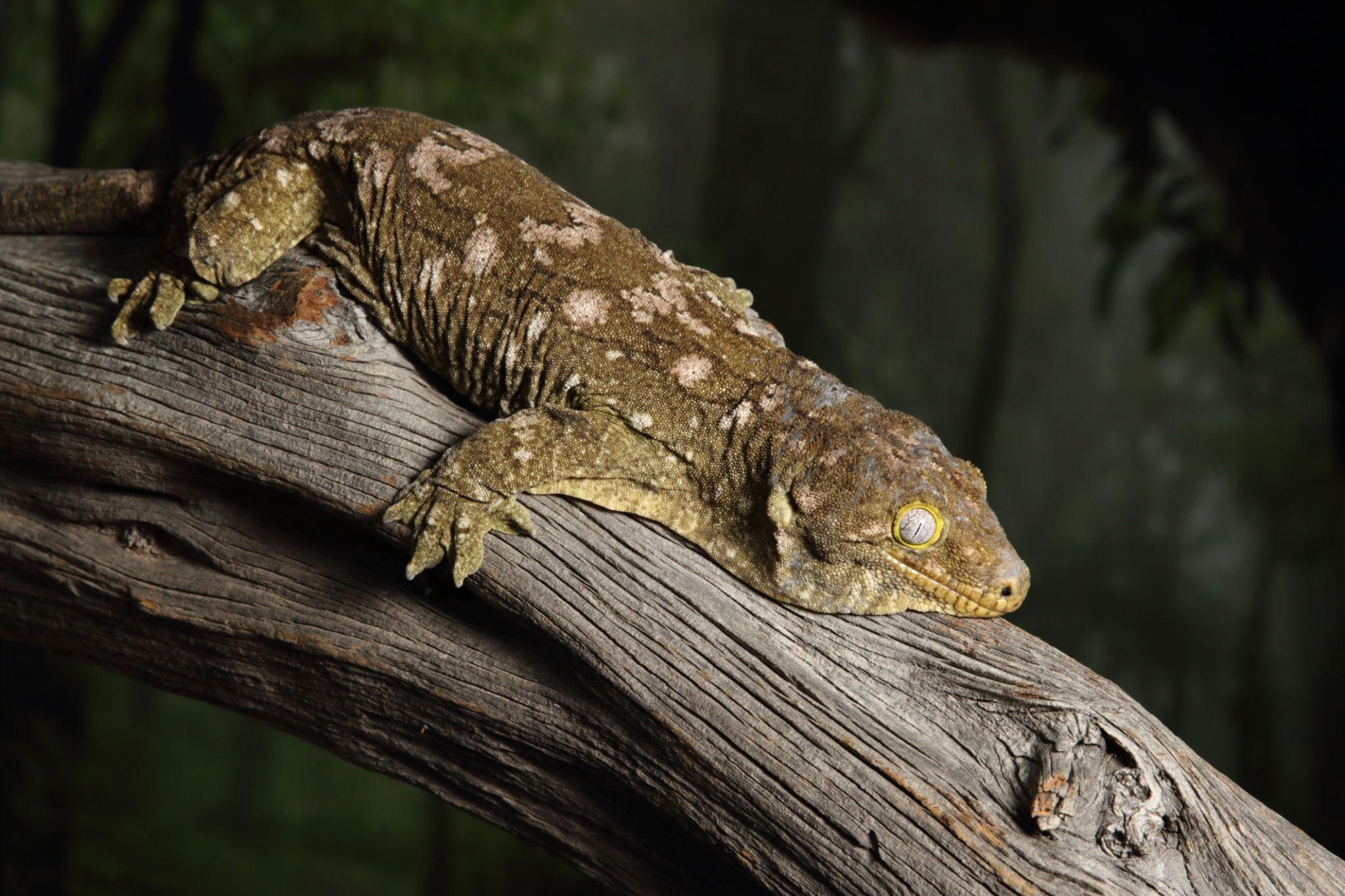
The world's largest gecko, giant centipede, and Goliath frog displayed in their natural habitats, showcasing their extraordinary size.

The World’s Biggest Gecko, Centipede, and Frog: Giant Creatures That Seem Too Strange to Be Real

Image
Image
Image
Image
Image

The Largest Gecko, Centipede, and Frog Ever Discovered

The natural world is filled with extraordinary creatures, but every so often scientists discover animals that seem to break the normal rules of size.

Most geckos are small enough to fit comfortably in the palm of your hand. Most frogs can sit on a leaf, and most centipedes are creatures people barely notice as they crawl through the soil.

However, some species have evolved into giants compared to their relatives. These animals are so large that they often surprise even experienced wildlife researchers.

Today, we’ll explore three record-breaking creatures that hold the title of being among the largest members of their groups: the giant gecko, the giant centipede, and the enormous Goliath frog.

These remarkable animals prove that nature still has the power to amaze us.


1. The Giant Gecko of New Caledonia

Image
Image
Image
Image
Image
Image
Image

When most people think of geckos, they imagine small lizards running across walls or hiding in gardens.

However, the largest gecko species in the world is a completely different story.

Known scientifically as Leach’s Gecko, this giant reptile lives in the forests of New Caledonia, a group of islands in the South Pacific.

Unlike common house geckos, Leach’s Gecko can grow up to 17 inches (43 centimeters) long and weigh more than 300 grams.

Its thick body, powerful jaws, and impressive size make it look more like a miniature dragon than a typical gecko.

A Strange Appearance

The giant gecko has rough, bark-like skin that helps it blend perfectly into tree trunks.

During the day, it hides among branches and tree cavities. At night, it becomes active and searches for food.

Its diet includes:

  • Fruits
  • Nectar
  • Insects
  • Small animals

A Powerful Bite

One surprising fact about Leach’s Gecko is the strength of its bite.

Many reptile enthusiasts report that this species has one of the strongest bites among geckos.

Although it is not dangerous to humans, it can certainly deliver a painful bite when threatened.


2. The Giant Centipede: A Predator With Hundreds of Legs

Image
Image
Image
Image
Image
Image

Among all centipede species, one stands above the rest in terms of size and reputation.

The giant Amazonian centipede, known scientifically as Amazonian Giant Centipede, is considered one of the largest centipedes on Earth.

This incredible arthropod can grow up to 30 centimeters (12 inches) long.

For comparison, many ordinary centipedes are only a few centimeters long.

Built for Hunting

Unlike insects that feed on plants, giant centipedes are predators.

They use specialized venomous claws to capture prey.

Their diet may include:

  • Insects
  • Spiders
  • Small reptiles
  • Frogs
  • Rodents
  • Small birds

Scientists have even observed giant centipedes catching bats inside caves.

Surprisingly Fast

Despite having dozens of legs, giant centipedes can move with incredible speed.

This allows them to surprise prey before it has a chance to escape.

Although their appearance may seem frightening, giant centipedes play an important role in maintaining ecological balance by controlling populations of smaller animals.


3. The Goliath Frog: The Largest Frog in the World

Image
Image
Image
Image
Image
Image

If you think all frogs are small creatures that sit beside ponds and croak at night, think again.

The world’s largest frog is truly enormous.

Known as the Goliath Frog, this giant amphibian lives in parts of Cameroon and Equatorial Guinea in Africa.

How Big Is It?

A fully grown Goliath frog can reach:

  • Length: Up to 34 centimeters (13 inches)
  • Weight: Over 3 kilograms (7 pounds)

That’s heavier than many domestic cats.

When people see photographs of a Goliath frog being held by researchers, they often assume the images have been edited.

The frog’s size is genuinely astonishing.

Life Near Fast Rivers

Unlike many frog species, Goliath frogs prefer fast-flowing rivers and waterfalls.

These powerful amphibians use their muscular legs to navigate strong currents.

Researchers have even discovered that Goliath frogs move rocks to help create safe nesting areas for their young.

This behavior demonstrates a level of environmental interaction rarely seen among amphibians.


Why Do Some Animals Become Giants?

Image
Image
Image
Image

Scientists believe several factors can contribute to unusually large sizes in animals.

1. Genetics

Inherited traits play a major role in determining how large an animal can grow.

2. Food Availability

Animals living in environments with abundant food resources may grow larger over time.

3. Evolutionary Advantages

Being larger can help with:

  • Defending territory
  • Avoiding predators
  • Capturing prey
  • Reproduction

4. Habitat Conditions

Stable environments sometimes allow species to evolve larger body sizes across generations.


Amazing Facts About These Giant Creatures

Here are some fascinating facts:

Giant Gecko

  • Largest living gecko species.
  • Can produce surprisingly loud vocalizations.
  • Uses camouflage to hide in trees.

Giant Centipede

  • One of the largest centipedes ever discovered.
  • Can hunt animals larger than many people expect.
  • Possesses venom used to subdue prey.

Goliath Frog

  • Largest frog species on Earth.
  • Can weigh more than 7 pounds.
  • Lives only in limited regions of Africa.

Conservation Challenges

Image
Image
Image
Image

Unfortunately, all three of these remarkable animals face threats in the modern world.

These challenges include:

  • Habitat destruction
  • Deforestation
  • Pollution
  • Illegal wildlife trade
  • Climate change

As natural habitats continue to shrink, protecting biodiversity becomes increasingly important.

Many scientists believe preserving these species is essential because they represent unique branches of Earth’s evolutionary history.


Conclusion

The giant gecko, Amazonian giant centipede, and Goliath frog demonstrate that nature is capable of producing creatures far larger than most people imagine.

From the tree-dwelling giant gecko of New Caledonia to the fearsome centipede of South America and the enormous frog of Africa, these animals challenge our assumptions about what reptiles, arthropods, and amphibians should look like.

Their incredible size, unique adaptations, and fascinating behaviors continue to inspire scientists and wildlife enthusiasts around the world.

The next time you see a small gecko, frog, or centipede, remember that somewhere on Earth, there may be a giant relative that looks like it belongs in a prehistoric world rather than the modern one. 🦎🐸🪱🌍