Posted on Leave a comment

馃尶 7 Extraordinary Amazon Animal Stories That Will Change the Way You See the Rainforest

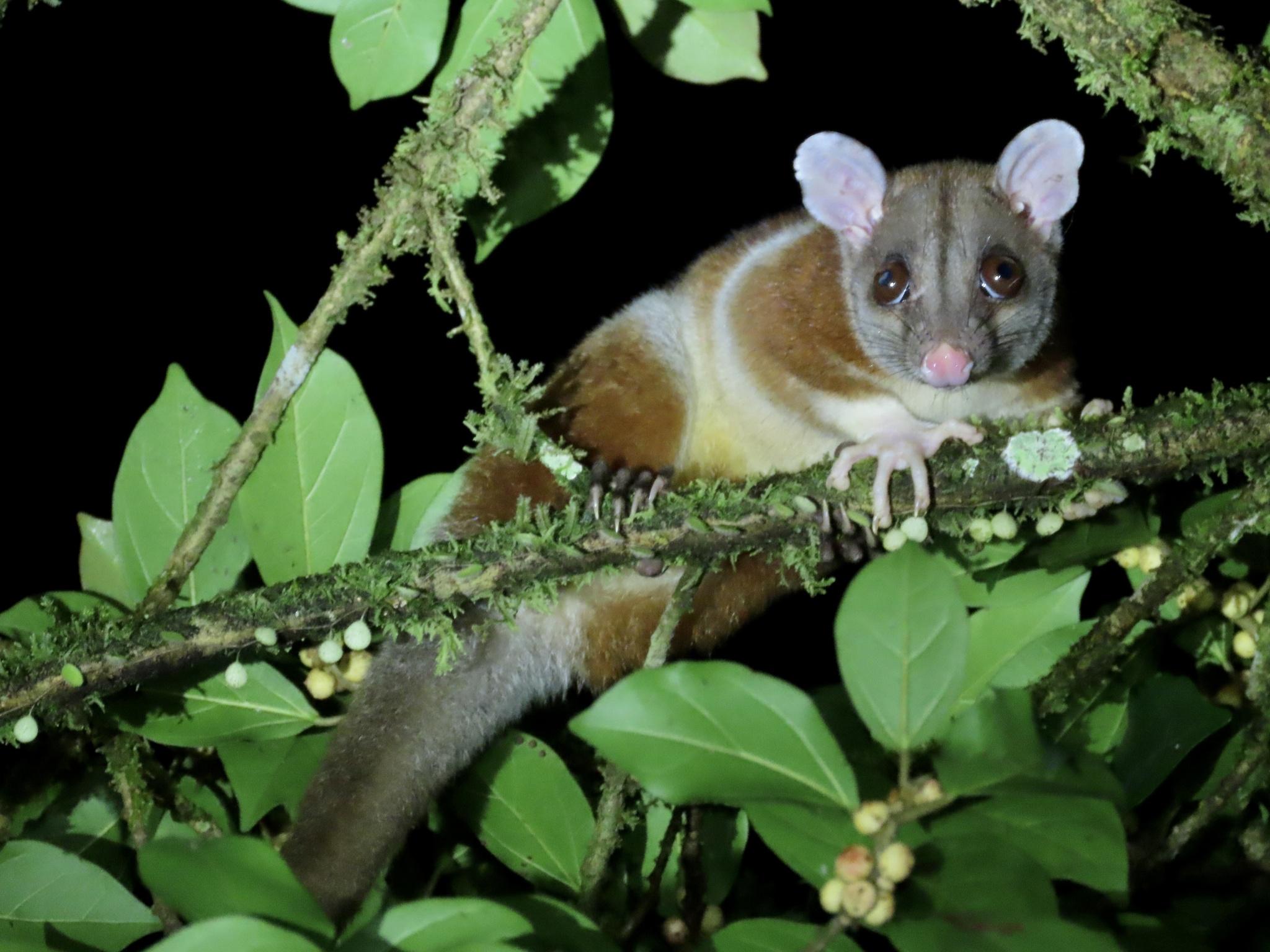
Woolly opossum climbing through rainforest branches at night
Image
Image
Image
Image

馃尶 7 Extraordinary Amazon Animal Stories That Will Change the Way You See the Rainforest

Category: Wildlife | Nature | Amazon Rainforest

Tags: Amazon Rainforest, Amazon wildlife, rainforest animals, wildlife stories, biodiversity, South America, jungle creatures, exotic animals, conservation, nature facts

Meta Description:
Explore seven brand-new true stories from the Amazon Rainforest, featuring leaf fish, jacanas, woolly opossums, giant katydids, hoatzins, and other fascinating rainforest wildlife.


7 Extraordinary Amazon Animal Stories That Will Change the Way You See the Rainforest

The Amazon Rainforest is often described as the lungs of the planet, but it is also one of Earth’s greatest wildlife sanctuaries. Every day, thousands of remarkable interactions take place among animals that have adapted to life in dense forests, winding rivers, and flooded wetlands.

While famous species like jaguars and anacondas capture headlines, many lesser-known creatures have evolved survival strategies that are equally astonishing. Here are seven fresh stories that reveal the hidden brilliance of Amazon wildlife.


1. The Tiny Monkey That Never Lets Go of Its Baby

Alt Text: Adult tamarin carrying its baby through the Amazon canopy.

Many tamarin species are devoted parents, but one unusual behavior stands out鈥攆athers carry newborn babies for most of the day.

The infants cling tightly to their father’s back while the mother rests and feeds. She usually takes the babies back only for nursing before returning them to the father.

This teamwork allows the family to travel, forage, and protect the young more efficiently, making tamarins one of the Amazon’s most cooperative primates.


2. The Fish That Looks Exactly Like a Dead Leaf

Alt Text: Amazon leaf fish perfectly camouflaged among underwater leaves.

The Amazon leaf fish is an extraordinary master of disguise.

Its flattened body, mottled colors, and slow drifting movements make it almost indistinguishable from a floating dead leaf.

Instead of chasing prey, it patiently drifts with the current until a small fish swims close. Then, with lightning speed, it opens its mouth and creates a suction powerful enough to capture its meal.


3. The Bird That Walks Across Floating Plants

Alt Text: Wattled jacana walking across giant Amazon water lilies.

The wattled jacana appears to perform magic as it walks across floating vegetation.

Its secret lies in its exceptionally long toes, which spread its weight across broad leaves such as giant Amazon water lilies.

This adaptation allows the bird to search for insects, seeds, and aquatic plants without sinking into the water.


4. The Night Explorer With Soft Woolly Fur

Alt Text: Woolly opossum climbing through rainforest branches at night.

The woolly opossum is rarely seen because it spends its life high in the trees after sunset.

Its thick fur protects it from cool nighttime temperatures, while its long tail helps maintain balance as it searches for fruit, nectar, insects, and small animals.

By feeding on flowers and fruits, woolly opossums also contribute to pollination and seed dispersal throughout the rainforest.


5. The Bird That Builds Nests Above Rivers

Alt Text: Hoatzin nest built above a calm Amazon river.

Hoatzins often build their nests directly above slow-moving rivers and flooded forests.

This unusual location offers an escape route for chicks.

If danger approaches, young birds can leap safely into the water, swim toward nearby vegetation, and climb back using the small claws on their wings.

Few birds possess such an extraordinary survival strategy.


6. The Giant Insect That Pretends to Be a Leaf

Alt Text: Giant green katydid blending into rainforest foliage.

The giant katydid has wings that closely resemble fresh green leaves.

Even tiny veins on the wings mimic real plant structures.

This remarkable camouflage protects the insect from birds, reptiles, and mammals that hunt by sight.

Remaining motionless during daylight makes the disguise even more convincing.


7. Every Sunrise Starts a New Rainforest Symphony

Alt Text: Sunrise illuminating mist over an Amazon rainforest river.

As dawn breaks over the Amazon, the rainforest awakens in stages.

Frogs gradually fall silent.

Birds begin singing.

Monkeys call across the canopy.

Butterflies emerge into warm sunlight.

This daily chorus signals another day in one of the most biologically diverse ecosystems on Earth.


Scientists Continue Discovering New Wonders

Researchers describe dozens of new Amazon species every year, including frogs, insects, fish, orchids, and fungi.

Modern technologies such as drone surveys, environmental DNA sampling, and remote camera systems are helping scientists explore previously inaccessible regions of the rainforest.


Why Protecting the Amazon Matters

The Amazon supports an extraordinary network of life.

Monkeys disperse seeds.

Fish maintain aquatic food webs.

Birds pollinate flowers.

Insects recycle nutrients.

Every species contributes to the long-term health and resilience of this globally important ecosystem.


Final Thoughts

The Amazon Rainforest continues to surprise the world with its incredible wildlife.

Whether it is a fish disguised as a leaf, a monkey father carrying its baby, or a bird walking across floating plants, each story reveals another remarkable example of nature’s creativity.

Protecting this extraordinary rainforest ensures that these amazing animals鈥攁nd the countless discoveries still waiting to be made鈥攚ill continue to inspire future generations.


WordPress Image SEO

ImageFile NameAlt Text
1tamarin-carrying-baby.jpgAdult tamarin carrying its baby through the Amazon rainforest canopy
2amazon-leaf-fish.jpgAmazon leaf fish camouflaged among underwater leaves
3wattled-jacana-water-lily.jpgWattled jacana walking across giant Amazon water lily leaves
4woolly-opossum-night.jpgWoolly opossum climbing through rainforest branches at night
5hoatzin-nest-river.jpgHoatzin nest built above a calm Amazon rainforest river
6giant-katydid-leaf-camouflage.jpgGiant green katydid blending perfectly with rainforest leaves
7amazon-river-sunrise-mist.jpgSunrise over a misty Amazon River surrounded by lush rainforest
Posted on Leave a comment

馃尶 7 Hidden Amazon Wildlife Stories That Prove Every Creature Has a Superpower

Image
Image
Image
Image
Image

馃尶 7 Hidden Amazon Wildlife Stories That Prove Every Creature Has a Superpower

Category: Wildlife | Nature | Amazon Rainforest

Tags: Amazon Rainforest, Amazon wildlife, rainforest animals, wildlife facts, biodiversity, jungle creatures, South America, conservation, rare animals, nature stories

Meta Description:
Discover seven fascinating Amazon wildlife stories featuring orchid bees, squirrel cuckoos, spectacled caimans, giant centipedes, tamarins, sloths, and more.


7 Hidden Amazon Wildlife Stories That Prove Every Creature Has a Superpower

The Amazon Rainforest is one of the last great wildernesses on Earth, home to an astonishing variety of life. Every layer of the forest鈥攆rom the towering canopy to the muddy riverbanks鈥攊s filled with species that have evolved remarkable ways to survive.

Some animals rely on teamwork, others on camouflage, and a few possess abilities so unusual that they seem almost unbelievable. Here are seven fresh stories from the Amazon that highlight nature鈥檚 incredible ingenuity.


1. The Bird That Hunts Like a Squirrel

Alt Text: Squirrel cuckoo climbing through branches in the Amazon canopy.

The squirrel cuckoo earns its name from the way it moves.

Instead of flying long distances, it often runs and leaps through branches with quick, agile movements that resemble a squirrel.

Its long tail helps it balance while searching for caterpillars, insects, tree frogs, and small lizards hidden among the leaves.


2. The River Guardian With Watchful Eyes

Alt Text: Spectacled caiman floating quietly in an Amazon river.

The spectacled caiman spends much of its life almost completely submerged.

Only its eyes and nostrils remain above the water, allowing it to watch for fish and other prey while staying hidden.

Young caimans often remain close to their mothers, who protect them during their vulnerable early months.


3. The Slow Traveler That Saves Energy

Alt Text: Three-toed sloth hanging upside down in a rainforest tree.

The three-toed sloth moves slowly for a good reason.

Its leaf-based diet provides relatively little energy, so conserving energy is essential.

Specialized muscles and curved claws allow the sloth to hang comfortably upside down for hours while digesting its food.

Algae sometimes grow on its fur, providing additional camouflage among moss-covered branches.


4. The Bee That Collects Perfume

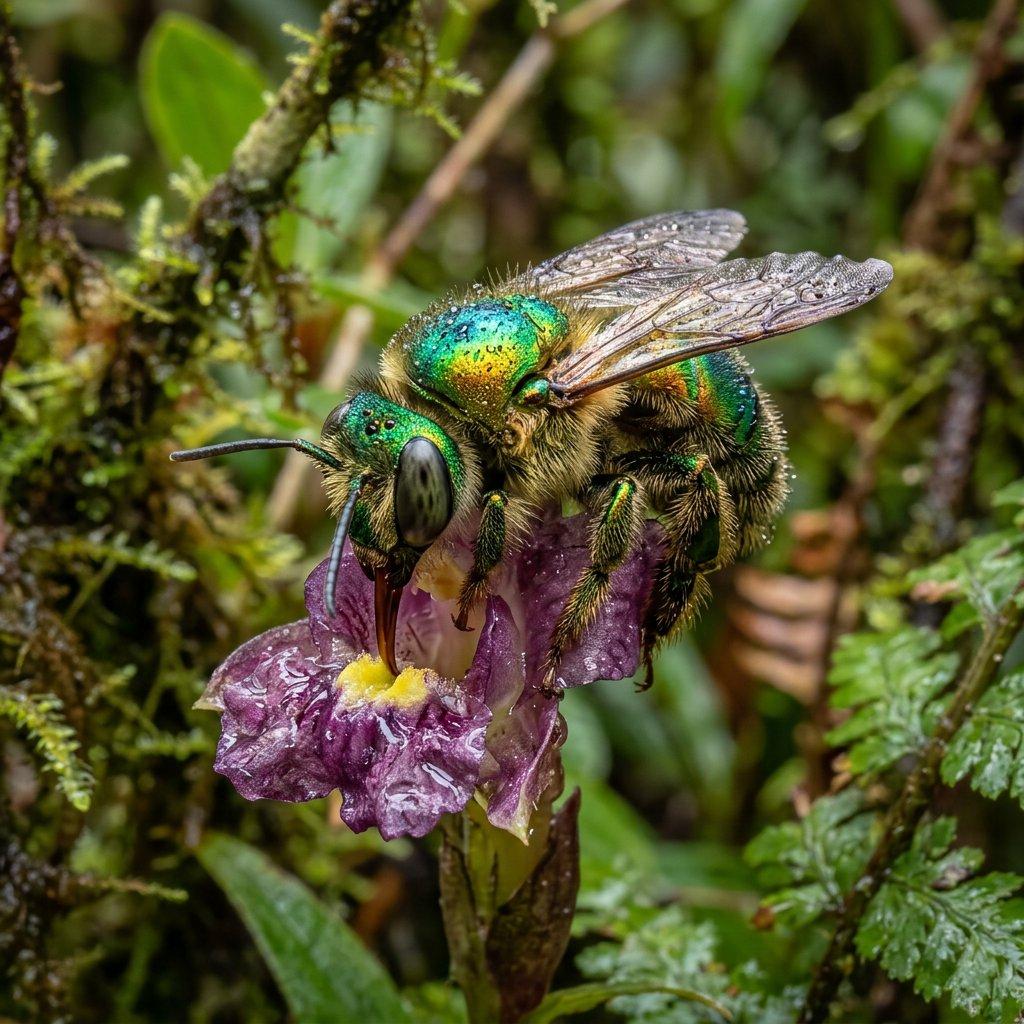
Alt Text: Metallic green orchid bee visiting a tropical flower.

Male orchid bees gather fragrant chemicals from orchids and other flowers.

Rather than using these scents for food, they store them in special pockets on their hind legs.

Scientists believe these perfumes help attract females during courtship, making orchid bees some of the rainforest’s most unusual pollinators.


5. Tiny Monkeys That Care for One Another

Alt Text: Family of tamarins grooming each other on a tree branch.

Tamarins are highly social primates.

Group members frequently groom one another to strengthen social bonds.

In many species, fathers and older siblings help carry babies for much of the day, allowing mothers more time to feed.

This cooperative care greatly increases the survival of young tamarins.


6. The Night Hunter Beneath the Leaves

Alt Text: Giant Amazon centipede crossing the rainforest floor at night.

The Amazon giant centipede becomes active after sunset.

Using highly sensitive antennae, it searches through leaf litter for insects and other small animals.

Despite its intimidating appearance, it usually avoids larger animals and spends daylight hours hidden beneath logs, rocks, or fallen branches.


7. The River That Connects Every Living Thing

Alt Text: Peaceful Amazon River glowing in golden evening light.

The Amazon River is the lifeblood of the rainforest.

Its seasonal floods transport nutrients, nourish forests, create fish breeding grounds, and provide water for countless animals.

Many species depend on these annual floods to complete their life cycles, making the river one of the world’s most important natural systems.


A Rainforest Still Full of Discoveries

Researchers continue to uncover new Amazon species every year, including insects, amphibians, fish, fungi, and flowering plants.

Even familiar animals often surprise scientists with previously unknown behaviors, proving that the rainforest still holds countless mysteries.


Why Protecting Biodiversity Matters

Every Amazon species has a purpose.

Bees pollinate flowers.

Sloths support tiny ecosystems in their fur.

Caimans help regulate aquatic food webs.

Monkeys disperse seeds that become future forests.

Protecting biodiversity means preserving these intricate relationships that keep the rainforest healthy.


Final Thoughts

The Amazon Rainforest is filled with extraordinary wildlife that rarely makes headlines.

From perfume-collecting bees and acrobatic birds to caring monkey families and patient river predators, every species contributes to one of Earth’s richest ecosystems.

The more we explore the Amazon, the more we realize that even its smallest creatures have remarkable stories to tell.


WordPress Image SEO

ImageFile NameAlt Text
1squirrel-cuckoo-amazon.jpgSquirrel cuckoo moving through branches in the Amazon canopy
2spectacled-caiman-river.jpgSpectacled caiman floating quietly in an Amazon river
3three-toed-sloth-tree.jpgThree-toed sloth hanging from a rainforest tree branch
4orchid-bee-flower.jpgMetallic green orchid bee collecting fragrance from a flower
5tamarin-family-grooming.jpgFamily of tamarins grooming each other in the rainforest
6amazon-giant-centipede.jpgGiant Amazon centipede walking across the rainforest floor
7amazon-river-golden-hour.jpgGolden sunset over the Amazon River surrounded by rainforest
Posted on Leave a comment

馃尶 7 Hidden Amazon Animal Stories That Feel Like Discoveries From Another World

https://images.openai.com/static-rsc-4/IeP5MvfD6MgDPTxCQtbjlQ5pyyxKF5Y73unzeT2pCbm8mtQ_Cj9rN_OTlMO9rAdiGbl4TyBRaGk8zbFkrSKNzyCOg5jJ1_YCQg4jcpfILOONVhni19vIwzwZHEirdJ0DkHmGsfYBJdeBnlji_umlHk4z87I6GaCdqP8U5eATvy17pIGsCK6EzAVl_W6X_U15?purpose=fullsize
https://images.openai.com/static-rsc-4/z3T9CT6woV01SzzALmQXHFxhShwZvSaSENqW0Jf2BHSO-UOPTZiJpFQagRWgs9Ch3GntOPYwf1JD9EdM0dJUT2nUbOQrV7pSfsdbf_-P_n-XTbqx5NV84LsVF7wGD4kq_wDBYb9_eEgj1CjvnFH5tinecjLMfs1hhIgdTG0MPnHUFP4elXsX3yrc3bUcdJh7?purpose=fullsize
https://images.openai.com/static-rsc-4/v10l2en_kAfulGuTPw2elx_0KtaaJgtgeqSs6cjp9951uS7Kg1-7hydzlGhQoxOetVuLJIGxX-UOsWTUXbxjM_bGREDQoTR-USdxpih842gzvUpqLl2uUyeV5R-C7SNLcdD9vWwKLF9XD4BbVzEhOineNjrubZ-sIrXxaDddk2ItooRMIOaFdulXQYmjRnVk?purpose=fullsize

4

馃尶 7 Hidden Amazon Animal Stories That Feel Like Discoveries From Another World

Category: Wildlife | Nature | Amazon Rainforest

Tags: Amazon Rainforest, Amazon wildlife, rainforest animals, jungle creatures, biodiversity, wildlife stories, South America, nature facts, exotic animals, conservation

Meta Description:
Explore seven incredible Amazon wildlife stories featuring the giant armadillo, bushmaster snake, tiger heron, umbrellabird, basilisk, and other extraordinary rainforest creatures.


7 Hidden Amazon Animal Stories That Feel Like Discoveries From Another World

The Amazon Rainforest is home to an astonishing variety of life. Covering millions of square kilometers across South America, it shelters countless species that remain hidden beneath dense canopies, flooded forests, and winding rivers.

Many of the Amazon’s most fascinating residents are rarely seen. Some emerge only at night, others disappear perfectly into the vegetation, and a few possess unusual features unlike anything found elsewhere in nature.

Here are seven brand-new wildlife stories that reveal the extraordinary diversity of the Amazon.


1. The Giant Armadillo That Builds Homes for Other Animals

Alt Text: Giant armadillo digging a large burrow in the Amazon rainforest.

The giant armadillo is one of the rainforest’s most powerful diggers.

Using enormous claws, it creates deep burrows that provide shelter not only for itself but also for many other species after the armadillo leaves.

Researchers have discovered reptiles, mammals, amphibians, and insects using abandoned burrows as safe refuges from predators and extreme weather.

In many ways, giant armadillos act as ecosystem engineers.


2. The Snake That Almost Never Needs to Chase

Alt Text: Bushmaster snake camouflaged among fallen rainforest leaves.

The bushmaster is the longest venomous snake in the Americas.

Despite its impressive size, it rarely pursues prey.

Instead, it relies on excellent camouflage and patiently waits for rodents or other small animals to approach.

Its leaf-like coloration allows it to blend almost perfectly into the forest floor.


3. The Bird With a Giant Feathered Umbrella

Alt Text: Male umbrellabird displaying its large crest.

The Amazonian umbrellabird has one of the strangest appearances in the bird world.

A large crest of feathers arches over its head like an umbrella, while an elongated throat wattle hangs below its beak.

Males use these features during elaborate courtship displays to attract females in the dense rainforest.


4. The Monkeys That Can Be Heard Before They Are Seen

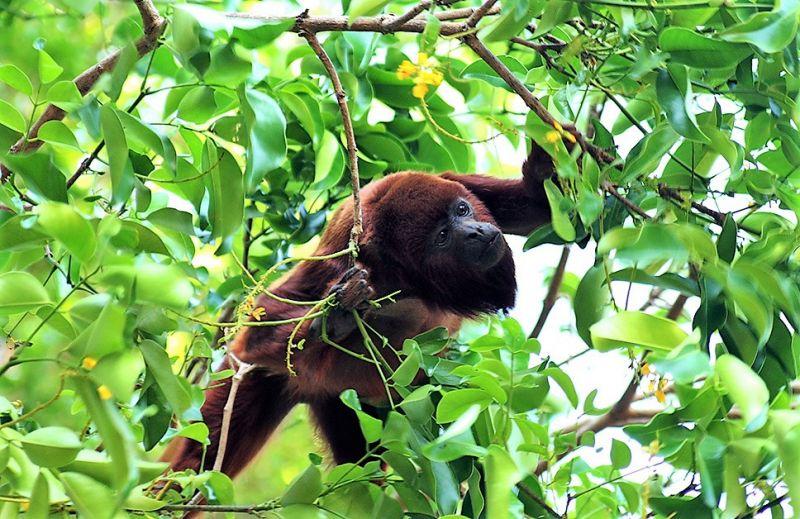
Alt Text: Red-handed howler monkey sitting high in the rainforest canopy.

The red-handed howler monkey possesses an enlarged throat structure that amplifies its deep calls.

These powerful vocalizations can travel several kilometers through the forest, allowing neighboring groups to communicate territory boundaries without direct confrontation.

At dawn, their haunting roars become one of the defining sounds of the Amazon.


5. The Lizard That Can Run Across Water

Alt Text: Helmeted basilisk resting on a rainforest branch.

The helmeted basilisk is famous for its remarkable ability to sprint across the surface of water.

Specialized toes spread outward as it runs, helping distribute its weight and preventing it from sinking immediately.

This extraordinary adaptation allows the lizard to escape predators with surprising speed.


6. The Patient Hunter Along the Riverbank

Alt Text: Tiger heron standing motionless beside an Amazon river.

The rufescent tiger heron is a master of patience.

Rather than chasing fish, it stands perfectly still beside rivers and streams, waiting for the ideal moment to strike.

Its striped plumage blends beautifully with reeds and shadows, making it difficult for prey to detect.


7. Floodwaters Create an Entirely Different Forest

Alt Text: Flooded Amazon forest glowing during sunset.

Every year, rising rivers transform vast sections of the Amazon into flooded forests.

Fish swim among tree trunks.

Turtles feed on fallen fruit.

River dolphins enter areas that were once dry land.

This seasonal flooding creates one of the most dynamic ecosystems on Earth and supports countless species adapted to changing water levels.


The Amazon Still Holds Countless Mysteries

Despite centuries of exploration, scientists continue discovering new Amazon species every year.

Remote habitats, advanced technology, and ongoing research reveal that many parts of the rainforest remain surprisingly unexplored.

The Amazon is still one of Earth’s greatest frontiers of biological discovery.


Why Conservation Matters

Each species in the rainforest plays an important role.

Monkeys disperse seeds.

Birds control insects.

Predators maintain ecological balance.

Burrowing animals create habitat for others.

Protecting the Amazon means preserving these extraordinary relationships for future generations.


Final Thoughts

The Amazon is more than a forest鈥攊t is a living network of remarkable species and incredible adaptations.

From giant burrowing armadillos and water-running lizards to umbrella-headed birds and booming monkeys, every corner of the rainforest contains another fascinating story waiting to be told.


WordPress Image SEO

ImageFile NameAlt Text
1giant-armadillo-burrow-amazon.jpgGiant armadillo digging a burrow in the Amazon rainforest
2bushmaster-snake-camouflage.jpgBushmaster snake hidden among rainforest leaf litter
3amazon-umbrellabird-display.jpgMale Amazonian umbrellabird displaying its feathered crest
4red-handed-howler-monkey.jpgRed-handed howler monkey resting in the rainforest canopy
5helmeted-basilisk-water-runner.jpgHelmeted basilisk perched on a branch near water
6tiger-heron-amazon-river.jpgRufescent tiger heron standing beside an Amazon river
7flooded-amazon-forest-sunset.jpgSeasonal flooding transforms part of the Amazon rainforest

Posted on Leave a comment

馃尶 7 Incredible Amazon Animal Stories That Most People Have Never Discovered

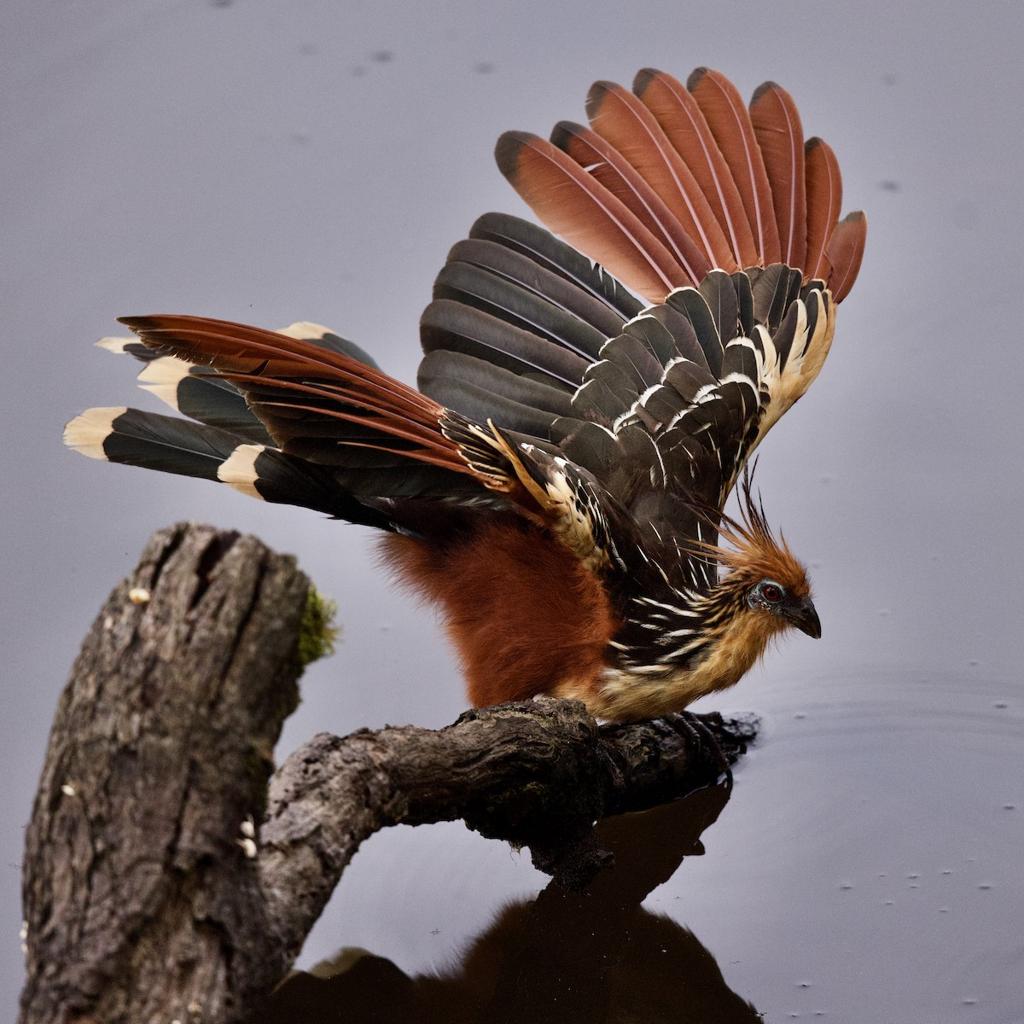
Adult hoatzin perched beside an Amazon river
Image
Image
Image
Image

馃尶 7 Incredible Amazon Animal Stories That Most People Have Never Discovered

Category: Wildlife | Nature | Amazon Rainforest

Tags: Amazon animals, rainforest wildlife, wildlife stories, Amazon biodiversity, jungle creatures, South America, rare animals, nature facts, exotic wildlife, conservation

Meta Description:
Discover seven fresh stories from the Amazon Rainforest, featuring the tiny pygmy marmoset, leafcutter ants, fishing spiders, giant butterflies, and other remarkable wildlife.


7 Incredible Amazon Animal Stories That Most People Have Never Discovered

The Amazon Rainforest is a place where almost every trail leads to a new discovery. Hidden among towering trees, winding rivers, and dense vegetation are thousands of remarkable creatures that rarely appear in wildlife documentaries.

Many of these animals survive using astonishing strategies that have evolved over millions of years. Some seem to walk on water, others farm fungi, and one of the world’s smallest monkeys survives by drinking tree sap.

Let’s explore seven amazing Amazon wildlife stories that deserve far more attention.


1. The Bird With a Digestive System Like a Cow

Alt Text: Adult hoatzin perched beside an Amazon river.

The hoatzin is one of the strangest birds on Earth.

Unlike most birds, it digests leaves through fermentation inside an enlarged crop, much like cows digest grass.

This unusual process allows the hoatzin to survive on a leafy diet that few other birds can use.

Because fermentation produces gas, hoatzins spend much of their time quietly resting after feeding.


2. The Spider That Hunts Without Getting Wet

Alt Text: Fishing spider standing on the surface of calm Amazon water.

Amazon fishing spiders can run across the surface of ponds and slow-moving streams.

Sensitive hairs on their legs detect tiny vibrations made by fish, tadpoles, or aquatic insects below.

When prey comes close, the spider lunges onto the water and captures it with incredible speed.

Unlike web-building spiders, these hunters rely entirely on stealth and quick reflexes.


3. The Lizard That Lives High Above the Ground

Alt Text: Green iguana basking on a rainforest tree branch.

The green iguana spends much of its life in the forest canopy.

Excellent climbers, these reptiles feed mainly on leaves, flowers, and fruit.

If threatened, they sometimes leap from branches more than 15 meters (50 feet) high into rivers below.

Strong swimming skills allow them to escape safely and disappear into dense vegetation.


4. The World’s Smallest Monkey

Alt Text: Tiny pygmy marmoset licking tree sap from bark.

The pygmy marmoset is the smallest monkey on Earth.

Adults weigh little more than an apple.

Instead of relying only on fruit, they use specialized lower teeth to chew holes in tree bark.

They return repeatedly to drink the sweet sap that slowly flows from these tiny openings.

Their miniature size allows them to move easily along branches no thicker than a pencil.


5. The Ants That Grow Their Own Food

Alt Text: Leafcutter ants carrying green leaf pieces across the rainforest floor.

Leafcutter ants do not eat the leaves they carry.

Instead, they use freshly cut vegetation to cultivate a special fungus inside underground chambers.

The fungus becomes their primary food source.

This remarkable farming system has existed for millions of years鈥攍ong before humans developed agriculture.


6. The Butterfly With Wings as Large as a Bird

Alt Text: Giant swallowtail butterfly flying through the Amazon rainforest.

Several giant swallowtail butterflies of the Amazon possess wingspans that rival small birds.

Their graceful flight allows them to travel long distances between flowering trees.

As they feed on nectar, they also pollinate many rainforest plants, helping maintain healthy forest ecosystems.


7. Rainbows Above the Rainforest

Alt Text: Rainbow arching over the Amazon canopy after a tropical rainstorm.

After heavy tropical rain, sunlight often breaks through the clouds, creating brilliant rainbows above the forest canopy.

For many rainforest animals, these storms signal new opportunities.

Frogs begin calling.

Butterflies emerge to warm their wings.

Birds search for insects washed from the trees.

Each rainfall renews life throughout the Amazon.


Why the Amazon Is One of Earth’s Greatest Wonders

Scientists estimate that millions of plant and animal species live within the Amazon Basin.

Every layer鈥攆rom underground soil to towering treetops鈥攕upports specialized wildlife found nowhere else.

Many species have yet to be formally described by science.


Protecting the Rainforest Means Protecting Its Stories

Every Amazon animal contributes to the health of this vast ecosystem.

Leafcutter ants recycle nutrients.

Butterflies pollinate flowers.

Monkeys spread seeds.

Spiders help control insect populations.

Protecting these species preserves one of the planet’s most remarkable natural treasures.


Final Thoughts

The Amazon is filled with animals that challenge our imagination.

Birds digest leaves like cows.

Spiders hunt on water.

Tiny monkeys harvest tree sap.

Ants operate underground farms.

These fascinating stories remind us that the rainforest still holds countless secrets waiting to be explored.


Posted on Leave a comment

馃尶 7 Little-Known Amazon Animal Stories That Are Stranger Than Fiction

https://images.openai.com/static-rsc-4/ikrPwb04n2101zNaDA9vQ5_auCwxqD2hPY5OYt9dyMHqheZ9M8Vat8YOhTYFFkoEMsWhqr4vCvBU7cxHfy_0OO5M1tZG5w7DfyBW05_5rfUZ4BoPTYh69Kn9EDvbdWd-pYK4iR2lK6BSkzLnnQPvyxeaxZTn2BfO-QjReUQ7LQpmvEaUKtrgv7QUdglSkd0H?purpose=fullsize
https://images.openai.com/static-rsc-4/pUTOZbMxJqGOOjwzzmIDECR1U2sNQUlQv387GiL7ufK47AnMicwrKSTbkITV8SvkVvCpiXrJsSoUh74YzEMRMzG5bG1WmXnrESK044hNdUOtzO_LZ90jtj3ejTokCqZLHtWhagylxvfbolCZHDKBIJvaY16jh7zXyN22sjRCRo0kGSsLQSrD01lclTvSfVjT?purpose=fullsize
https://images.openai.com/static-rsc-4/H3nlBozAcX8q2MnB_kqIranAeXfoalIa9OOh1aF_RU9moU2Zf42hTnwi0U9OjPbj1I6pioWNNUvU4DB0Tbrs-vEiDc5cMmgC5Yf5S8Brd2AefjRWvEPdx7sZPoJW4MOWa4Y_SG6ix_5sdItOqyzWBJHw1ye75hSGAna2gG3UMw3p8SzHKFE7tkMoZJeu11k0?purpose=fullsize

7

馃尶 7 Little-Known Amazon Animal Stories That Are Stranger Than Fiction

Category: Wildlife | Nature | Animal Stories

Tags: Amazon rainforest, Amazon wildlife, strange animals, rainforest biodiversity, wildlife facts, jungle creatures, South America, rare animals, exotic wildlife, animal adaptations, nature lovers

Meta Description:
Discover seven fresh and fascinating stories about hidden Amazon wildlife, including the red-faced uakari monkey, lily-walking birds, colorful lanternflies, and mysterious rainforest creatures.


7 Little-Known Amazon Animal Stories That Are Stranger Than Fiction

The Amazon Rainforest is the largest tropical forest on Earth, home to an astonishing variety of wildlife. While famous animals like jaguars and macaws often capture attention, many lesser-known species live extraordinary lives hidden deep within the jungle.

Some have unusual appearances that puzzle scientists, while others possess survival skills found nowhere else in nature.

Here are seven completely new Amazon animal stories perfect for wildlife enthusiasts.


1. The Monkey With the Bright Red Face

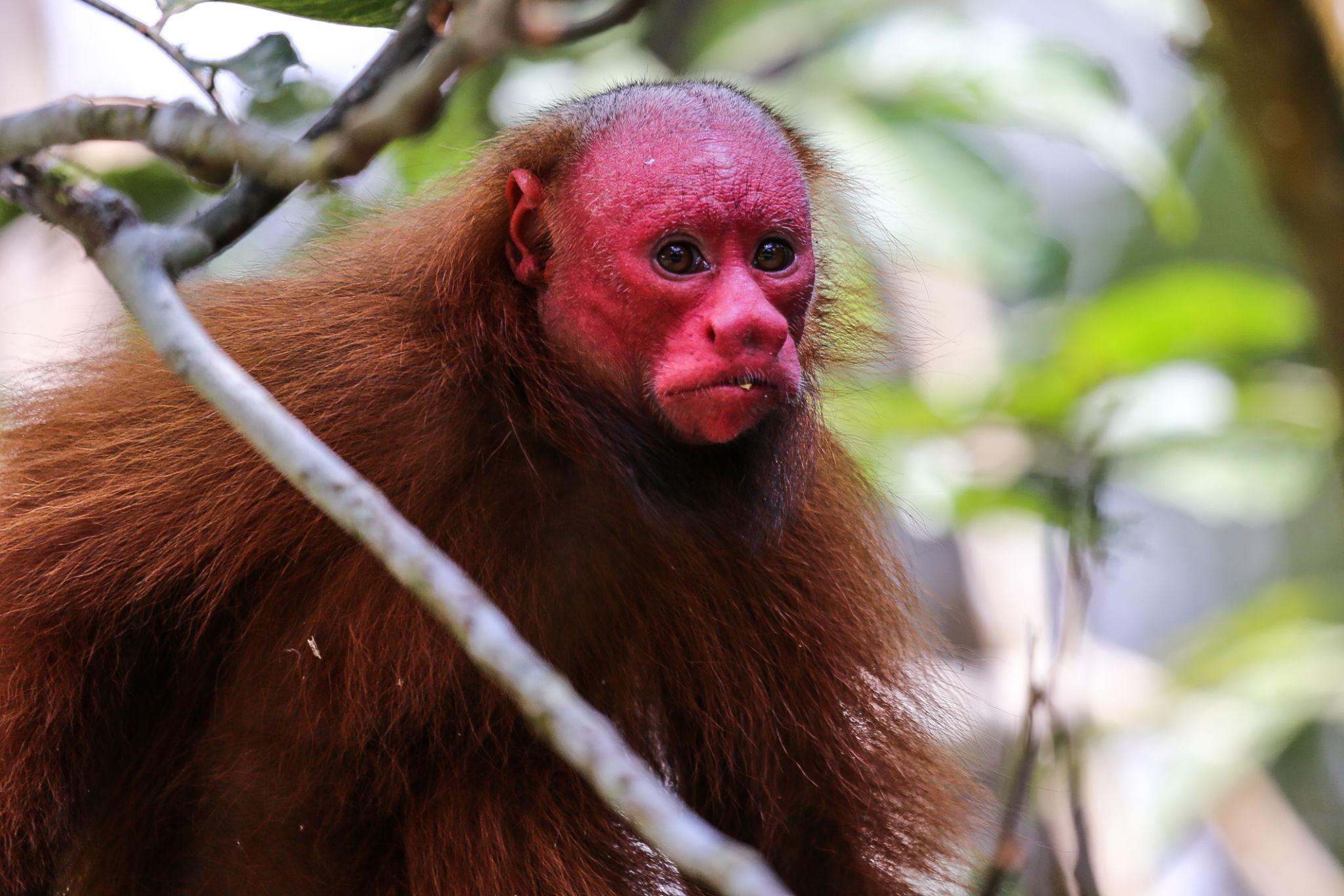
Alt Text: Red-faced bald uakari monkey sitting on a rainforest branch.

The bald uakari is instantly recognizable because of its vivid crimson face.

Unlike many monkeys with furry faces, the uakari’s bare skin helps other monkeys judge its health. A bright red face usually signals a healthy individual, while a pale face may indicate illness.

Living mainly in seasonally flooded forests, these monkeys travel through the treetops searching for seeds, fruit, and nuts that many other animals cannot crack open.

Their powerful jaws allow them to feed on foods that would be inaccessible to most primates.


2. The Baby Bird That Pretends to Be a Broken Branch

Alt Text: Young potoo chick perfectly camouflaged on a tree stump.

Even as chicks, potoos rely on camouflage.

Instead of begging loudly for food, young potoos stretch upward and remain almost completely motionless, resembling broken tree branches.

This remarkable disguise helps them avoid hawks, snakes, and climbing mammals while their parents quietly hunt insects during the night.


3. The Bird That Walks Across Floating Plants

Alt Text: Jacana bird walking effortlessly across floating lily pads.

The Amazon jacana seems to walk on water.

Its secret lies in its extraordinarily long toes, which spread its weight across floating vegetation.

This adaptation allows the bird to walk over lily pads without sinking while searching for insects, seeds, and aquatic invertebrates.

During the breeding season, male jacanas take on the unusual responsibility of incubating eggs and raising the chicks.


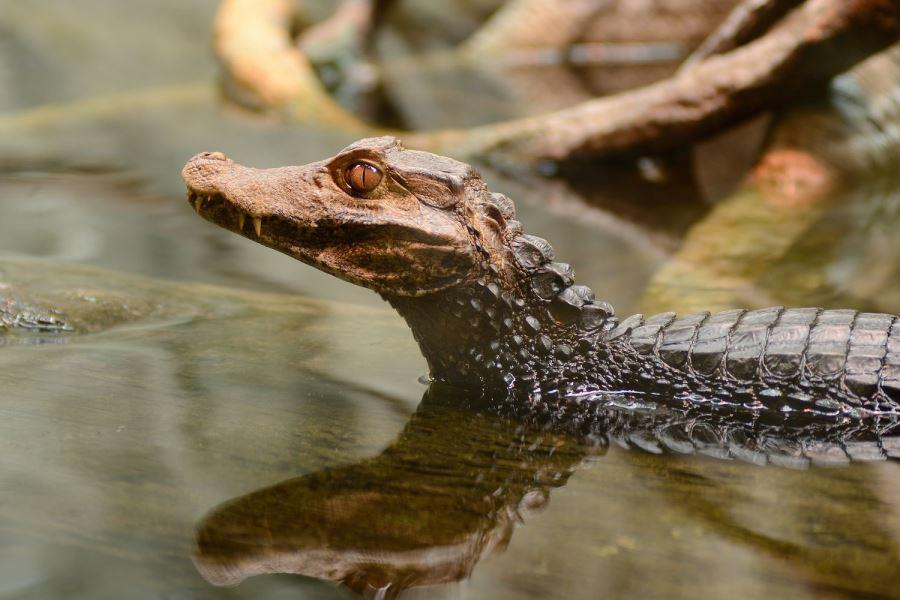
4. The Quiet Crocodilian of Blackwater Streams

Alt Text: Dwarf caiman resting in a shaded Amazon creek.

The Cuvier’s dwarf caiman is one of the smallest crocodilian species in the Amazon.

Unlike its much larger relatives, it prefers narrow forest streams and blackwater creeks hidden beneath dense vegetation.

Its armored body provides excellent protection, allowing it to feed on fish, crustaceans, and amphibians in secluded waterways.

Because of its secretive lifestyle, many people never realize these fascinating reptiles are nearby.


5. The Monkey With a Magnificent Mustache

Alt Text: Emperor tamarin displaying its long white mustache.

The emperor tamarin is famous for its spectacular white mustache.

Despite its regal appearance, this tiny monkey is energetic and playful.

It travels in family groups, communicating with whistles and chirps while searching for fruit, insects, tree sap, and nectar.

Group members cooperate by sharing food and helping care for young monkeys.


6. The Insect That Looks Like It Belongs on Another Planet

Alt Text: Colorful lanternfly resting on tree bark in the Amazon rainforest.

Amazon lanternflies are among the rainforest’s most unusual insects.

Many species display vivid colors, intricate wing patterns, and elongated heads that make them resemble miniature fantasy creatures.

Although once believed to glow at night, scientists have found that lanternflies do not produce light. Their striking appearance likely helps confuse predators or mimic toxic insects.


7. A Forest That Disappears Underwater Every Year

Alt Text: Flooded igap贸 forest with trees standing in calm Amazon water.

During the rainy season, large areas of the Amazon become igap贸 forests鈥攂lackwater forests flooded for months at a time.

Fish weave between submerged trunks.

River turtles feed on fallen fruit.

Birds perch above water where dry forest once stood.

Many Amazon animals have evolved specifically for this seasonal transformation, making the flooded forest one of the planet’s most extraordinary ecosystems.


Why Scientists Keep Returning to the Amazon

Every scientific expedition uncovers new information about Amazon wildlife. From unusual behaviors to entirely new species, the rainforest continues to surprise researchers.

Modern technologies such as camera traps, satellite mapping, and environmental DNA sampling are revealing hidden animals that were once almost impossible to study.


Conserving a Global Treasure

The Amazon is more than a rainforest鈥攊t is one of Earth’s greatest reservoirs of biodiversity. Protecting its forests, rivers, and wetlands helps preserve thousands of species found nowhere else on the planet.

Healthy ecosystems also support local communities, regulate regional climates, and contribute to the global environment.


Final Thoughts

From red-faced monkeys and mustached tamarins to birds that walk across floating plants, the Amazon is filled with wildlife unlike anywhere else on Earth.

These incredible animals remind us that even after centuries of exploration, the rainforest still holds countless mysteries waiting to be discovered.


WordPress Image SEO

ImageFile NameAlt Text
1bald-uakari-red-face.jpgRed-faced bald uakari monkey perched in the Amazon rainforest
2potoo-chick-camouflage.jpgYoung potoo chick blending into a tree branch
3amazon-jacana-lily-pads.jpgJacana bird walking across floating lily pads
4dwarf-caiman-blackwater.jpgCuvier’s dwarf caiman resting in a blackwater Amazon creek
5emperor-tamarin-mustache.jpgEmperor tamarin showing its long white mustache
6amazon-lanternfly.jpgColorful Amazon lanternfly resting on rainforest tree bark
7igapo-flooded-forest.jpgSeasonal flooded igap贸 forest in the Amazon rainforest
Posted on Leave a comment

馃尶 7 Hidden Amazon Animal Stories That Seem Too Strange to Be Real

https://images.openai.com/static-rsc-4/1ne3fW-hEf9NI-qd7NZICQyeO5zWAHKNyHrwAooEOl-OdMZzcCg7QqG2f9EYCNycGHBSsvDkFqHyEutsKY1cldF0LVwqVUON54zFoWondoVIrc0rgiqOM7L6HN9VRAg_yhj_1xXUBmNWpu9bU6ke1eletgpDLboESW3b0d9biER8eZKoq-42m0ckq905_GOb?purpose=fullsize
https://images.openai.com/static-rsc-4/GMrD8TS7KvXHANavIHp9gnWCHnsaovn3T5dPGKXAhjvMIE1lQkazWS3o7FZmFhvJ5zVk0ASpbG1TISAZnRizA2_rMn2AqXMKok8c1NSU3cxlrNrtLEgWGnc49UJGKj_EkaMQg9MYTpzbxCmPuXOj8H7kd2ScB94rHcyNEGe182y4q7rxuTgrbcg_o49YHDhk?purpose=fullsize
https://images.openai.com/static-rsc-4/ZWHIDwMhWRjtnL-xanoY3CXKFGgYZGEJt2UYSPA7mga8GRecc9zlm4mTJ9Twr9or3o6vM-7EXSWIR5FGSTUX2qmbbuWoNm-pCOrplHr52Ho8nsmmBbd_PStwZmziyH_CPFRi7mKLXkKNez3TpTSHDGcAE9QMIHzpaNy7fQEcd6vxlmwkOPXVsuEq1fdtaUys?purpose=fullsize

4

馃尶 7 Hidden Amazon Animal Stories That Seem Too Strange to Be Real

Category: Wildlife | Nature | Amazon Rainforest

Tags: Amazon wildlife, Amazon rainforest, strange animals, jungle creatures, rare animals, rainforest biodiversity, wildlife facts, South America, exotic animals, nature stories, Amazon ecosystem

Meta Description:
Journey deep into the Amazon Rainforest and discover seven little-known animal stories, from the bizarre matamata turtle to the tiny pygmy marmoset and the remarkable army ants that reshape the forest floor.


7 Hidden Amazon Animal Stories That Seem Too Strange to Be Real

The Amazon Rainforest is often called the most biologically diverse place on Earth. While jaguars, macaws, and anacondas are famous worldwide, countless lesser-known animals quietly live extraordinary lives hidden beneath the rainforest canopy.

Some are masters of disguise. Others survive by working together in enormous colonies. A few have evolved appearances so unusual that they seem almost prehistoric.

Here are seven fresh and fascinating stories about Amazon animals that deserve far more attention.


1. The Turtle That Looks Like a Pile of Leaves

Alt Text: Matamata turtle camouflaged among leaves underwater in the Amazon.

If you saw a matamata turtle underwater, you might mistake it for a pile of dead leaves.

Its rough shell, flattened head, and ragged skin flaps help it blend perfectly with the riverbed. Instead of chasing prey, the turtle waits patiently until a fish swims close.

Then, in a split second, it opens its huge mouth and creates a powerful suction that pulls the fish inside.

This unique hunting technique allows the matamata to catch prey without swimming fast.


2. The Bird With an Extraordinary Hairdo

Alt Text: Male umbrella bird displaying its large feathered crest.

The Amazon Umbrellabird is famous for its dramatic appearance.

The male has a large feathered crest that hangs over its head like an umbrella. It also possesses a long inflatable throat pouch that produces deep booming calls during the breeding season.

These sounds travel long distances through the dense rainforest, helping females locate potential mates.

Although its appearance may seem unusual, the umbrellabird plays an important role by spreading the seeds of rainforest fruits.


3. The Army That Never Stops Marching

Alt Text: Massive column of Amazon army ants moving across the rainforest floor.

Army ants don’t build permanent nests.

Instead, millions of ants travel together in enormous moving colonies that constantly search for food.

As they march across the forest floor, insects, spiders, frogs, and even small reptiles flee their path.

Interestingly, many birds follow these swarms鈥攏ot to eat the ants, but to catch the insects escaping from them.

This creates one of the Amazon’s most fascinating examples of animals benefiting from each other’s behavior.


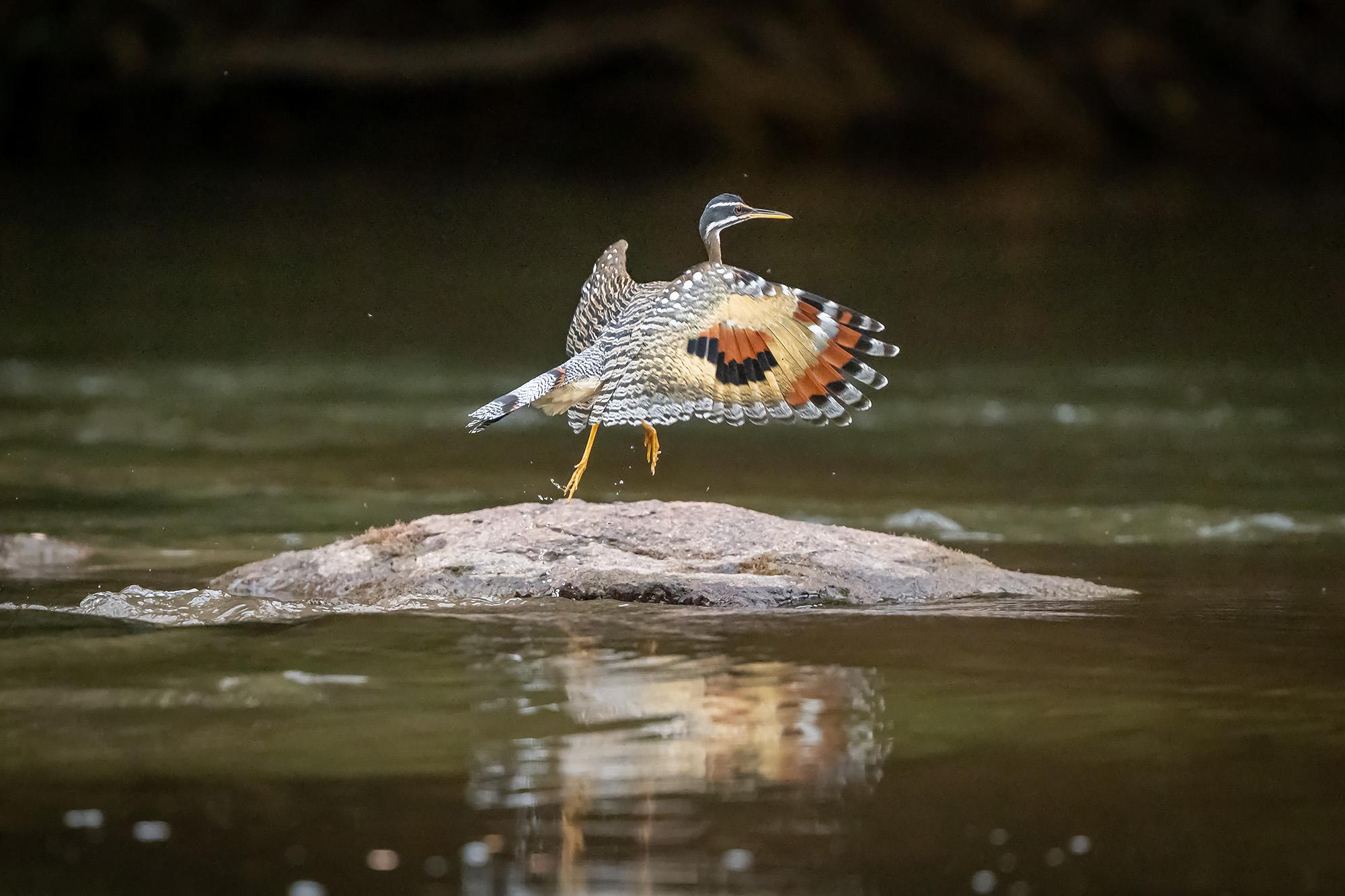
4. The Bird That Opens Wings Like a Butterfly

Alt Text: Sunbittern displaying colorful patterned wings beside an Amazon stream.

The sunbittern appears fairly ordinary until it feels threatened.

Suddenly, it spreads its wings to reveal spectacular patterns resembling enormous butterfly eyes.

This startling display often surprises predators long enough for the bird to escape.

Unlike many rainforest birds, the sunbittern spends much of its time walking quietly beside streams searching for insects, small fish, and frogs.


5. The World’s Smallest Monkey

Alt Text: Tiny pygmy marmoset clinging to a rainforest tree branch.

The pygmy marmoset is the smallest monkey on Earth.

Adults weigh little more than an apple and can comfortably sit in the palm of a human hand.

Despite their tiny size, these monkeys are incredibly agile.

They leap between branches, feed on tree sap, insects, and fruit, and communicate using high-pitched whistles that are often too faint for humans to hear.

Living in close family groups helps protect them from predators.


6. The Insect That Disappears Into Leaves

Alt Text: Leaf-mimicking katydid resting on rainforest vegetation.

Some Amazon katydids have evolved wings that look exactly like damaged leaves.

Their wings display:

  • Fake leaf veins
  • Brown spots resembling decay
  • Tiny holes that imitate insect damage

Even experienced researchers sometimes overlook them.

This extraordinary camouflage allows the insects to avoid hungry birds, reptiles, and mammals.


7. Every Fallen Tree Creates New Life

Alt Text: Fallen tree in the Amazon rainforest covered with moss, fungi, and insects.

When a giant rainforest tree falls, its story isn’t over.

Within days, fungi begin breaking down the wood.

Beetles tunnel inside.

Ant colonies move in.

Tiny frogs hide beneath damp bark.

Young plants sprout from the decaying trunk, using its nutrients to begin new life.

Ecologists call these fallen logs “nurse trees” because they support hundreds of species during decomposition.

In the Amazon, even death becomes the beginning of another thriving ecosystem.


The Endless Wonders of the Amazon

Scientists believe that thousands of Amazon species remain undiscovered. Every expedition into remote forests reveals new insects, fish, fungi, amphibians, or plants that have never before been documented.

Modern tools such as camera traps, drones, and environmental DNA sampling continue to uncover hidden wildlife, proving that the Amazon still holds countless secrets waiting to be explored.


Why Conservation Matters

The remarkable animals of the Amazon depend on healthy forests and clean rivers. Habitat loss, illegal logging, mining, and climate change threaten many of these unique species.

Protecting the rainforest safeguards not only its wildlife but also one of the planet’s most important ecosystems鈥攐ne that helps regulate climate, store carbon, and support millions of people.


Conclusion

The Amazon Rainforest is a place where nature constantly challenges our imagination. A turtle disguised as leaves, a monkey no larger than a squirrel, birds with dazzling displays, and insects that vanish into foliage all demonstrate the incredible creativity of evolution.

These hidden stories remind us that some of the most extraordinary wildlife on Earth is still waiting quietly beneath the emerald canopy of the Amazon.