Tag: Edge Computing

  • 6G Explained: How the Next Generation of Wireless Technology Could Transform the World

    6G Explained: How the Next Generation of Wireless Technology Could Transform the World

    https://images.openai.com/static-rsc-4/1D3IjvbqmdL8G7qaXtdHiJ3vsfrLsOZIK7TJRJBlbpF3mORzgRiHSWSfRICet4kRNnZ_V4c_I-DtSxQSDQsXDulxoaYWAOXw4oKkE1OMeJbnIdw5A3ZATsWItGk7yXDbE8ukD_Ksr6ptKDvh5ms3ktXlfrPMrN31ogAUKOiiJ8LbOWjsgRC158nDnciei9SL?purpose=fullsize
    https://images.openai.com/static-rsc-4/DQ1gYXAVwnhJLPGtkb2yDrDNBXxhP6ymsHzryvLGJSG35a3WX-7Pyx2sz07UEUpJ83DW4UGQeCVToqQrzISRfAp57NgiTJ282d9cXlOGvNZAGrNyp7pTbYVWqVSBFZdE1vbWPhhspEiCK1NJCHUyD5d62CHbD8TWaJKzPj-gitf8qQRGBOi_mYwSLQQpprOq?purpose=fullsize
    https://images.openai.com/static-rsc-4/iOYL7_FQjKE5P-hXJm2skf95H2cZ3GSh9BsrP_wWRPvVCjedLLLahQ2cnnPekcAGHQ-BJB4CGyfWSUhgoUVcFF7jYoGOP7xcOZzzFzCmpOSUT4UejtaG8dlC75S4OSEc4CW1InHxMr7_Ap6aM5b-xy2pXOWboT4Ya519Jgvx6Dn0TXELCaRStIV-032dRCa9?purpose=fullsize

    7

    Image Alt Text

    Image 1: Futuristic smart city powered by next-generation 6G wireless communication.

    Image 2: Telecommunications engineers testing advanced 6G networking equipment.

    Image 3: Artificial intelligence managing an intelligent 6G communications network.

    Image 4: Connected smart city infrastructure using ultra-fast wireless technology.

    Image 5: Autonomous vehicles communicating through future 6G mobile networks.

    Image 6: Modern telecommunications tower supporting next-generation wireless connectivity.

    Image 7: Concept illustration of holographic communication enabled by future 6G technology.


    6G Is Already in Development: What the Next Generation of Wireless Technology Could Mean for the World

    The rollout of 5G networks is still expanding across many countries, bringing faster mobile internet, lower latency, and improved support for connected devices. Yet while consumers and businesses continue adopting 5G, researchers, universities, telecommunications companies, and governments have already begun laying the groundwork for 6G, the next generation of wireless communication technology.

    Although commercial 6G networks are not expected until the 2030s, early research suggests they could deliver capabilities far beyond today’s mobile systems. Rather than simply increasing internet speeds, 6G aims to create an intelligent communication ecosystem where artificial intelligence, cloud computing, edge computing, satellites, and billions of connected devices work together seamlessly.

    From immersive virtual experiences and autonomous transportation to smart factories and advanced healthcare, 6G has the potential to reshape nearly every aspect of the digital economy. While many technical challenges remain, the technology represents an ambitious vision for the future of global connectivity.


    What Is 6G?

    6G is the proposed sixth generation of mobile wireless communication technology that will eventually succeed 5G.

    Like previous generations of mobile networks, 6G is expected to improve:

    • Data transmission speeds
    • Network capacity
    • Reliability
    • Energy efficiency
    • Device connectivity
    • Response times

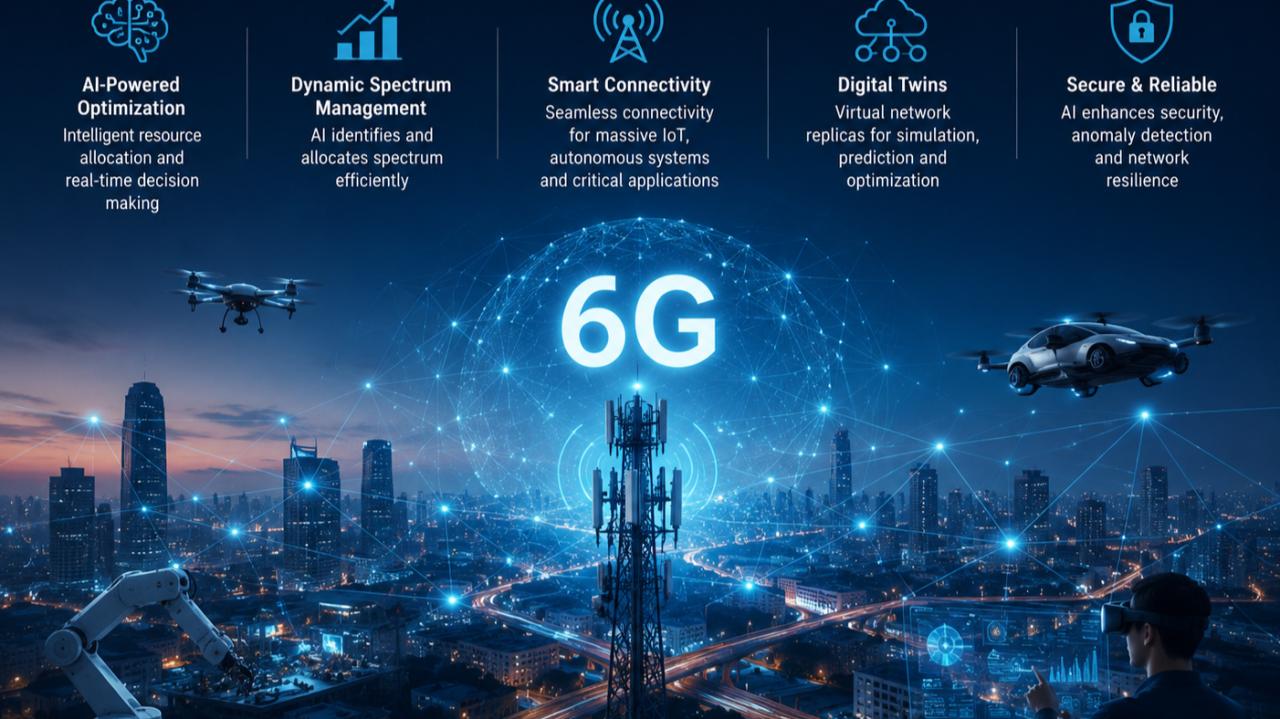
    However, 6G also seeks to integrate advanced artificial intelligence directly into the communication network itself, allowing systems to optimize performance automatically.


    How 6G Could Differ From 5G

    While 5G introduced significant improvements over 4G, researchers believe 6G will extend wireless technology in several new directions.

    Potential advancements include:

    • Higher data speeds
    • Lower latency
    • AI-native network management
    • Better energy efficiency
    • Expanded satellite integration
    • Improved support for immersive digital experiences

    Rather than focusing solely on smartphones, 6G is expected to support a much broader ecosystem of intelligent devices and services.

    Artificial Intelligence at the Core

    One of the defining characteristics of 6G is the integration of artificial intelligence throughout the network.

    AI may help:

    • Optimize traffic routing
    • Predict network congestion
    • Improve cybersecurity
    • Allocate bandwidth dynamically
    • Reduce energy consumption
    • Detect technical faults automatically

    This intelligent network management could improve both performance and reliability while reducing operational costs.


    Supporting Massive Internet of Things (IoT)

    The number of connected devices worldwide continues to grow rapidly.

    Future 6G networks are expected to support billions of connected systems, including:

    • Smart appliances
    • Industrial sensors
    • Autonomous robots
    • Agricultural monitoring equipment
    • Medical devices
    • Transportation infrastructure

    Higher capacity will allow these devices to communicate more efficiently without overwhelming network resources.


    Enabling Smart Cities

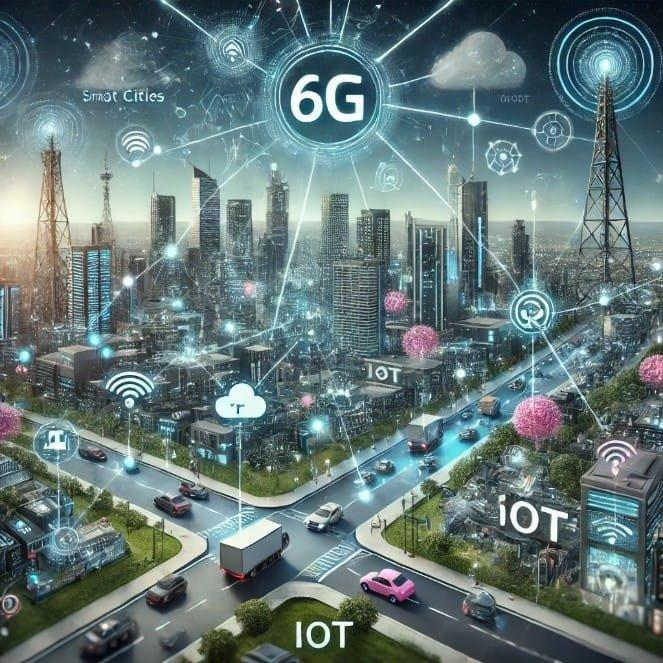
    Smart cities rely on continuous communication between infrastructure, vehicles, and public services.

    6G may improve:

    • Intelligent traffic management
    • Public transportation systems
    • Environmental monitoring
    • Emergency response
    • Energy distribution
    • Smart lighting

    These capabilities could help cities operate more efficiently while improving sustainability and quality of life.


    Transforming Healthcare

    Healthcare is another sector expected to benefit from advanced wireless communication.

    Possible applications include:

    • Remote patient monitoring
    • AI-assisted diagnostics
    • Connected medical devices
    • High-quality telemedicine
    • Emergency medical communications
    • Smart hospitals

    Reliable, low-latency networks are especially important for transmitting medical information quickly and securely.


    Autonomous Transportation

    Future transportation systems may depend heavily on real-time communication.

    6G could support:

    • Self-driving vehicles
    • Connected traffic systems
    • Autonomous delivery robots
    • Smart logistics
    • Railway automation
    • Drone coordination

    Rapid communication between vehicles and infrastructure may improve both safety and traffic efficiency.


    Immersive Digital Experiences

    Researchers believe 6G could enable new forms of digital interaction.

    Potential applications include:

    • High-resolution virtual reality
    • Augmented reality collaboration
    • Holographic communication
    • Digital twins
    • Immersive education
    • Interactive entertainment

    These technologies require extremely fast, reliable wireless connections with minimal delays.


    Challenges Facing 6G Development

    Although research is progressing, significant obstacles remain.

    Spectrum Availability

    New frequency bands may require advanced hardware and international coordination.

    Infrastructure Costs

    Building global 6G networks will require substantial investment.

    Energy Efficiency

    Supporting billions of connected devices while reducing energy consumption presents a major engineering challenge.

    Security

    As networks become more intelligent and interconnected, cybersecurity becomes increasingly important.

    Researchers are actively exploring solutions to these issues.


    When Will 6G Arrive?

    Most experts expect commercial 6G deployment to begin sometime during the early 2030s.

    Before widespread adoption, researchers must:

    • Finalize technical standards
    • Develop compatible hardware
    • Test network performance
    • Improve energy efficiency
    • Expand supporting infrastructure

    Until then, 5G will continue evolving through ongoing upgrades and expanded deployment.


    The Future of Global Connectivity

    6G represents more than simply another increase in internet speed.

    It reflects a broader vision in which communication networks become intelligent platforms supporting artificial intelligence, cloud services, robotics, healthcare, transportation, manufacturing, and smart cities.

    As digital transformation accelerates, future wireless infrastructure will likely become an increasingly important foundation for economic growth and technological innovation.


    Final Thoughts

    Although 6G remains under development, it has already captured the attention of researchers and technology companies worldwide. By combining advanced wireless communication with artificial intelligence, edge computing, satellite integration, and next-generation networking, 6G has the potential to redefine how people, devices, and infrastructure interact.

    While commercial deployment is still several years away, the research taking place today will shape the digital ecosystems of tomorrow. From autonomous transportation and smart cities to immersive education and connected healthcare, 6G could become one of the most influential technologies of the coming decade.

    As the world prepares for the next chapter in wireless communication, 6G offers a glimpse of a future where connectivity is faster, smarter, and more deeply integrated into everyday life than ever before.

  • Invisible Computers Are Coming: How Ambient Computing Is Quietly Transforming Everyday Life

    Invisible Computers Are Coming: How Ambient Computing Is Quietly Transforming Everyday Life

    Invisible Computers Are Coming: How Ambient Computing Is Quietly Transforming Everyday Life


    Image
    Image
    Image
    Image
    Image
    Image
    Image

    Image Alt Text

    Image 1: Smart home demonstrating ambient computing with interconnected AI-powered devices.

    Image 2: Family interacting naturally with intelligent home technology and voice assistants.

    Image 3: Modern office using ambient computing for seamless automation and productivity.

    Image 4: Edge computing sensors collecting real-time data inside a connected building.

    Image 5: Wearable smart devices connected through an ambient computing ecosystem.

    Image 6: Digital visualization of AI coordinating multiple connected devices in real time.

    Image 7: Futuristic home featuring invisible computing integrated into everyday living.


    Invisible Computers Are Coming: How Ambient Computing Is Quietly Transforming Everyday Life

    For decades, computers have become progressively smaller and more powerful. Massive desktop machines evolved into laptops, tablets, smartphones, and wearable devices. Today, another technological shift is underway—one in which computers become less visible while remaining constantly available. This emerging concept, known as ambient computing, is changing how people interact with technology by embedding intelligence into everyday environments rather than requiring users to actively operate individual devices.

    Instead of opening an application or manually controlling every connected gadget, ambient computing enables devices to work together intelligently in the background. Artificial intelligence (AI), cloud computing, edge computing, wireless sensors, and the Internet of Things (IoT) allow homes, offices, vehicles, and public spaces to respond automatically to changing conditions and user preferences.

    Although many ambient computing technologies already exist in early forms, experts believe the coming decade will see far deeper integration. From smart lighting and climate control to healthcare monitoring and intelligent workplaces, ambient computing has the potential to make technology more seamless, efficient, and personalized.


    What Is Ambient Computing?

    Ambient computing is a technology approach in which digital services are embedded into the surrounding environment and operate with minimal direct interaction.

    Instead of relying on a single computer, users interact with an ecosystem of connected devices that communicate automatically.

    These systems may include:

    • Smart speakers
    • Sensors
    • Wearable devices
    • Cameras
    • Smart displays
    • Connected appliances
    • Mobile devices
    • Cloud platforms
    • AI assistants

    The goal is to provide helpful digital services naturally without requiring constant attention from users.


    How Ambient Computing Works

    Ambient computing combines several advanced technologies.

    Artificial Intelligence

    AI analyzes data and makes decisions based on user behavior and environmental conditions.

    Internet of Things (IoT)

    Connected devices continuously exchange information through wireless networks.

    Edge Computing

    Some information is processed locally on nearby devices, reducing delays and improving responsiveness.

    Cloud Computing

    Cloud platforms manage larger datasets, software updates, and long-term analytics.

    Together, these technologies create intelligent environments that respond automatically to changing situations.


    Smarter Homes

    One of the most familiar applications of ambient computing is the smart home.

    Connected devices can coordinate activities such as:

    • Adjusting lighting
    • Regulating temperature
    • Managing security systems
    • Controlling entertainment devices
    • Monitoring energy consumption

    Rather than controlling each device individually, homeowners benefit from systems that automatically adapt to routines and preferences.


    Transforming the Workplace

    Businesses are also adopting ambient computing technologies.

    Smart offices may automatically:

    • Reserve meeting rooms
    • Adjust lighting levels
    • Optimize heating and cooling
    • Monitor occupancy
    • Improve energy efficiency
    • Support hybrid work environments

    Employees spend less time managing technology and more time focusing on productive work.


    Healthcare Applications

    Healthcare organizations are exploring ambient computing to improve patient care.

    Possible applications include:

    • Remote patient monitoring
    • Smart hospital rooms
    • Connected medical devices
    • Elderly care systems
    • Medication reminders
    • Health data collection

    Wearable sensors can continuously monitor health indicators and notify caregivers when unusual patterns are detected.

    These technologies support healthcare professionals while encouraging independent living for many patients.


    Retail and Customer Experience

    Retail businesses are integrating ambient computing into stores.

    Examples include:

    • Smart shelves
    • Automated inventory systems
    • Personalized digital displays
    • Contactless checkout
    • Indoor navigation
    • Customer analytics

    These systems help improve operational efficiency while creating more convenient shopping experiences.


    Transportation and Smart Cities

    Ambient computing also plays an important role in urban infrastructure.

    Connected systems can help manage:

    • Traffic signals
    • Parking availability
    • Public transportation
    • Street lighting
    • Environmental monitoring
    • Emergency response

    Smart cities use data collected from sensors to improve public services while reducing congestion and energy consumption.


    Benefits of Ambient Computing

    As adoption grows, ambient computing offers several advantages.

    Convenience

    Technology becomes available when needed without constant manual control.

    Efficiency

    Connected devices coordinate automatically, reducing unnecessary energy use.

    Personalization

    AI systems learn user preferences over time.

    Accessibility

    Voice control and automation may improve usability for people with different accessibility needs.

    Productivity

    Routine digital tasks become increasingly automated.


    Challenges and Concerns

    Despite its potential, ambient computing also raises important questions.

    Privacy

    Connected devices collect significant amounts of data.

    Organizations must implement strong privacy protections and transparent data policies.

    Cybersecurity

    As more devices connect to networks, protecting systems from unauthorized access becomes increasingly important.

    Interoperability

    Devices from different manufacturers must communicate effectively.

    Reliability

    Automated systems must continue functioning safely even during network interruptions or hardware failures.

    Addressing these issues will be essential for long-term public trust.


    The Future of Ambient Computing

    Industry experts expect ambient computing to expand significantly over the next decade.

    Future developments may include:

    • AI-powered workplaces
    • Smarter wearable devices
    • Intelligent healthcare systems
    • Connected vehicles
    • Personalized retail experiences
    • Advanced smart city infrastructure
    • Energy-efficient buildings
    • More natural human-computer interaction

    Rather than replacing existing computers, ambient computing will extend digital intelligence into everyday environments.


    Ambient Computing and Artificial Intelligence

    Artificial intelligence serves as the decision-making engine behind ambient computing.

    Machine learning algorithms analyze patterns from sensors, devices, and user interactions to improve automation over time.

    As AI becomes more capable, ambient computing environments will likely become increasingly adaptive while requiring less direct user input.

    However, developers continue emphasizing responsible AI design to ensure transparency, privacy, and user control remain central priorities.


    Final Thoughts

    Ambient computing represents a significant evolution in the relationship between people and technology. Instead of demanding constant attention, computers are becoming integrated into the background of daily life, quietly assisting with routine tasks and responding intelligently to changing environments.

    Powered by artificial intelligence, IoT, cloud computing, and edge computing, ambient systems are already beginning to transform homes, workplaces, healthcare, retail, and transportation. While challenges related to privacy, cybersecurity, and interoperability remain, continued innovation is making these systems more reliable and practical.

    As technology becomes increasingly seamless, ambient computing may redefine how people interact with the digital world. Rather than sitting in front of computers, future generations may simply live and work in environments where intelligent technology is always present, always connected, and almost invisible.


  • Edge AI Explained: Why Local Artificial Intelligence Is Transforming Smart Devices

    Edge AI Explained: Why Local Artificial Intelligence Is Transforming Smart Devices

    🔥 Viral Title

    Edge AI Is the Next Big Tech Revolution: Why Smart Devices Are Becoming Faster, Safer, and More Intelligent


    Image
    Image
    Image
    Image
    Image
    Image
    Image

    Image Alt Text

    Image 1: AI-powered smart security camera processing video locally with edge computing.

    Image 2: Engineers developing advanced edge AI semiconductor chips in a research laboratory.

    Image 3: Smart factory using edge AI to automate manufacturing and monitor equipment.

    Image 4: Autonomous delivery robot navigating city streets using edge artificial intelligence.

    Image 5: Wearable health monitoring device with built-in AI processing capabilities.

    Image 6: Smart home devices connected through edge AI technology for faster automation.

    Image 7: Futuristic illustration of edge AI connecting intelligent devices across a digital ecosystem.


    Edge AI Is the Next Big Tech Revolution: Why Smart Devices Are Becoming Faster, Safer, and More Intelligent

    Artificial intelligence has rapidly become one of the most influential technologies of the modern era. From virtual assistants and recommendation systems to autonomous vehicles and smart factories, AI is transforming industries around the world. Much of this progress has been powered by cloud computing, where data is sent to remote servers for processing before results are returned to users.

    However, a new approach is gaining momentum—Edge AI. Instead of sending every piece of information to distant data centers, Edge AI enables devices to process data locally, right where it is generated. This shift reduces delays, improves privacy, lowers bandwidth requirements, and allows intelligent systems to respond almost instantly.

    From smartphones and wearable health monitors to industrial robots and autonomous drones, Edge AI is helping create a new generation of faster, smarter, and more reliable devices. As computing hardware becomes more powerful and energy efficient, many experts believe Edge AI will become one of the defining technologies of the next decade.


    What Is Edge AI?

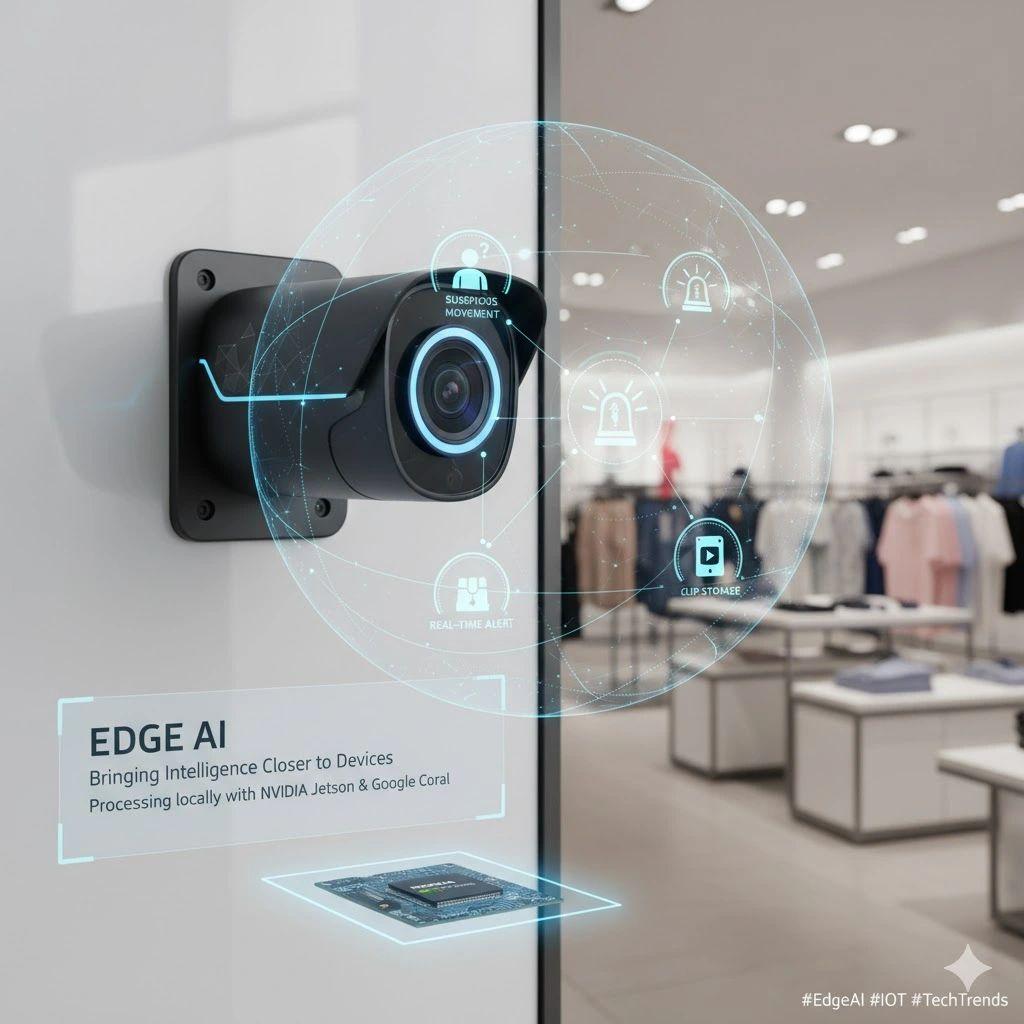
    Edge AI combines artificial intelligence with edge computing, allowing AI models to run directly on local devices rather than relying entirely on cloud servers.

    An “edge device” can be almost any connected product, including:

    • Smartphones
    • Smart cameras
    • Security systems
    • Medical devices
    • Factory equipment
    • Autonomous robots
    • Smart speakers
    • Wearable fitness trackers
    • Connected vehicles

    Instead of transmitting raw data to a remote server, the device analyzes information locally using built-in AI processors.

    This enables much faster decision-making while reducing dependence on constant internet connectivity.


    How Edge AI Works

    A typical Edge AI system follows several steps:

    1. Sensors collect information from the surrounding environment.
    2. Built-in processors analyze the data using AI algorithms.
    3. The device immediately determines the appropriate response.
    4. Only selected information may be sent to the cloud for storage, updates, or long-term analysis.

    This local processing dramatically reduces the time required to complete many AI tasks.

    For example, a smart security camera can recognize a person approaching a front door without continuously uploading video footage to remote servers.


    Why Speed Matters

    One of the greatest advantages of Edge AI is low latency.

    Cloud-based AI often requires data to travel across the internet before processing begins. Even small delays can become significant for applications requiring immediate responses.

    Edge AI minimizes this delay by performing calculations directly on the device.

    Real-time processing is especially valuable for:

    • Autonomous vehicles
    • Industrial automation
    • Medical monitoring
    • Smart manufacturing
    • Robotics
    • Drone navigation

    In these situations, even a fraction of a second can make a meaningful difference.


    Improving Privacy and Security

    Privacy is becoming increasingly important as more devices collect personal information.

    Edge AI helps protect user privacy by processing much of that information locally instead of sending everything to external servers.

    Examples include:

    • Facial recognition performed on a smartphone.
    • Voice commands processed inside a smart speaker.
    • Health data analyzed on wearable devices.
    • Home security cameras identifying familiar faces without uploading continuous video streams.

    Keeping sensitive information closer to the user reduces exposure while supporting stronger data protection strategies.


    Transforming Smart Homes

    Modern homes contain growing numbers of connected devices.

    Edge AI enables smart home systems to respond more quickly and intelligently.

    Examples include:

    • Security cameras recognizing visitors.
    • Smart thermostats adjusting temperatures automatically.
    • Lighting systems responding to occupancy.
    • Voice assistants understanding commands faster.
    • Smart appliances optimizing energy use.

    Because processing occurs locally, many features continue working even when internet connectivity is temporarily unavailable.


    Healthcare Applications

    Healthcare is another field benefiting from Edge AI.

    Wearable devices can monitor heart rate, sleep quality, blood oxygen levels, and physical activity while analyzing information directly on the device.

    Potential applications include:

    • Detecting irregular heart rhythms.
    • Monitoring chronic conditions.
    • Supporting elderly care.
    • Providing fitness insights.
    • Alerting users to unusual health patterns.

    By processing data locally, wearable devices can deliver immediate feedback while helping reduce unnecessary network traffic.


    Industrial Automation

    Factories are increasingly adopting Edge AI to improve productivity and reliability.

    Smart manufacturing systems use connected sensors to monitor equipment in real time.

    AI algorithms can:

    • Detect unusual vibrations.
    • Predict maintenance needs.
    • Identify production defects.
    • Optimize energy consumption.
    • Improve worker safety.
    • Reduce equipment downtime.

    These capabilities help manufacturers improve efficiency while minimizing unexpected production interruptions.


    Smarter Transportation

    Vehicles are becoming increasingly connected and intelligent.

    Many advanced driver-assistance systems rely on Edge AI to process information from cameras, radar, and sensors almost instantly.

    Examples include:

    • Automatic emergency braking.
    • Lane-keeping assistance.
    • Pedestrian detection.
    • Traffic sign recognition.
    • Adaptive cruise control.

    Because these systems must react within milliseconds, local AI processing is essential.

    Future autonomous transportation systems are also expected to rely heavily on Edge AI technologies.


    Challenges Facing Edge AI

    Although Edge AI offers significant advantages, several challenges remain.

    Hardware Limitations

    Small devices have limited processing power and battery capacity compared with large cloud data centers.

    Software Optimization

    AI models must be carefully designed to operate efficiently on compact hardware.

    Security

    Local devices still require strong protection against unauthorized access and cyber threats.

    Updates

    Manufacturers must provide secure software updates to ensure devices continue improving over time.

    Researchers continue developing specialized AI chips that deliver higher performance while consuming less energy.


    The Future of Edge AI

    Experts expect Edge AI to become increasingly common across both consumer and industrial applications.

    Future developments may include:

    • More powerful AI processors.
    • Longer battery life.
    • Improved energy efficiency.
    • Greater support for robotics.
    • Expanded smart city infrastructure.
    • Smarter wearable devices.
    • Advanced autonomous machines.
    • Better collaboration between cloud and edge computing.

    Rather than replacing cloud computing, Edge AI is expected to complement it by performing time-sensitive tasks locally while leaving large-scale analysis to cloud platforms.


    Final Thoughts

    Edge AI is reshaping the future of intelligent technology by bringing artificial intelligence closer to where data is created. This approach enables devices to make faster decisions, improve privacy, reduce internet dependence, and deliver more responsive user experiences.

    From healthcare and manufacturing to transportation and smart homes, Edge AI is already demonstrating its potential to transform everyday life. As specialized processors continue improving and AI software becomes more efficient, the number of intelligent edge devices is expected to grow rapidly.

    The next wave of innovation will not depend solely on larger cloud data centers. Instead, it will increasingly rely on billions of smart devices capable of thinking, analyzing, and responding locally. Edge AI represents an important step toward a future where intelligence is embedded seamlessly into the technology people use every day.