The AI PC Revolution Has Begun: Why the Next Generation of Computers Will Think Smarter, Work Faster, and Protect Your Privacy


Image Alt Text
Image 1: Modern AI-powered laptop featuring a built-in neural processing unit for local artificial intelligence tasks.
Image 2: Professional using an AI-enabled computer for productivity and creative work.
Image 3: Engineers testing next-generation AI processors inside a semiconductor research laboratory.
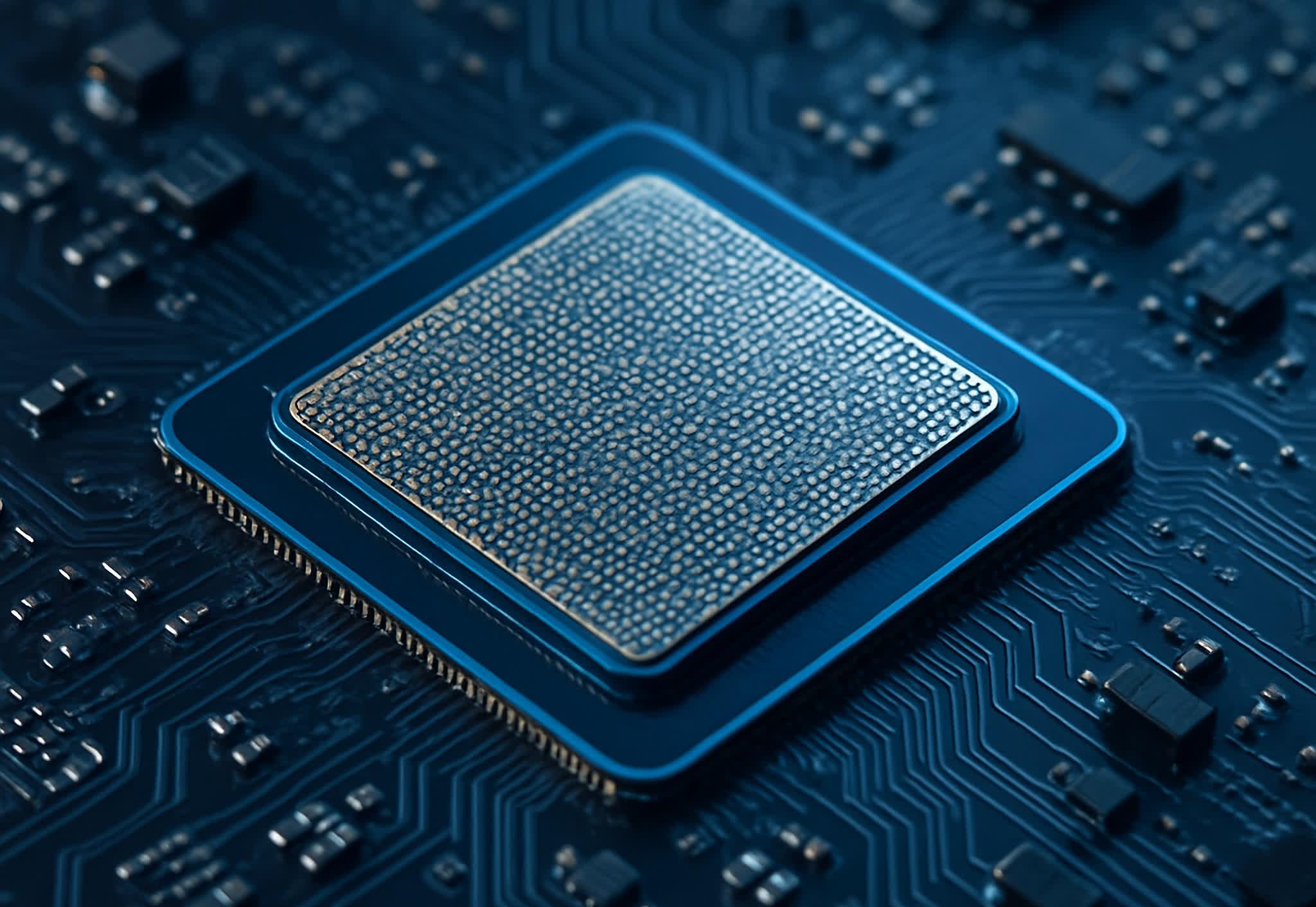
Image 4: Close-up of a neural processing unit (NPU) integrated into a modern computer chip.
Image 5: Office workstation powered by an AI PC for advanced multitasking and automation.
Image 6: Futuristic desktop computer with integrated artificial intelligence assistant and local AI processing.
Image 7: High-performance AI computer supporting creative workflows, coding, and machine learning applications.
The AI PC Revolution Has Begun: Why the Next Generation of Computers Will Think Smarter, Work Faster, and Protect Your Privacy
For decades, personal computers have evolved through faster processors, larger storage drives, improved graphics cards, and more efficient operating systems. Every generation brought noticeable improvements in speed and performance, but the basic way computers worked remained largely unchanged. Today, however, the industry is entering a completely new chapter. Instead of simply becoming faster, computers are becoming intelligent.
Welcome to the era of the AI PC—a new class of personal computer designed specifically to run artificial intelligence workloads directly on the device. Unlike traditional computers that often rely on cloud servers for AI-powered features, AI PCs include specialized hardware capable of processing machine learning tasks locally. This shift promises faster performance, improved privacy, lower latency, and more responsive user experiences.
Technology companies around the world are investing heavily in AI-enabled computers, believing they will become the next major upgrade cycle for consumers and businesses alike. From students and creators to software developers and enterprise professionals, AI PCs could fundamentally change how people interact with their computers.
What Is an AI PC?
An AI PC is a personal computer equipped with dedicated hardware designed to accelerate artificial intelligence tasks.
In addition to the traditional:
- Central Processing Unit (CPU)
- Graphics Processing Unit (GPU)
AI PCs also include a:
- Neural Processing Unit (NPU)
The NPU is optimized specifically for machine learning calculations, allowing AI applications to run efficiently without placing excessive demands on the CPU or GPU.
Why AI PCs Are Different
Traditional computers can run AI software, but they often rely heavily on cloud computing or consume significant processing power.
AI PCs improve this process by allowing many AI functions to execute locally.
Benefits include:
- Faster AI responses
- Lower energy consumption
- Reduced cloud dependency
- Better battery life
- Improved multitasking
- Enhanced privacy
Running AI directly on the device also reduces delays caused by sending information across the internet.
Understanding the Neural Processing Unit (NPU)
The NPU is one of the defining features of AI PCs.
Unlike CPUs, which handle general computing tasks, or GPUs, which specialize in graphics and parallel processing, NPUs are designed specifically for AI inference.
Typical NPU workloads include:
- Image recognition
- Voice recognition
- Language translation
- Background noise removal
- AI-generated content
- Object detection
Because these tasks are handled by dedicated hardware, the entire system becomes more efficient.
Boosting Productivity
AI PCs are expected to improve productivity across many professional fields.
Examples include:
Writers
AI-assisted drafting, grammar suggestions, and summarization.
Designers
Faster image editing, object removal, and creative assistance.
Developers
Code completion, debugging support, and software documentation.
Business Professionals
Meeting summaries, automated note-taking, and document analysis.
These features help users spend less time on repetitive tasks and more time on creative work.
Improving Privacy
Privacy is becoming increasingly important as AI services expand.
With local AI processing:
- Sensitive information can remain on the device.
- Fewer files need to be uploaded to cloud servers.
- AI features remain available even with limited internet access.
Although cloud services will continue to play an important role, local AI provides users with greater control over their personal data.
Smarter Video Calls
Remote work and online collaboration continue to grow.
AI PCs enhance video conferencing through:
- Automatic background blur
- Eye contact correction
- Noise cancellation
- Lighting optimization
- Real-time language translation
- Speaker tracking
Many of these features operate continuously using the NPU without significantly affecting battery life.
AI for Creativity
Creative professionals are also benefiting from local AI.
Applications include:
- Image generation
- Video editing
- Audio enhancement
- Graphic design
- Music production
- Animation assistance
AI-powered creative tools help accelerate workflows while allowing artists to maintain creative control over final results.
Gaming and Entertainment
Although gaming still relies heavily on GPUs, AI is becoming increasingly important.
AI PCs may improve gaming through:
- Intelligent upscaling
- Real-time graphics optimization
- Voice assistants
- Personalized recommendations
- Automatic performance tuning
Entertainment applications also benefit from faster media processing and improved content recommendations.
Challenges Facing AI PCs
Despite their promise, AI PCs face several challenges.
Software Support
Many applications are still being optimized for NPUs.
Hardware Costs
AI-enabled processors often increase manufacturing costs.
Consumer Awareness
Many users are still learning how AI hardware differs from traditional computing.
Rapid Innovation
The technology continues evolving quickly, making purchasing decisions more complex.
As software developers expand AI support, the value of AI PCs is expected to grow.
The Future of AI Computing
Industry analysts expect AI functionality to become a standard feature in future computers.
Upcoming developments may include:
- Smarter operating systems
- More capable NPUs
- Personalized AI assistants
- Offline generative AI
- Intelligent cybersecurity
- Real-time language translation
- Advanced accessibility features
These innovations could redefine what consumers expect from personal computers.
Why AI PCs Matter
The AI PC represents more than another hardware upgrade.
It reflects a broader transition toward intelligent computing where AI becomes deeply integrated into everyday tasks.
Rather than opening separate AI applications, users may increasingly interact with AI that is built directly into the operating system, creative software, productivity tools, and communication platforms.
This seamless integration could make computers more intuitive, efficient, and responsive than ever before.
Final Thoughts
The emergence of AI PCs marks one of the most significant shifts in personal computing since the introduction of laptops and smartphones. By combining CPUs, GPUs, and specialized Neural Processing Units, these computers are designed to run artificial intelligence directly on the device, delivering faster performance, improved privacy, and more efficient workflows.
Although the ecosystem is still developing, AI PCs are poised to become the foundation of future computing. As software developers create more applications optimized for local AI processing, users will experience smarter assistants, better productivity tools, enhanced creativity, and stronger privacy protections.
The next generation of computers will not simply process information—they will increasingly understand, assist, and adapt to the people using them. That transformation has already begun, making AI PCs one of the most exciting technology trends to watch in the years ahead.
Leave a Reply