The AI Revolution Is Here: 10 Breakthrough Technologies That Could Change Everyday Life Faster Than You Think


Image Alt Texts
Image 1 Alt Text:
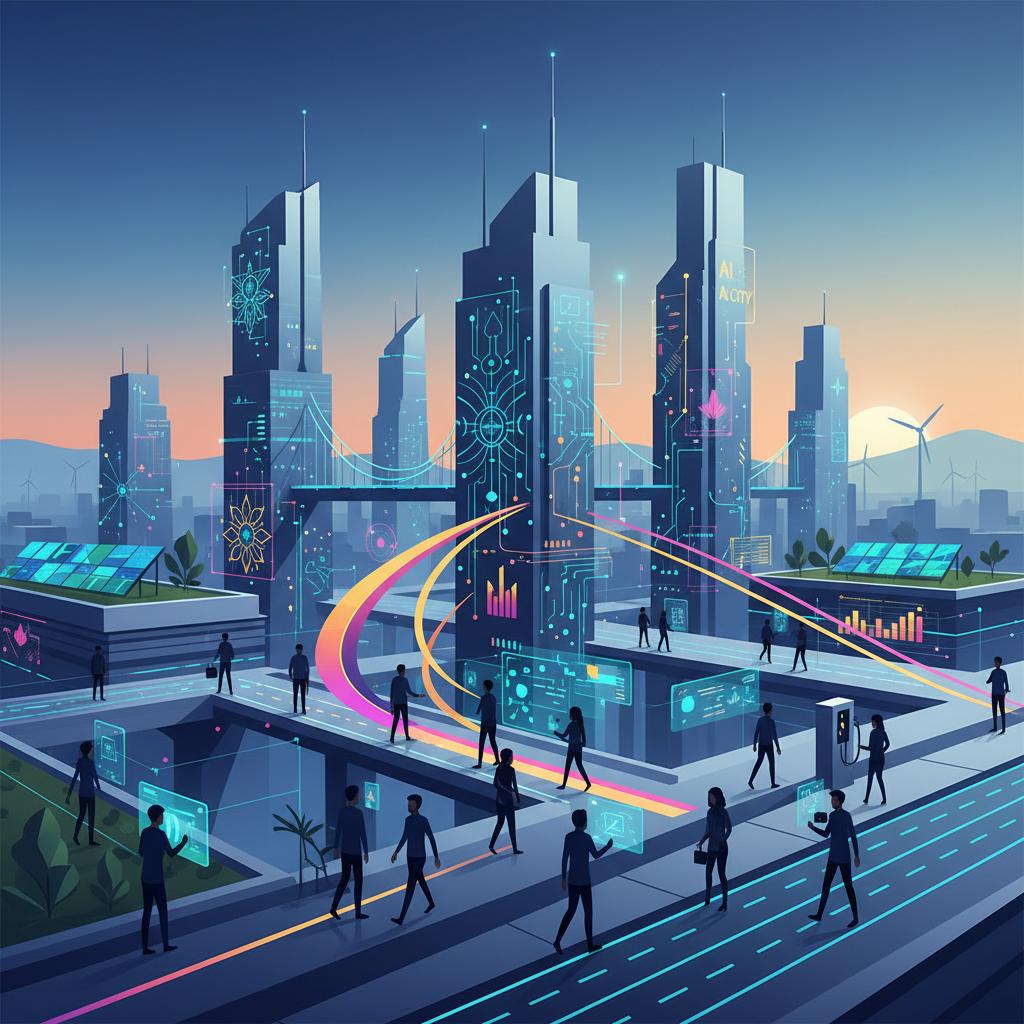
Artificial intelligence powering a futuristic smart city with connected digital technology.
Image 2 Alt Text:
Humanoid AI assistant collaborating with office workers using advanced technology.
Image 3 Alt Text:
Modern smart home featuring AI-powered connected devices and automation.
Image 4 Alt Text:
Autonomous electric vehicle driving through a technologically advanced urban environment.
Image 5 Alt Text:
Cybersecurity concept showing digital protection against online threats.
Image 6 Alt Text:
Industrial robots performing automated manufacturing inside a smart factory.
Image 7 Alt Text:
Modern cloud computing data center supporting artificial intelligence applications.
The AI Revolution Is Here: 10 Breakthrough Technologies That Could Change Everyday Life Faster Than You Think
Artificial intelligence has rapidly evolved from a futuristic concept into one of the most influential technologies of the 21st century. Over the past few years, AI-powered tools have transformed how people work, communicate, learn, shop, and even receive healthcare. While many once believed intelligent machines belonged only in science fiction, today’s reality proves otherwise.
Technology companies around the world continue investing billions of dollars into AI research, robotics, cloud computing, and automation. As a result, consumers are beginning to experience innovations that once seemed impossible. From virtual assistants capable of holding natural conversations to self-driving vehicles and intelligent medical diagnostics, AI is becoming deeply integrated into everyday life.
Experts believe the next decade could bring even more dramatic changes as AI continues improving at an unprecedented pace.
1. AI Is Becoming Everyone’s Personal Assistant
Today’s AI assistants are far more capable than simple voice commands.
Modern systems can:
- Write emails
- Summarize long documents
- Translate languages instantly
- Plan vacations
- Create presentations
- Generate images
- Help students learn complex subjects
- Assist programmers in writing software
Instead of replacing human creativity, many experts believe AI will become a powerful productivity partner, allowing people to complete routine tasks more efficiently while focusing on creative and strategic work.
2. Healthcare Is Entering a New Digital Era
Artificial intelligence is helping doctors detect diseases earlier and more accurately.
AI-powered systems now assist with:
- Medical imaging analysis
- Cancer detection
- Drug discovery
- Personalized treatment plans
- Remote patient monitoring
Researchers are also developing AI models capable of identifying subtle health patterns that humans may overlook, potentially leading to earlier diagnoses and better patient outcomes.
While AI is unlikely to replace physicians, it is increasingly becoming a valuable clinical support tool.
3. Smart Homes Continue Getting Smarter
Connected homes are becoming more intelligent every year.
Modern smart homes can automatically:
- Adjust lighting
- Control indoor temperature
- Detect unusual activity
- Save electricity
- Lock doors remotely
- Monitor energy consumption
Artificial intelligence allows these systems to learn homeowners’ daily routines, making automation more personalized over time.
Future smart homes may anticipate household needs before residents even ask.
4. Transportation Is Being Reinvented
Self-driving technology has progressed significantly over the past decade.
Although fully autonomous vehicles are still being tested in many regions, advanced driver-assistance systems are already helping improve road safety through features such as:
- Automatic emergency braking
- Lane-keeping assistance
- Adaptive cruise control
- Collision avoidance
Electric vehicles are also becoming increasingly connected through AI software that improves battery efficiency, navigation, and predictive maintenance.
5. Robots Are Working Alongside Humans
Automation has expanded well beyond factory assembly lines.
Today’s robots assist in:
- Warehouses
- Hospitals
- Agriculture
- Hotels
- Restaurants
- Logistics
- Space exploration
Rather than replacing every worker, many modern robots handle repetitive, physically demanding, or hazardous tasks while employees focus on responsibilities requiring judgment, communication, and creativity.
Collaborative robots, often called “cobots,” are specifically designed to safely work beside humans.
6. Cybersecurity Has Become More Important Than Ever
As digital technology expands, cyber threats continue evolving.
Artificial intelligence now plays a major role in identifying suspicious online activity before attacks become widespread.
AI security systems can detect:
- Unusual login attempts
- Malware behavior
- Phishing campaigns
- Network intrusions
- Financial fraud
Organizations increasingly rely on intelligent security tools that analyze millions of events every second to respond faster than traditional security methods.
7. Education Is Becoming More Personalized
AI-powered learning platforms can adapt educational content based on each student’s learning style and progress.
Instead of every student following the exact same pace, intelligent software can:
- Recommend practice exercises
- Identify weak subjects
- Provide instant feedback
- Generate quizzes
- Translate educational materials
Teachers continue playing the central role in education, while AI helps reduce administrative work and supports personalized learning experiences.
8. Businesses Are Transforming Operations
Companies of every size are adopting AI to improve productivity.
Artificial intelligence now helps businesses:
- Forecast demand
- Manage inventory
- Improve customer service
- Analyze market trends
- Automate paperwork
- Detect financial anomalies
Small businesses, once unable to afford advanced technology, can now access cloud-based AI services at relatively affordable costs.
This has accelerated digital transformation across nearly every industry.
9. Creativity Is Entering a New Age
Generative AI has introduced entirely new ways for creators to produce digital content.
Modern AI systems can assist with:
- Writing articles
- Creating illustrations
- Designing presentations
- Editing videos
- Producing music
- Brainstorming ideas
Many professionals now combine human imagination with AI-generated suggestions, leading to faster creative workflows while maintaining human oversight.
Rather than replacing artists, AI is increasingly viewed as another creative tool.
10. The Future Brings Both Opportunity and Responsibility
Despite remarkable progress, AI also raises important questions.
Governments, researchers, and technology companies continue discussing issues involving:
- Privacy
- Security
- Transparency
- Copyright
- Fairness
- Responsible AI development
Experts agree that human oversight remains essential as intelligent systems become more powerful.
Responsible innovation will likely determine how successfully society benefits from future AI breakthroughs.
Looking Ahead
Artificial intelligence is no longer a distant vision—it is becoming a practical technology that shapes everyday life across healthcare, education, transportation, business, entertainment, and communication. As research accelerates and computing power grows, AI applications are expected to become even more capable, accessible, and integrated into daily routines.
For consumers, staying informed about emerging technologies will be increasingly important. Understanding both the opportunities and challenges of AI can help individuals and organizations make smarter decisions in a rapidly evolving digital world.
While the future remains uncertain, one thing is clear: the AI revolution has already begun, and its impact on society is only just starting to unfold. Those who embrace lifelong learning and adapt to technological change will be well positioned to benefit from the next wave of innovation.
Leave a Reply