Tag: Quantum Networks

  • Quantum Internet Explained: How the Future of Secure Communication Is Taking Shape

    Quantum Internet Explained: How the Future of Secure Communication Is Taking Shape

    The Quantum Internet Is Closer Than You Think: How Unbreakable Communication Could Change the Digital World Forever


    Image
    Image
    Image
    Image
    Image
    Image
    Image

    Image Alt Text

    Image 1: Futuristic visualization of a global quantum internet connecting cities with secure quantum communication.

    Image 2: Scientists conducting experiments with quantum communication technology in an advanced laboratory.

    Image 3: Fiber-optic infrastructure supporting next-generation quantum communication networks.

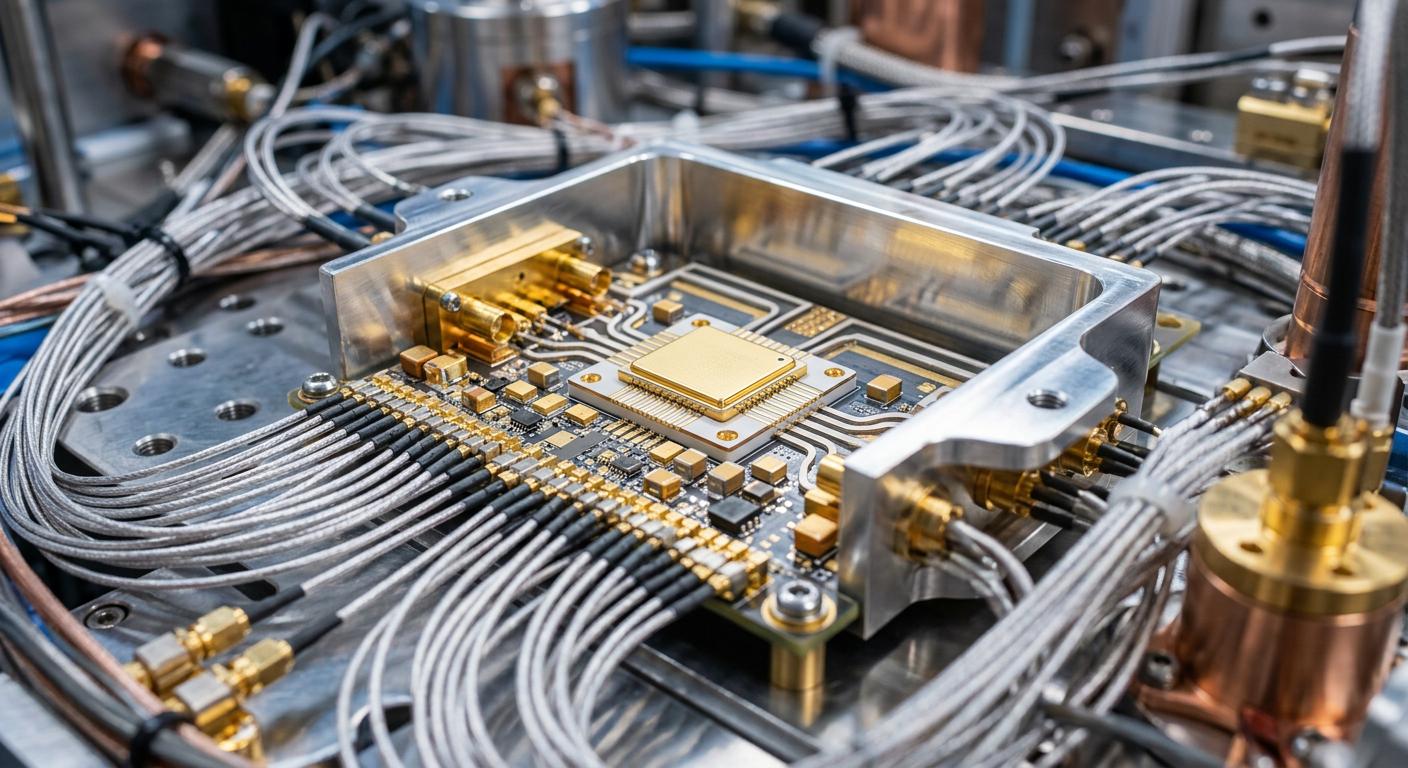
    Image 4: Close-up view of a quantum processor used in quantum networking research.

    Image 5: Smart city connected through highly secure quantum internet infrastructure.

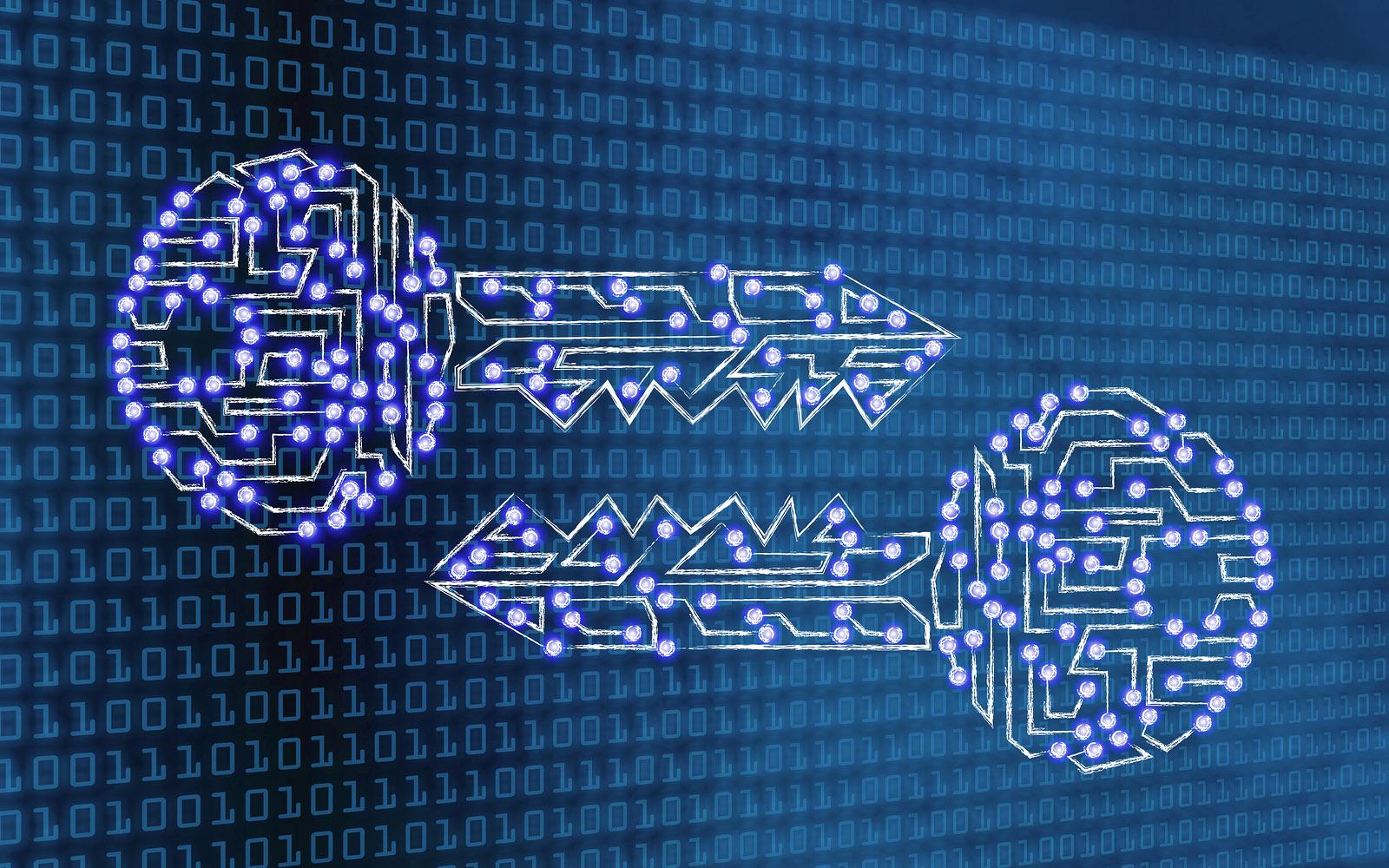
    Image 6: Digital illustration representing quantum encryption protecting sensitive online communications.

    Image 7: Concept art showing the future of global quantum networking and secure data transmission.


    The Quantum Internet Is Closer Than You Think: How Unbreakable Communication Could Change the Digital World Forever

    For more than 50 years, the internet has transformed nearly every aspect of modern life. It has connected people across continents, enabled instant access to information, powered global commerce, and created entirely new industries. Yet despite these remarkable achievements, today’s internet still relies on communication technologies that face growing challenges from cyberattacks, data breaches, and increasingly powerful computers.

    Now, scientists around the world are working on an ambitious next step: the Quantum Internet. Unlike today’s internet, which transmits information using classical bits represented as 0s and 1s, a quantum internet would use the principles of quantum mechanics to exchange information in fundamentally different ways.

    Although the technology is still in the research and early testing stage, experts believe quantum networking could eventually enable ultra-secure communication, new forms of distributed computing, and scientific breakthroughs that are impossible with conventional internet infrastructure.


    What Is the Quantum Internet?

    The quantum internet is a proposed communication network that uses quantum states instead of only traditional digital signals to exchange information.

    Rather than replacing today’s internet overnight, a quantum network would likely operate alongside existing internet infrastructure.

    Its primary goal is to enable communication that takes advantage of quantum properties such as:

    • Quantum entanglement
    • Quantum superposition
    • Quantum key distribution
    • Quantum state transfer

    These technologies could make certain types of communication far more secure than conventional methods.


    How Does It Work?

    Unlike traditional internet data, which travels as electrical or optical signals carrying digital bits, quantum communication relies on quantum bits, commonly called qubits.

    Qubits can exist in multiple quantum states under specific conditions, allowing entirely new methods of transmitting and protecting information.

    One important concept is quantum entanglement, where two particles become linked so that measurements of one are correlated with the other, even when separated by large distances.

    Researchers are exploring ways to use these quantum properties to create secure communication channels across future quantum networks.


    Why Is Security Such a Big Advantage?

    One of the biggest motivations for developing a quantum internet is cybersecurity.

    Current encryption methods rely on mathematical problems that are extremely difficult for conventional computers to solve.

    Future quantum computers, however, may eventually solve some of these problems much faster than today’s machines.

    Quantum communication offers a different approach.

    With Quantum Key Distribution (QKD):

    • Encryption keys are exchanged using quantum particles.
    • Attempts to intercept the transmission disturb the quantum state.
    • Legitimate users can detect possible interception attempts.

    This characteristic makes quantum communication especially attractive for protecting highly sensitive information.


    Potential Applications

    Although widespread deployment is still years away, researchers see numerous possible applications.

    Government Communications

    Highly secure diplomatic and defense communications.

    Financial Services

    Protection of banking transactions and financial data.

    Healthcare

    Secure transmission of sensitive medical records.

    Scientific Research

    Connecting quantum computers to solve complex scientific problems collaboratively.

    Critical Infrastructure

    Protecting power grids, communication systems, and transportation networks.


    Quantum Internet and Quantum Computing

    Quantum computing and the quantum internet are closely related but serve different purposes.

    • Quantum computers perform complex calculations using qubits.
    • Quantum networks connect quantum devices securely.

    Future quantum networks may allow multiple quantum computers located in different regions to work together, forming a distributed quantum computing system.

    This concept could dramatically increase computational capabilities for certain specialized applications.


    Current Progress Around the World

    Research institutions, universities, and technology companies are actively developing quantum networking technologies.

    Current achievements include:

    • Experimental quantum communication over fiber-optic cables
    • Satellite-based quantum communication demonstrations
    • Improved quantum memory systems
    • Development of quantum repeaters
    • Expansion of quantum research networks

    While these systems remain experimental, steady progress continues each year.


    Technical Challenges

    Building a global quantum internet remains a major scientific challenge.

    Signal Loss

    Quantum information can degrade over long distances.

    Quantum Repeaters

    Researchers are developing specialized devices to extend communication ranges.

    Hardware Complexity

    Quantum devices often require highly controlled operating environments.

    Scalability

    Connecting large numbers of quantum devices reliably remains an ongoing engineering challenge.

    Scientists continue making progress toward overcoming these obstacles.


    Could It Replace Today’s Internet?

    Probably not.

    Most experts believe the quantum internet will complement, rather than replace, today’s internet.

    Traditional internet infrastructure will remain highly effective for everyday tasks such as:

    • Streaming video
    • Social media
    • Email
    • Web browsing
    • Online shopping

    Quantum networking is expected to focus on specialized applications requiring extremely high levels of security or quantum computing capabilities.


    The Future of Quantum Networking

    Industry experts expect continued progress throughout the coming decade.

    Future milestones may include:

    • Larger quantum communication networks
    • Improved quantum repeaters
    • Expanded satellite-based quantum links
    • Commercial quantum security services
    • International quantum networking standards
    • Integration with existing internet infrastructure

    As technology matures, quantum networking could gradually expand into new industries.


    Why the Quantum Internet Matters

    The quantum internet represents a new way of thinking about communication.

    Instead of relying solely on increasingly complex encryption algorithms, it explores communication methods rooted in the fundamental laws of physics.

    Although widespread deployment remains years away, the research underway today could eventually reshape cybersecurity, scientific collaboration, cloud computing, and global communications.

    Like the early internet decades ago, today’s experimental quantum networks may become the foundation for tomorrow’s digital infrastructure.


    Final Thoughts

    The quantum internet is one of the most ambitious technology projects currently under development. By harnessing the unique properties of quantum mechanics, researchers hope to build communication networks capable of unprecedented levels of security and entirely new forms of computing collaboration.

    Significant engineering challenges remain, and large-scale commercial deployment is still some years away. However, advances in quantum communication, quantum processors, and networking technologies continue to move the field forward.

    While it is unlikely to replace today’s internet for everyday online activities, the quantum internet could become an essential layer for protecting critical infrastructure, enabling scientific discovery, and supporting the next generation of secure digital communication. As research accelerates worldwide, this once-theoretical concept is steadily moving closer to reality.

  • Quantum Internet Explained: How Quantum Networks Could Make Hacking Impossible

    Quantum Internet Explained: How Quantum Networks Could Make Hacking Impossible

    https://images.openai.com/static-rsc-4/t6g_pbDd-XHlGjPiFSNANLWx4AXQ6tcXwPjR8MvCw3BDihP6bhtdvqTpAdGIlOjI_RmTuFzYfeVkjxtjfCz00T4IZG0v3KjnroVaRVVsf56XVdfOLc1xI8_m6F8R-GXS7xMmAcN0TE75M-sPU1N8riIa1YTe7en83HQjHmnDjiVjTwGoc5-4nvDbTd_VR8jh?purpose=fullsize
    https://images.openai.com/static-rsc-4/SZBr6kAs6zfWSc6hE2vm3mMWR3_q3iYwZqbA1eju8OyXTCSu0QvDtPwdKO7teBZ_TDoq3T1IHpQ-9zgt7Aj75-uzlyc8gt8_m17x1Wh2atLiFtM-zcyXLoRoPO0nuCfJNsigT8JLh97kGmjMc_J2ZnObJmxZ0fUYaUFpkteBVy_4pq6WJNpihcYZwrq-yGJG?purpose=fullsize
    https://images.openai.com/static-rsc-4/-U3wILUA92l-2AoF9hImpio5G5wf3llY3EV-hW0XTea1MR9YQUnnkqntgpgoFsxUgXw5462PkMynnGc_p5k6hZqsUobiIXiQcG74qmzgs14OOVZto0DLOIdytqWBGsaoNG8ofm3YzpOAeHfXRRk2mkZkfVngzEi8JsRTfALBHwjG2zhyY_ui2lFqRPMC6EW3?purpose=fullsize

    6

    Image Alt Text

    Image 1: Futuristic visualization of a quantum internet network connecting global nodes through fiber optics.

    Image 2: Scientists operating advanced equipment in a quantum communication research laboratory.

    Image 3: Illustration of secure quantum encryption protecting digital data transmission.

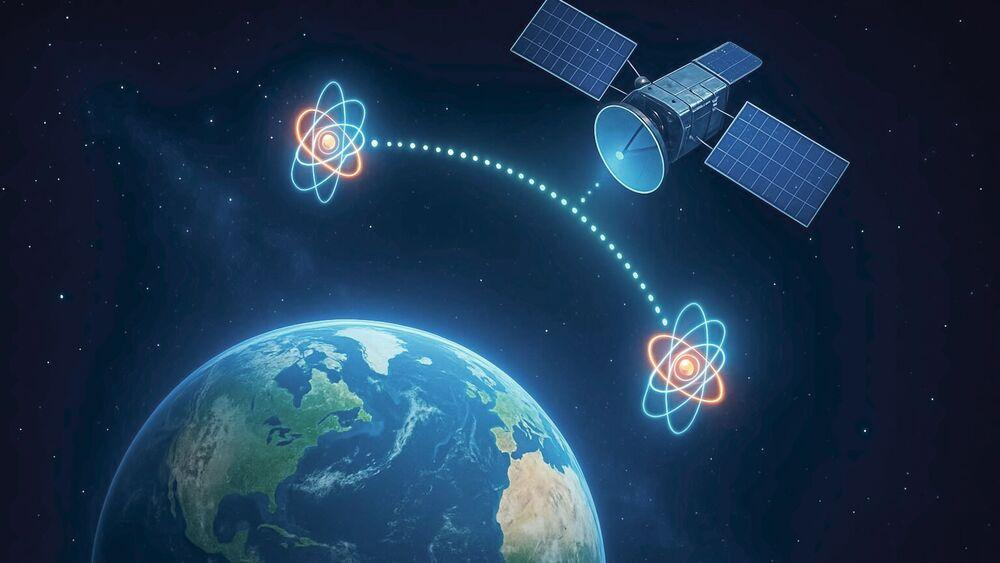
    Image 4: Satellite-based quantum communication system linking Earth and space networks.

    Image 5: Close-up of a quantum computer chip operating in a cryogenic environment.

    Image 6: Global map showing interconnected quantum network infrastructure across continents.

    Image 7: Abstract visualization of quantum entanglement representing instant data correlation.


    Quantum Internet Is Closer Than You Think: How Quantum Networks Will Make Hacking Nearly Impossible

    The internet has become the backbone of modern civilization, powering communication, finance, healthcare, education, and global commerce. However, today’s digital infrastructure is built on classical computing principles that face increasing security threats as technology advances. Cyberattacks, data breaches, and encryption vulnerabilities continue to challenge governments, businesses, and individuals worldwide.

    A revolutionary new technology known as the quantum internet could fundamentally change how information is transmitted and secured. Built on the principles of quantum mechanics, this next-generation network aims to enable ultra-secure communication that may make traditional hacking techniques virtually impossible.

    While still in early development stages, quantum networking research is progressing rapidly across universities, technology companies, and government laboratories. Scientists believe that in the future, quantum communication systems could work alongside or even partially replace aspects of today’s internet infrastructure.


    What Is the Quantum Internet?

    The quantum internet is a communication network that uses the principles of quantum physics to transmit information securely.

    Unlike the classical internet, which sends data as bits (0s and 1s), quantum networks use quantum bits or qubits.

    Qubits can exist in multiple states simultaneously due to a property called superposition, and they can be linked across distance through quantum entanglement.

    These properties enable entirely new ways of transmitting and securing information that are not possible with traditional systems.


    How Quantum Communication Works

    Quantum communication relies on several key principles:

    1. Quantum Entanglement

    When two particles become entangled, their states remain connected even when separated by large distances. Any change in one particle instantly affects the other.

    2. Superposition

    Qubits can represent multiple values at once until they are measured, allowing more complex data encoding.

    3. Quantum Key Distribution (QKD)

    One of the most practical applications today, QKD enables two parties to share encryption keys securely. If an attacker tries to intercept the key, the system immediately detects the disturbance.

    These principles make quantum communication extremely secure compared to classical encryption methods.


    Why Quantum Internet Matters for Security

    Cybersecurity threats are becoming more advanced as computing power increases.

    Today’s encryption systems rely on mathematical complexity. However, powerful future computers—including quantum computers themselves—could potentially break some of these encryption methods.

    Quantum internet offers a different approach:

    • Any interception attempt alters the quantum state
    • Tampering becomes immediately detectable
    • Data cannot be copied without detection
    • Encryption keys remain highly secure

    This could significantly reduce risks associated with hacking, espionage, and data breaches.


    Real-World Quantum Network Experiments

    Although a fully global quantum internet does not yet exist, several experimental systems have already been developed.

    Researchers have successfully demonstrated:

    • Quantum communication over fiber-optic cables
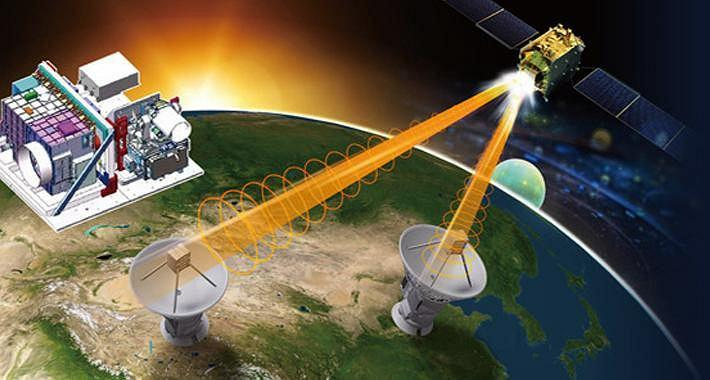
    • Satellite-based quantum key distribution
    • Entanglement over long distances
    • Secure government communication trials

    Some countries have already tested early quantum networks connecting multiple cities using specialized fiber infrastructure.

    These experiments show that quantum communication is not just theoretical—it is becoming technically feasible.


    Quantum Satellites and Space Networks

    Satellites play a critical role in quantum communication research.

    By transmitting entangled photons between Earth and space, satellites can enable long-distance quantum encryption.

    Potential applications include:

    • Secure international communications
    • Military-grade encryption systems
    • Financial data protection
    • Government communication networks

    Space-based quantum links may help overcome distance limitations that currently affect fiber-optic systems.


    Quantum Internet vs Traditional Internet

    The quantum internet is not designed to replace the classical internet entirely.

    Instead, it will likely work alongside it, providing secure communication layers.

    Key differences include:

    FeatureClassical InternetQuantum Internet
    Data unitBits (0/1)Qubits
    SecurityMathematical encryptionPhysics-based security
    Hacking riskVulnerableExtremely difficult
    SpeedHighExperimental (varies)
    Use caseGeneral communicationSecure data transfer

    This hybrid approach allows both systems to complement each other.


    Potential Applications of Quantum Internet

    The quantum internet could transform many industries:

    Cybersecurity

    Ultra-secure encryption for sensitive communications.

    Finance

    Protection of banking transactions and financial networks.

    Healthcare

    Secure transmission of patient medical records.

    Government & Defense

    Highly secure communication channels.

    Cloud Computing

    Protected data transfer between global data centers.

    Scientific Research

    Secure collaboration between international laboratories.

    Each of these fields relies heavily on data integrity and privacy.


    Challenges in Building Quantum Networks

    Despite its promise, the quantum internet faces major technical obstacles.

    Fragility of Quantum States

    Quantum information is extremely sensitive to environmental interference.

    Distance Limitations

    Maintaining entanglement over long distances is difficult.

    Infrastructure Requirements

    Specialized hardware and quantum-compatible fiber networks are needed.

    High Costs

    Quantum research and equipment remain expensive.

    Error Correction

    Quantum systems require advanced techniques to maintain stability.

    Researchers are actively working to solve these challenges.


    Quantum Repeaters and Network Expansion

    One of the key breakthroughs needed for a global quantum internet is the development of quantum repeaters.

    These devices help extend quantum communication over long distances by:

    • Preserving entanglement
    • Reducing signal loss
    • Connecting multiple quantum nodes

    Once fully developed, quantum repeaters could enable continent-scale quantum networks.


    The Future of Quantum Communication

    Experts predict steady progress in quantum networking over the next decade.

    Future developments may include:

    • City-wide quantum networks
    • Commercial quantum encryption services
    • Integration with 5G and 6G systems
    • Quantum cloud computing links
    • Global secure communication infrastructure

    While full-scale deployment may still be years away, foundational systems are already being built.


    Final Thoughts

    The quantum internet represents one of the most transformative advances in communication technology. By leveraging the strange and powerful principles of quantum physics, scientists are developing a new form of networking that could dramatically improve data security and reshape global communication systems.

    Although significant technical challenges remain, rapid progress in quantum research suggests that early versions of quantum networks may soon become part of real-world infrastructure. Rather than replacing the internet as we know it, quantum communication is likely to enhance it—adding a new layer of security that could make digital hacking far more difficult than ever before.

    As research continues, the quantum internet may become a cornerstone of future cybersecurity, enabling a safer and more secure digital world for governments, businesses, and individuals alike.