

6
Image Alt Text
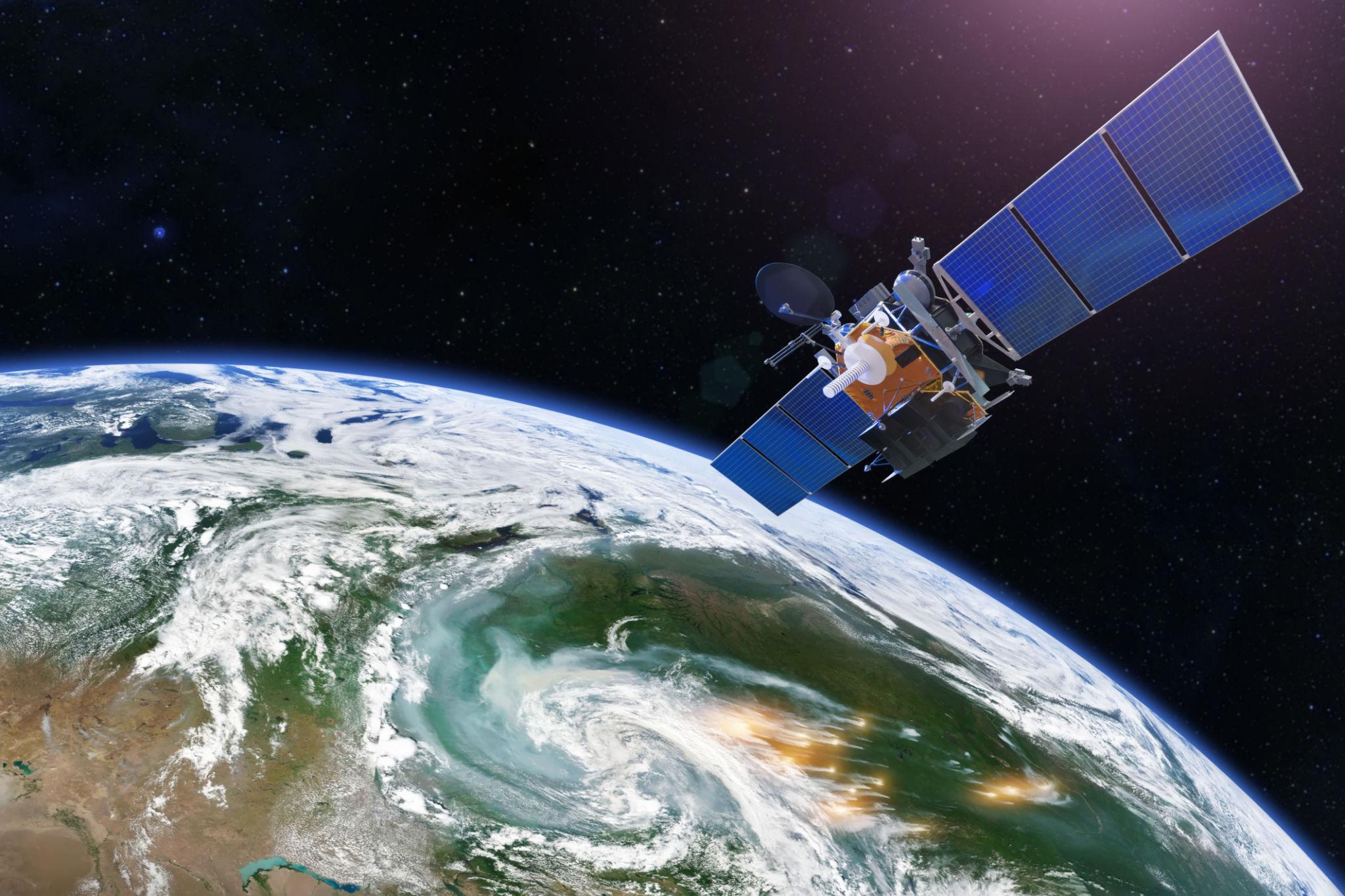
Image 1: A CubeSat satellite orbiting Earth in low Earth orbit.
Image 2: Aerospace engineers assembling a CubeSat inside a clean room laboratory.
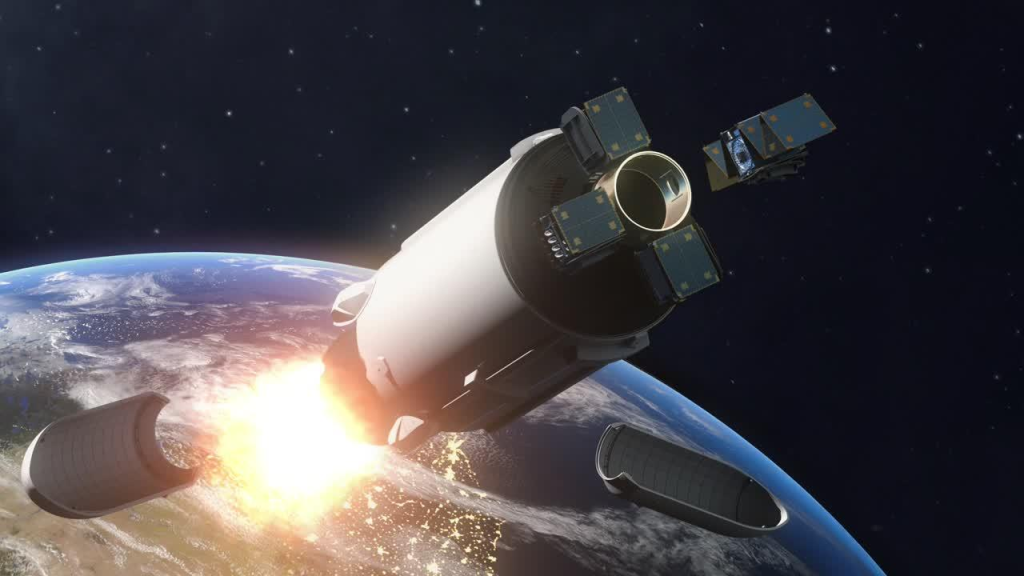
Image 3: Rocket launching multiple small satellites into space during a rideshare mission.
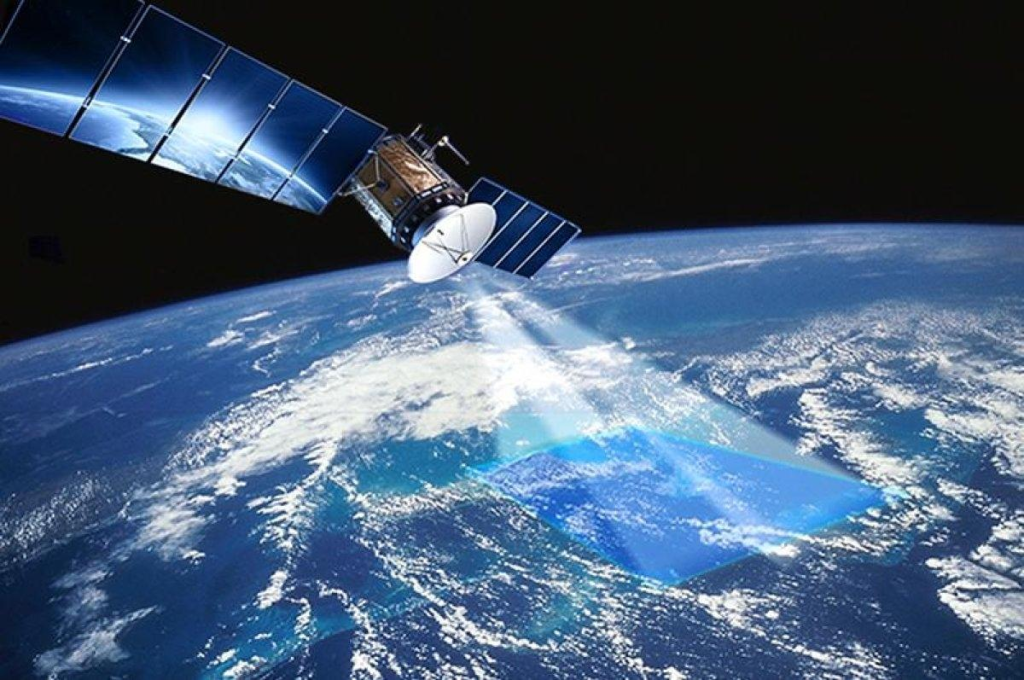
Image 4: Earth observation satellite capturing images of the planet from orbit.
Image 5: Satellite ground station communicating with CubeSats in orbit.
Image 6: Digital illustration of a CubeSat constellation providing global coverage.
Image 7: Concept image showing low Earth orbit satellites supporting future internet connectivity.
Tiny Satellites, Massive Impact: How CubeSats Are Revolutionizing Space Technology and Global Connectivity
For decades, launching a satellite into space required enormous budgets, years of development, and large rockets capable of carrying heavy spacecraft into orbit. Governments and major aerospace companies dominated the industry because building traditional satellites often cost hundreds of millions of dollars. Today, however, a new generation of miniature spacecraft is transforming access to space. Known as CubeSats, these compact satellites are making space technology more affordable, flexible, and accessible than ever before.
Despite their small size, CubeSats are capable of performing many valuable missions, including Earth observation, scientific research, weather monitoring, communications, environmental studies, technology demonstrations, and educational projects. Universities, research institutions, startups, and private companies now routinely use CubeSats to conduct missions that would once have required much larger and more expensive satellites.
As launch costs continue to fall and satellite technology advances, CubeSats are playing an increasingly important role in the global space economy. They are helping scientists better understand Earth’s climate, improving communication networks, supporting disaster response, and expanding opportunities for innovation in space exploration.
What Is a CubeSat?
A CubeSat is a type of miniature satellite built using standardized dimensions.
The basic unit, known as 1U, measures approximately 10 × 10 × 10 centimeters. Larger CubeSats combine multiple units, such as:
- 1U
- 2U
- 3U
- 6U
- 12U
- 16U
This standardized design simplifies manufacturing, reduces costs, and allows multiple CubeSats from different organizations to share a single rocket launch.
Although compact, CubeSats often carry cameras, communication equipment, scientific instruments, onboard computers, power systems, and navigation hardware.
How CubeSats Reach Space
CubeSats are commonly launched as secondary payloads alongside larger satellites.
This approach, known as ridesharing, allows many organizations to share launch costs.
After reaching orbit, CubeSats are released from specialized deployment systems that safely separate each satellite from the launch vehicle.
Most CubeSats operate in low Earth orbit (LEO), typically between 300 and 1,200 kilometers above Earth’s surface.
At these altitudes, satellites complete an orbit in roughly 90 to 120 minutes.
Earth Observation and Environmental Monitoring
One of the most important applications of CubeSats is observing Earth.
Modern CubeSats monitor:
- Forests
- Oceans
- Agriculture
- Urban development
- Weather systems
- Ice coverage
- Air quality
- Natural disasters
Scientists use this information to better understand environmental changes and improve climate research.
Because CubeSats can be launched more frequently than traditional satellites, they provide updated observations at lower costs.
Supporting Global Communications
CubeSats also contribute to satellite communication systems.
Although they cannot fully replace large communications satellites, constellations of small satellites can support:
- Remote internet access
- Internet of Things (IoT) connectivity
- Scientific communications
- Maritime tracking
- Aviation monitoring
- Emergency communications
Growing satellite constellations are expanding connectivity to regions where traditional infrastructure is difficult to build.
Accelerating Scientific Research
Universities and research organizations increasingly use CubeSats for space science.
Research missions include:
- Radiation measurements
- Solar observations
- Atmospheric studies
- Space weather monitoring
- Microgravity experiments
- Technology demonstrations
Because CubeSats are relatively inexpensive, researchers can test new ideas with lower financial risk compared with traditional satellite missions.
Education and Student Innovation
CubeSats have become valuable educational tools.
Engineering students gain practical experience by participating in real satellite missions involving:
- Electronics
- Programming
- Mechanical engineering
- Telecommunications
- Mission planning
- Systems integration
Many universities around the world now design and operate CubeSat missions as part of aerospace education programs.
This hands-on experience prepares students for careers in the rapidly growing space industry.
Commercial Opportunities
Private companies are using CubeSats to develop new commercial services.
Examples include:
- Agricultural monitoring
- Infrastructure inspection
- Asset tracking
- Weather analytics
- Financial market data
- Environmental monitoring
- Maritime surveillance
Lower launch costs have enabled startups to enter the space sector with innovative business models.
The expanding commercial market continues attracting investment in satellite technology and related services.
Challenges Facing CubeSats
Despite their many advantages, CubeSats have several limitations.
Limited Size
Small dimensions restrict payload capacity and onboard power generation.
Shorter Lifespan
Many CubeSats operate for only a few years before re-entering Earth’s atmosphere.
Communication Constraints
Compact antennas may limit data transmission rates compared with larger satellites.
Orbital Congestion
The growing number of satellites in low Earth orbit increases the importance of responsible space traffic management and debris mitigation.
Researchers continue improving propulsion systems, communications, and onboard computing to overcome these challenges.
The Future of CubeSat Technology
Experts expect CubeSat capabilities to continue advancing during the coming decade.
Future developments may include:
- AI-powered onboard processing
- Higher-resolution imaging
- Inter-satellite communication networks
- Improved propulsion systems
- Longer mission durations
- Advanced scientific instruments
- Deep-space CubeSat missions
As technology improves, CubeSats will likely play an even greater role in scientific discovery, communications, and commercial space services.
CubeSats and the New Space Economy
The rapid growth of CubeSat technology reflects broader changes in the global space industry.
Lower launch costs, standardized hardware, and increasing private investment have opened opportunities for organizations that previously lacked access to space.
This democratization of space technology encourages innovation while accelerating research and commercial development.
Rather than replacing traditional satellites, CubeSats complement them by performing specialized missions that benefit from lower costs and greater deployment flexibility.
Final Thoughts
CubeSats have transformed the space industry by proving that small satellites can deliver significant scientific, commercial, and educational value. Their compact size, standardized design, and relatively low cost have made space more accessible to universities, startups, governments, and research organizations worldwide.
From monitoring climate change and improving disaster response to expanding global connectivity and supporting scientific research, CubeSats are helping reshape how humanity uses space technology.
As launch services become more affordable and onboard technologies continue advancing, these tiny satellites are expected to play an increasingly important role in the future of space exploration and communication. Their impact demonstrates that innovation is not always measured by size—sometimes the smallest spacecraft can create the biggest opportunities.