Tag: Market Update

  • Gold Jumps to a Two-Week High: Safe-Haven Demand Returns as Global Uncertainty Grows

    Gold Jumps to a Two-Week High: Safe-Haven Demand Returns as Global Uncertainty Grows

    Gold Jumps to a Two-Week High: Safe-Haven Demand Returns as Global Uncertainty Grows


    https://images.openai.com/static-rsc-4/upse8RdU8ADcjZJN2RYZT6YsMtWQKMfdgjpA_raota3BihPUqrIC2UIhybheFbB_lj2FagpbZBBW6_vDx_mN8gGeAwUvBbIwgByNCnaIs3RoUX8nua30RIrpwdxLvXSOuxEwqcl3WfPpW8ebvb0Ohl0LguOPDiJwDPCOT7wmt8CGmVSfBCi6FWJA0DOWVpjb?purpose=fullsize
    https://images.openai.com/static-rsc-4/TKR4bGeVwyy2Bop3dI4gXafL2sHEq-vUAbk1bWL--gs30kRYX_nqOOgbUV6V14FRV62s9RyExMZs_51QJ30ECGM6tsdnbAEM89pfRcGQJTcV6Yssthv8ATwc7DLEKT-2n6DEUp8bfP_dHgjDyYgTnVC43bVpCJnqTnGB7YEHq1GH8c5UP66nWAU2BW4zp7Qc?purpose=fullsize
    https://images.openai.com/static-rsc-4/MmqOsLX7ElTKv6rGsL81FP1KPlP2nIvFQpy4a4DikcIGl6oqJPb3CFnbYRTgYqWwiNx_62A-lTwm2v5Fh-bvot9hQjs7iQmj2PWyX7nwS1lrRRXBdtJuUiYw8bDo_QDitwP6xCIk-tpKRpbVBSAS4rzMMDnDwhwIx1bIz3gU6K-d-Bd76UDBm4cKd6vOJUha?purpose=fullsize

    7

    Gold Jumps to a Two-Week High: Safe-Haven Demand Returns as Global Uncertainty Grows

    Published: July 22, 2026
    Category: Finance | Commodities | Gold | Market News

    Gold prices climbed to their highest level in two weeks on Wednesday as investors sought safety amid escalating geopolitical tensions and shifted expectations for U.S. monetary policy. Spot gold rose above $4,130 per ounce during trading, while U.S. gold futures also advanced, supported by a weaker U.S. dollar, technical buying, and renewed safe-haven demand.

    The rally follows several volatile trading sessions during which gold struggled to maintain momentum after reaching record highs earlier this year. Market participants are now focusing on the upcoming U.S. Federal Reserve meeting, where policymakers are widely expected to leave interest rates unchanged but could provide new guidance on inflation and future monetary policy.


    Gold Regains Momentum

    After falling sharply last week, buyers returned to the gold market as bargain hunters stepped in.

    Spot gold briefly traded above $4,140 per ounce, marking its strongest performance since early July. Analysts say the rebound was driven by three major factors:

    • Increased safe-haven demand
    • A weaker U.S. dollar
    • Technical buying after the recent correction

    These developments helped reverse much of last week’s decline and restored confidence among precious-metals investors.


    Middle East Conflict Continues Supporting Gold

    Geopolitical uncertainty remains one of the biggest drivers of gold prices.

    The ongoing conflict involving the United States and Iran has increased concerns about global energy supplies and international trade. Oil prices have remained elevated, increasing worries that inflation could remain stubbornly high.

    Whenever geopolitical risks rise, many investors shift capital toward traditional safe-haven assets such as gold because of its long history as a store of value.


    Federal Reserve Meeting Takes Center Stage

    The next Federal Reserve meeting is expected to be one of the most important events for financial markets this month.

    Although economists generally expect interest rates to remain unchanged, investors will closely analyze every statement from policymakers for clues about future rate decisions.

    Gold typically benefits when markets expect lower interest rates because:

    • Holding gold becomes more attractive relative to bonds.
    • The U.S. dollar often weakens.
    • Investment demand for precious metals increases.

    However, if policymakers indicate that rates may stay higher for longer, gold could face renewed pressure.


    Dollar Weakness Boosts Bullion

    The U.S. dollar softened during Wednesday’s trading session.

    Since gold is priced globally in U.S. dollars, a weaker dollar makes bullion less expensive for buyers using other currencies, often increasing global demand.

    Currency movements remain one of the strongest short-term influences on precious-metal prices.


    Central Banks Continue Supporting the Market

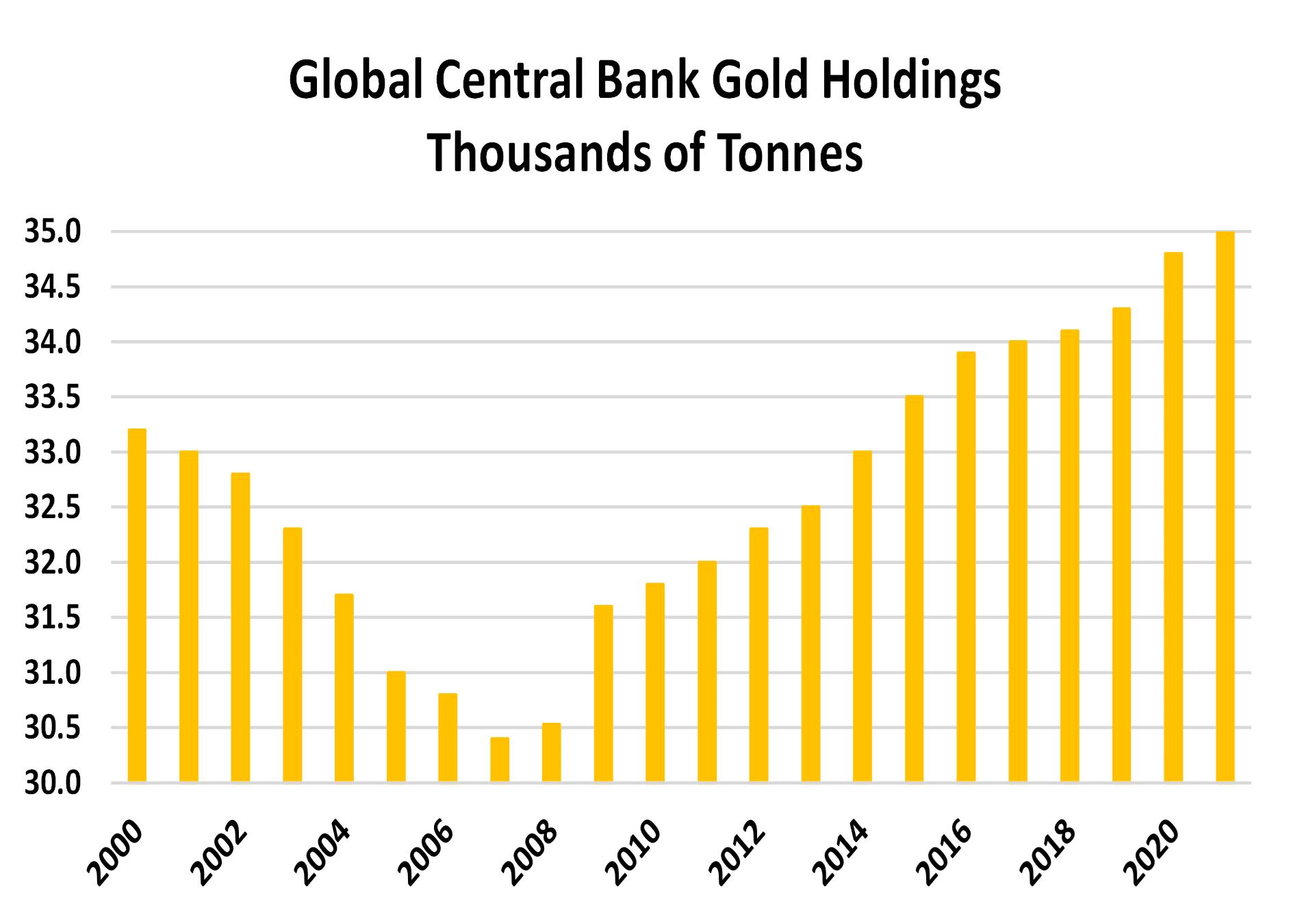
    Long-term demand remains supported by central banks around the world.

    Many countries continue expanding their gold reserves to diversify away from foreign currencies and strengthen financial resilience.

    This steady institutional demand has become one of the strongest structural supports for the gold market and helps reduce the impact of temporary investor selling.


    Gold Mining Companies Prepare for Strong Earnings

    While investors focus on bullion prices, gold mining companies are preparing to report second-quarter earnings.

    Higher average gold prices are expected to significantly increase profits for many of the world’s largest miners. However, rising fuel prices and higher operating costs linked to energy markets could offset part of those gains.

    Mining companies are also investing in:

    • New exploration projects
    • Automation technology
    • Renewable energy
    • More efficient extraction methods

    Physical Gold Demand Remains Resilient

    Demand for physical gold has remained relatively stable despite recent volatility.

    Consumers continue purchasing:

    • Gold jewelry
    • Gold coins
    • Investment bars
    • Collectible bullion

    Jewelry demand in Asia and the Middle East continues to provide an important foundation for the global gold market.


    Key Levels Investors Are Watching

    Technical analysts believe several important price levels could determine gold’s next move.

    Resistance

    • $4,150
    • $4,200
    • $4,375

    Support

    • $4,100
    • $4,050
    • $4,000

    A sustained move above resistance could encourage additional buying, while a break below support may trigger profit-taking. These levels are technical reference points rather than guarantees.


    Risks That Could Affect Gold

    Several factors may influence prices over the coming weeks:

    • Federal Reserve policy decisions
    • Inflation reports
    • U.S. Treasury yields
    • U.S. dollar movements
    • Oil prices
    • Geopolitical developments
    • Central-bank buying activity

    Investors should monitor these indicators because they often drive short-term price swings.


    Outlook

    Many commodity analysts remain cautiously optimistic.

    Safe-haven demand, ongoing central-bank purchases, and expectations that interest rates may eventually stabilize continue supporting the long-term investment case for gold.

    At the same time, elevated oil prices and uncertainty surrounding inflation suggest that volatility is likely to remain high.

    For long-term investors, gold continues to play an important role as a portfolio diversifier and a hedge against economic and geopolitical uncertainty.


  • 🚨 Global Finance Update: AI Rally Faces Reality as Central Banks, Oil Prices, and Earnings Take Center Stage

    🚨 Global Finance Update: AI Rally Faces Reality as Central Banks, Oil Prices, and Earnings Take Center Stage

    https://images.openai.com/static-rsc-4/-6BePjU-yhZq2_EzcJhtQU6VgCl2dFU2lVctVfNvq7XnImlzZojfd0_EtER8EqH50WOF6I0lFCo-ZR8NYRgW7LMx6eyM1sdrxLacO45Lf-zX_eZUKhTLwSQl7zQNzN8AX5CDTLWMBPOtFaJI_bG1aZIkWEAoF2B2Ect32VnuUdeqqt_GyuhMHYHrQ1rNtVot?purpose=fullsize
    https://images.openai.com/static-rsc-4/H38ACo9NEiBOE261WVy6GmF6_7iz0W6vHaKk1i85_PY8NuHzVj5BoLojv2iMv3AC_iCkFKVZWvY7LUPkq4fclEoxpQ00wJNeitwSk5K1wbeGvi9BDSHpxm_Vl9JBip1Hde21cMg4W9GTFq-GXw9M1ogmJj62yMtyq0FsS5yJKxx7H6VSpSZ_bWKZ7_FNK1MD?purpose=fullsize
    https://images.openai.com/static-rsc-4/aubff0LD-bwROxd4FiUVhDfCAquhLweiT8GYEBm4nxc8V-NwF35hpTb-pqNpJSzSPnIsI9X18j0kSr3S3nmK_-pGxqVIrT4qxSxXgV4YeDp03ZPvjJBo_aNVTQ6AzjxCrLcWuKMeeVdv73ckwKl45OBDaNoR9I9xYTHhJ0bomBCtm1r_YJ83JUSZgKXsovwv?purpose=fullsize

    4

    Global Finance Update: Markets Brace for a Week That Could Shape the Rest of 2026

    Global financial markets are entering one of the most closely watched periods of the year as investors prepare for a series of events that could determine the direction of stocks, bonds, commodities, and currencies throughout the remainder of 2026. Earnings reports from some of the world’s largest technology companies, policy decisions from major central banks, and continuing geopolitical uncertainty are all converging at the same time.

    Although global stock indices remain near record highs, analysts are becoming increasingly cautious. Investors have enjoyed an extraordinary rally driven largely by artificial intelligence (AI), but questions are now emerging about whether corporate profits can continue growing quickly enough to justify today’s elevated valuations. At the same time, rising oil prices and renewed geopolitical tensions have added another layer of uncertainty to an already complex investment environment.

    AI Continues to Dominate Market Sentiment

    Artificial intelligence remains the most influential investment theme in global markets. Over the past year, companies involved in AI chips, cloud computing, data centers, and software infrastructure have attracted enormous investor interest.

    Major technology firms continue investing billions of dollars in expanding AI infrastructure, believing demand for generative AI services will continue growing across industries including healthcare, finance, manufacturing, education, and cybersecurity.

    Semiconductor manufacturers remain among the biggest winners because advanced AI systems require increasingly powerful processors. Demand for high-performance chips has created strong revenue growth for leading hardware suppliers and helped lift broader stock markets.

    However, analysts warn that expectations have become extremely high. Investors are no longer satisfied with strong earnings alone—they expect rapid revenue growth and clear evidence that AI investments are translating into sustainable profits. Any disappointment could trigger significant market volatility.

    Earnings Season Becomes the Next Major Test

    This week’s corporate earnings season is expected to play a decisive role in determining market direction.

    Several major companies are scheduled to release quarterly results, including firms in technology, banking, consumer spending, and industrial manufacturing. Investors will focus on:

    • Revenue growth
    • Profit margins
    • AI-related capital spending
    • Consumer demand
    • Executive forecasts
    • Hiring trends

    Technology companies remain under particular scrutiny because many have dramatically increased spending on AI infrastructure over the past two years. Investors want confirmation that these massive investments will eventually generate stronger profits rather than simply increasing costs.

    Central Banks Continue Their Careful Balancing Act

    Monetary policy remains another critical factor affecting global financial markets.

    The European Central Bank is widely expected to keep interest rates unchanged while monitoring inflation and economic growth. Policymakers remain cautious despite signs that inflation has moderated in many regions.

    In the United States, investors continue analyzing every statement from Federal Reserve officials for clues about future interest-rate decisions. Although inflation has cooled significantly compared with previous years, officials remain concerned that higher energy prices and geopolitical tensions could slow progress toward long-term inflation targets.

    Oil Prices Add Fresh Inflation Risks

    Energy markets have once again become one of the biggest drivers of investor sentiment.

    Renewed tensions in the Middle East have increased concerns about possible disruptions to global oil supplies. Higher crude oil prices affect nearly every sector of the economy because transportation, manufacturing, logistics, and agriculture all depend heavily on energy.

    If oil prices remain elevated, consumers may face:

    • Higher gasoline prices
    • More expensive airline tickets
    • Increased shipping costs
    • Rising food prices
    • Higher manufacturing expenses

    Financial markets generally become more volatile whenever energy prices rise rapidly because higher oil prices can push inflation upward and reduce corporate profits.

    Global Economic Growth Shows Mixed Signals

    Recent economic data present a mixed picture.

    The United States continues showing relatively resilient consumer spending and employment, helping support economic activity despite higher borrowing costs.

    Meanwhile, China’s economy has produced conflicting signals. Export performance has remained relatively strong, particularly in technology-related industries, while domestic demand and the property sector continue facing significant challenges. Investors are watching closely because China’s economic performance has important implications for global manufacturing, commodity demand, and international trade.

    Stock Valuations Raise New Questions

    One of the biggest debates among professional investors is whether global equity markets have become too expensive.

    Several valuation indicators suggest U.S. stocks are trading near historically elevated levels after the AI-driven rally. Some analysts compare today’s enthusiasm with previous periods of rapid technological innovation that eventually experienced sharp market corrections.

    This does not necessarily indicate an imminent crash. High valuations can persist for extended periods when corporate earnings continue growing. Nevertheless, experts emphasize that higher valuations generally reduce the margin of safety for investors and increase the market’s sensitivity to disappointing news.

    Banking Sector Remains Relatively Stable

    Despite ongoing market uncertainty, the global banking system appears considerably stronger than during previous financial crises.

    Banks continue maintaining healthy capital levels while benefiting from higher interest-rate environments that have supported lending margins. Financial regulators also continue monitoring liquidity conditions to ensure financial institutions remain resilient against potential market shocks.

    Stable banking conditions provide an important foundation for the broader economy because healthy credit markets support business investment and consumer spending.

    Key Risks Investors Should Watch

    Although the overall economic outlook remains constructive, several important risks deserve attention during the coming months:

    • Escalating geopolitical conflicts
    • Higher oil prices
    • Persistent inflation
    • Slower corporate earnings growth
    • Elevated stock valuations
    • Unexpected changes in central bank policy

    Markets often react quickly whenever multiple risks occur simultaneously, making diversification and disciplined investing increasingly important.

    Opportunities Still Exist

    Despite these challenges, analysts continue identifying several long-term investment themes that may support future growth.

    Artificial intelligence remains one of the strongest structural trends in global markets, while cloud computing, cybersecurity, renewable energy, advanced manufacturing, and digital infrastructure continue attracting significant investment.

    Long-term investors generally focus on diversified portfolios rather than attempting to predict short-term market movements. Economic cycles naturally produce periods of optimism and uncertainty, but disciplined investing has historically rewarded patience over time.

    Outlook for the Second Half of 2026

    Looking ahead, financial markets are expected to remain highly data-dependent.

    Upcoming inflation reports, employment figures, corporate earnings, and central-bank decisions will likely determine whether the recent market rally continues or enters a period of consolidation.

    While uncertainty remains elevated, the global economy continues demonstrating resilience. Businesses continue investing in technology, consumers remain active across many major economies, and financial institutions remain relatively well-capitalized.

    For investors, maintaining a balanced portfolio, following economic developments carefully, and avoiding emotional investment decisions may be the most effective strategy during a period of heightened market uncertainty.