Tag: Gold Market

  • Gold Jumps to a Two-Week High: Safe-Haven Demand Returns as Global Uncertainty Grows

    Gold Jumps to a Two-Week High: Safe-Haven Demand Returns as Global Uncertainty Grows

    Gold Jumps to a Two-Week High: Safe-Haven Demand Returns as Global Uncertainty Grows


    https://images.openai.com/static-rsc-4/upse8RdU8ADcjZJN2RYZT6YsMtWQKMfdgjpA_raota3BihPUqrIC2UIhybheFbB_lj2FagpbZBBW6_vDx_mN8gGeAwUvBbIwgByNCnaIs3RoUX8nua30RIrpwdxLvXSOuxEwqcl3WfPpW8ebvb0Ohl0LguOPDiJwDPCOT7wmt8CGmVSfBCi6FWJA0DOWVpjb?purpose=fullsize
    https://images.openai.com/static-rsc-4/TKR4bGeVwyy2Bop3dI4gXafL2sHEq-vUAbk1bWL--gs30kRYX_nqOOgbUV6V14FRV62s9RyExMZs_51QJ30ECGM6tsdnbAEM89pfRcGQJTcV6Yssthv8ATwc7DLEKT-2n6DEUp8bfP_dHgjDyYgTnVC43bVpCJnqTnGB7YEHq1GH8c5UP66nWAU2BW4zp7Qc?purpose=fullsize
    https://images.openai.com/static-rsc-4/MmqOsLX7ElTKv6rGsL81FP1KPlP2nIvFQpy4a4DikcIGl6oqJPb3CFnbYRTgYqWwiNx_62A-lTwm2v5Fh-bvot9hQjs7iQmj2PWyX7nwS1lrRRXBdtJuUiYw8bDo_QDitwP6xCIk-tpKRpbVBSAS4rzMMDnDwhwIx1bIz3gU6K-d-Bd76UDBm4cKd6vOJUha?purpose=fullsize

    7

    Gold Jumps to a Two-Week High: Safe-Haven Demand Returns as Global Uncertainty Grows

    Published: July 22, 2026
    Category: Finance | Commodities | Gold | Market News

    Gold prices climbed to their highest level in two weeks on Wednesday as investors sought safety amid escalating geopolitical tensions and shifted expectations for U.S. monetary policy. Spot gold rose above $4,130 per ounce during trading, while U.S. gold futures also advanced, supported by a weaker U.S. dollar, technical buying, and renewed safe-haven demand.

    The rally follows several volatile trading sessions during which gold struggled to maintain momentum after reaching record highs earlier this year. Market participants are now focusing on the upcoming U.S. Federal Reserve meeting, where policymakers are widely expected to leave interest rates unchanged but could provide new guidance on inflation and future monetary policy.


    Gold Regains Momentum

    After falling sharply last week, buyers returned to the gold market as bargain hunters stepped in.

    Spot gold briefly traded above $4,140 per ounce, marking its strongest performance since early July. Analysts say the rebound was driven by three major factors:

    • Increased safe-haven demand
    • A weaker U.S. dollar
    • Technical buying after the recent correction

    These developments helped reverse much of last week’s decline and restored confidence among precious-metals investors.


    Middle East Conflict Continues Supporting Gold

    Geopolitical uncertainty remains one of the biggest drivers of gold prices.

    The ongoing conflict involving the United States and Iran has increased concerns about global energy supplies and international trade. Oil prices have remained elevated, increasing worries that inflation could remain stubbornly high.

    Whenever geopolitical risks rise, many investors shift capital toward traditional safe-haven assets such as gold because of its long history as a store of value.


    Federal Reserve Meeting Takes Center Stage

    The next Federal Reserve meeting is expected to be one of the most important events for financial markets this month.

    Although economists generally expect interest rates to remain unchanged, investors will closely analyze every statement from policymakers for clues about future rate decisions.

    Gold typically benefits when markets expect lower interest rates because:

    • Holding gold becomes more attractive relative to bonds.
    • The U.S. dollar often weakens.
    • Investment demand for precious metals increases.

    However, if policymakers indicate that rates may stay higher for longer, gold could face renewed pressure.


    Dollar Weakness Boosts Bullion

    The U.S. dollar softened during Wednesday’s trading session.

    Since gold is priced globally in U.S. dollars, a weaker dollar makes bullion less expensive for buyers using other currencies, often increasing global demand.

    Currency movements remain one of the strongest short-term influences on precious-metal prices.


    Central Banks Continue Supporting the Market

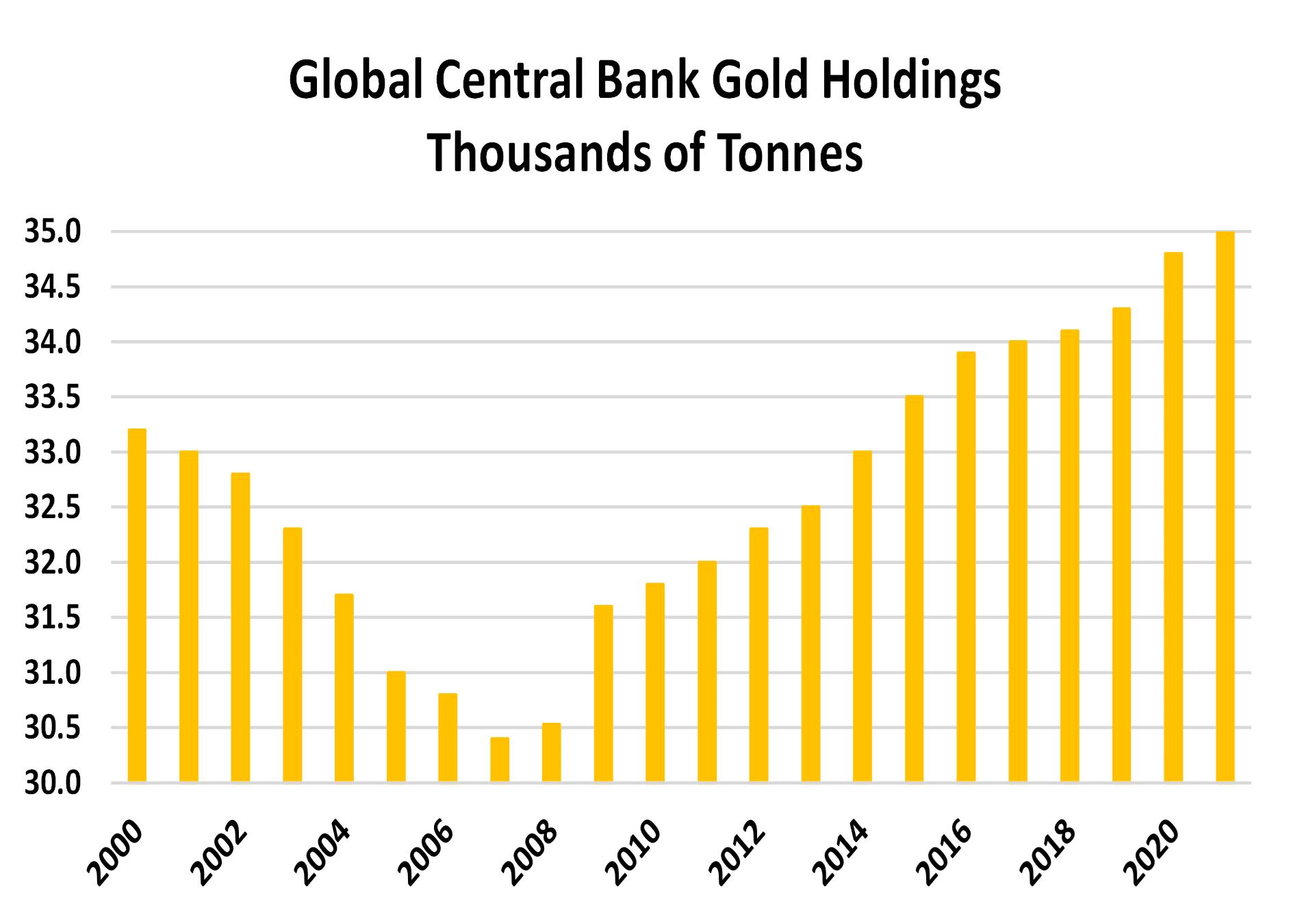
    Long-term demand remains supported by central banks around the world.

    Many countries continue expanding their gold reserves to diversify away from foreign currencies and strengthen financial resilience.

    This steady institutional demand has become one of the strongest structural supports for the gold market and helps reduce the impact of temporary investor selling.


    Gold Mining Companies Prepare for Strong Earnings

    While investors focus on bullion prices, gold mining companies are preparing to report second-quarter earnings.

    Higher average gold prices are expected to significantly increase profits for many of the world’s largest miners. However, rising fuel prices and higher operating costs linked to energy markets could offset part of those gains.

    Mining companies are also investing in:

    • New exploration projects
    • Automation technology
    • Renewable energy
    • More efficient extraction methods

    Physical Gold Demand Remains Resilient

    Demand for physical gold has remained relatively stable despite recent volatility.

    Consumers continue purchasing:

    • Gold jewelry
    • Gold coins
    • Investment bars
    • Collectible bullion

    Jewelry demand in Asia and the Middle East continues to provide an important foundation for the global gold market.


    Key Levels Investors Are Watching

    Technical analysts believe several important price levels could determine gold’s next move.

    Resistance

    • $4,150
    • $4,200
    • $4,375

    Support

    • $4,100
    • $4,050
    • $4,000

    A sustained move above resistance could encourage additional buying, while a break below support may trigger profit-taking. These levels are technical reference points rather than guarantees.


    Risks That Could Affect Gold

    Several factors may influence prices over the coming weeks:

    • Federal Reserve policy decisions
    • Inflation reports
    • U.S. Treasury yields
    • U.S. dollar movements
    • Oil prices
    • Geopolitical developments
    • Central-bank buying activity

    Investors should monitor these indicators because they often drive short-term price swings.


    Outlook

    Many commodity analysts remain cautiously optimistic.

    Safe-haven demand, ongoing central-bank purchases, and expectations that interest rates may eventually stabilize continue supporting the long-term investment case for gold.

    At the same time, elevated oil prices and uncertainty surrounding inflation suggest that volatility is likely to remain high.

    For long-term investors, gold continues to play an important role as a portfolio diversifier and a hedge against economic and geopolitical uncertainty.


  • 🔥Gold Rebounds Above $4,070 as Ceasefire Hopes Shake Safe-Haven Markets

    🔥Gold Rebounds Above $4,070 as Ceasefire Hopes Shake Safe-Haven Markets

    Gold Rebounds Above $4,070 as Ceasefire Hopes Shake Safe-Haven Markets


    Image
    Image
    Image
    Image
    Image
    Image
    Image

    Gold Rebounds Above $4,070 as Ceasefire Hopes Shake Safe-Haven Markets

    Published: July 21, 2026
    Category: Finance | Commodities | Gold | Investing

    Gold prices moved higher on Tuesday, July 21, as investors reacted to diplomatic efforts aimed at easing tensions between the United States and Iran. After several volatile trading sessions, bullion gained more than 1%, with New York gold futures rising to about $4,071.90 per ounce. The move came as traders reassessed geopolitical risks, inflation expectations, and the outlook for U.S. interest rates. (The Wall Street Journal)

    Although hopes for a ceasefire reduced some immediate safe-haven demand, gold remained well supported because investors continue to worry about persistent inflation, elevated bond yields, and uncertainty surrounding the Federal Reserve’s next policy decision. Markets are widely expecting the Fed to leave interest rates unchanged at its upcoming meeting, but traders are still assigning meaningful odds to another rate increase later this year. (The Wall Street Journal)


    Gold Recovers After Recent Weakness

    Gold had spent much of the previous week under pressure as higher Treasury yields and a stronger U.S. dollar reduced the appeal of non-interest-bearing assets.

    Tuesday’s rebound reflected renewed buying from investors who viewed the recent pullback as an opportunity rather than a signal of a long-term downtrend.

    Analysts noted that bullion continues to find strong support whenever prices approach the $4,000-per-ounce level, which has become an important psychological floor for the market. (The Wall Street Journal)


    Diplomatic Efforts Calm Markets

    The latest price movement was driven largely by reports that international mediators were pushing for a ceasefire between the United States and Iran.

    While easing geopolitical tensions can sometimes reduce demand for safe-haven assets such as gold, the market response has been more balanced because investors remain concerned that energy prices and inflation could stay elevated.

    Oil prices have been one of the biggest influences on gold during recent weeks. Rising crude prices increase inflation risks, while falling oil prices can reduce pressure on central banks to tighten monetary policy. (The Wall Street Journal)


    Federal Reserve Remains the Biggest Driver

    Even more important than geopolitics is the outlook for U.S. interest rates.

    Gold generally performs better when investors expect lower interest rates because the opportunity cost of holding bullion declines.

    At present, markets expect the Federal Reserve to hold rates steady at its next meeting. However, futures markets continue to indicate roughly a 60% probability of another rate increase later this year if inflation remains stubborn. (The Wall Street Journal)

    For gold investors, every inflation report and every speech from Federal Reserve officials could trigger significant price swings.


    Central Banks Continue Buying Gold

    One of the strongest long-term supports for the gold market remains demand from central banks.

    According to the World Gold Council, 89% of reserve managers expect global central bank gold holdings to increase over the next 12 months, while a record share of respondents plan to add gold to their own reserves. (World Gold Council)

    This trend reflects several long-term objectives:

    • Diversifying reserve portfolios
    • Reducing dependence on foreign currencies
    • Protecting against geopolitical uncertainty
    • Strengthening financial stability

    Because central banks typically invest with multi-year horizons, their purchases provide an important source of demand even during periods of market volatility.


    Physical Demand Remains Strong

    Demand from consumers has also remained resilient.

    Jewelry purchases across Asia and the Middle East continue to support the physical market, while investors are steadily buying:

    • Gold bars
    • Gold coins
    • Gold-backed ETFs
    • Collectible bullion

    China’s physical gold demand has remained particularly supportive despite short-term price fluctuations. (The Wall Street Journal)


    Gold Mining Companies Benefit From High Prices

    Mining companies continue generating strong revenues thanks to historically elevated gold prices.

    However, producers also face growing challenges, including:

    • Higher labor costs
    • Rising diesel prices
    • More expensive mining equipment
    • Environmental compliance costs

    Companies with efficient operations are expected to outperform if gold prices remain near current levels.


    What Investors Should Watch

    Several events could determine gold’s direction during the coming weeks:

    Federal Reserve Meeting

    Interest-rate guidance will remain the single most important driver of bullion prices.

    Inflation Reports

    Lower inflation could support gold by reducing expectations for additional rate hikes.

    Bond Yields

    Higher Treasury yields often pressure gold prices.

    U.S. Dollar

    A stronger dollar usually makes gold more expensive for international buyers.

    Geopolitical Developments

    Any escalation—or lasting de-escalation—in the Middle East could quickly influence safe-haven demand.


    Expert Outlook

    Commodity analysts believe gold remains in a transitional phase.

    The World Gold Council recently described the second half of 2026 as a pivotal period in which geopolitical developments, interest-rate expectations, and investor positioning are likely to determine the metal’s next major trend. (World Gold Council)

    Some analysts believe gold could challenge previous highs if bond yields decline later this year, while others expect prices to remain range-bound until there is greater clarity on monetary policy.


    Conclusion

    Gold has regained momentum after rebounding above $4,070 per ounce, supported by bargain buying, resilient physical demand, and continued central-bank purchases. While hopes for a ceasefire in the Middle East have eased some immediate market anxiety, investors remain focused on inflation, bond yields, and the Federal Reserve’s next move.

    For long-term investors, gold continues to serve as an important portfolio diversifier and hedge against economic uncertainty. Although short-term volatility is likely to persist, strong official-sector demand and ongoing geopolitical risks suggest the precious metal will remain one of the world’s most closely watched assets throughout the second half of 2026. (The Wall Street Journal)


    Alt Text for Images

    1. Gold bullion bars stored inside a high-security bank vault.
    2. Professional commodities trader monitoring live gold price charts.
    3. Investor holding an investment-grade gold bullion bar.
    4. Central bank vault containing official gold reserves.
    5. Gold coins displayed on a financial newspaper beside market data.
    6. Financial analyst reviewing precious-metals charts on multiple monitors.
    7. Modern financial district skyline symbolizing global gold investment markets.
  • Gold Prices Slide Below $4,000: Is This a Buying Opportunity or the Start of a Bigger Correction?

    Gold Prices Slide Below $4,000: Is This a Buying Opportunity or the Start of a Bigger Correction?

    Gold Prices Slide Below $4,000: Is This a Buying Opportunity or the Start of a Bigger Correction?


    Image
    Image
    Image
    Image
    Image
    Image
    Image

    Gold Prices Slide Below $4,000: Is This a Buying Opportunity or the Start of a Bigger Correction?

    Published: July 2026
    Category: Finance | Commodities | Precious Metals

    Global gold prices have entered one of their most closely watched periods of 2026 after falling below the psychologically important $4,000-per-ounce level. The decline comes after months of record-breaking gains that pushed bullion to all-time highs earlier this year.

    The recent pullback has surprised many investors because gold is traditionally viewed as one of the world’s safest assets during times of uncertainty. Instead of climbing on geopolitical tensions, the precious metal has weakened as rising U.S. Treasury yields, a stronger U.S. dollar, and expectations of higher interest rates reduced demand for non-yielding assets. (Reuters)

    Despite the correction, many analysts believe gold’s long-term outlook remains positive. Investors are now debating whether the current decline represents a healthy consolidation after an extraordinary rally—or the beginning of a more prolonged downturn.


    Why Gold Prices Are Falling

    Gold prices are influenced by several major economic forces, and multiple factors have combined to pressure the market in recent weeks.

    Rising Interest Rate Expectations

    The biggest challenge for gold has been renewed expectations that the U.S. Federal Reserve could keep interest rates higher for longer.

    Higher interest rates generally reduce the appeal of gold because the metal does not generate interest or dividend income. When government bonds offer higher yields, many investors shift money away from precious metals toward income-producing assets. (Reuters)


    Stronger U.S. Dollar

    Gold is priced globally in U.S. dollars.

    When the dollar strengthens, gold becomes more expensive for international buyers using other currencies. This typically reduces global demand and places downward pressure on prices. Recent gains in the U.S. dollar have therefore been another major headwind for bullion.


    Geopolitical Tensions Aren’t Always Bullish

    Normally, geopolitical conflicts increase demand for safe-haven assets like gold.

    However, the latest escalation in Middle East tensions has also pushed oil prices higher, increasing inflation concerns. Higher energy prices have strengthened expectations that central banks may maintain tighter monetary policy, offsetting gold’s traditional safe-haven appeal. (Reuters)


    Gold’s Incredible Rally Earlier This Year

    The recent correction follows one of the strongest rallies in gold’s history.

    Earlier in 2026, gold reached record highs above $5,400 per ounce, supported by geopolitical uncertainty, central-bank buying, and strong investor demand. According to the World Gold Council, gold set more than a dozen all-time highs before retreating as investors took profits and markets reassessed interest-rate expectations. (World Gold Council)

    Even after the recent decline, gold remains one of the best-performing major asset classes over the past year.


    Central Banks Continue Buying Gold

    One of the strongest long-term supports for the gold market remains central-bank demand.

    Many countries continue increasing their gold reserves as part of efforts to diversify away from foreign currencies and strengthen national financial stability.

    Central-bank purchases have become an increasingly important source of demand, helping offset periods of weaker investment flows. Analysts believe this trend could continue if geopolitical uncertainty remains elevated. (World Gold Council)


    What Does This Mean for Investors?

    Market experts are divided.

    Some believe the decline represents nothing more than a healthy correction after a powerful rally. Profit-taking is common after prices reach record highs, and periods of consolidation often occur before a longer-term trend resumes.

    Others warn that if interest rates continue rising and the dollar remains strong, gold could remain under pressure for several months.

    For long-term investors, the current environment highlights the importance of patience rather than reacting to short-term price swings.


    Physical Gold Demand Remains Healthy

    While financial markets have experienced volatility, demand for physical gold remains relatively resilient in many regions.

    Consumers continue purchasing:

    • Gold jewelry
    • Gold coins
    • Investment bars
    • Collectible bullion

    Physical demand often provides an important floor for prices during periods of financial-market weakness.


    Gold Mining Companies Face New Challenges

    Gold producers are also closely monitoring price movements.

    Although gold prices remain historically high, mining companies face increasing production costs due to:

    • Higher fuel prices
    • Labor shortages
    • Rising equipment costs
    • Environmental regulations

    Companies with lower operating costs remain better positioned to generate strong profits even if bullion prices continue to fluctuate.


    Factors Investors Should Watch

    Several upcoming developments could determine gold’s direction during the remainder of 2026:

    • Federal Reserve interest-rate decisions
    • U.S. inflation reports
    • Treasury bond yields
    • U.S. dollar performance
    • Geopolitical developments
    • Central-bank gold purchases
    • Global economic growth

    These indicators are likely to have a significant impact on investor sentiment toward precious metals.


    Could Gold Recover?

    Many analysts believe the longer-term case for gold remains intact despite recent weakness.

    If inflation begins to cool further, central banks eventually reduce interest rates, or geopolitical uncertainty intensifies, investors could once again increase allocations to safe-haven assets.

    The World Gold Council describes the second half of 2026 as a pivotal period in which geopolitical risk, interest-rate expectations, and investor positioning will largely determine gold’s next major move. (World Gold Council)


    Final Thoughts

    Gold’s recent decline below $4,000 per ounce has attracted significant attention from investors worldwide. Although higher interest-rate expectations and a stronger U.S. dollar have weighed on prices, the precious metal continues to benefit from strong long-term fundamentals, including central-bank buying and its role as a portfolio diversifier.

    Whether this correction becomes a buying opportunity or signals a deeper pullback will depend largely on inflation trends, Federal Reserve policy, and global geopolitical developments. For investors with a long-term horizon, maintaining a diversified portfolio and monitoring macroeconomic indicators remain the best strategies in an uncertain market.


    WordPress SEO

    Category

    • Finance
    • Commodities
    • Gold
    • Investing

    Tags

    Gold Prices, Gold News, Precious Metals, Gold Market, Bullion, Safe Haven, Federal Reserve, Inflation, U.S. Dollar, Interest Rates, Gold Investment, Gold Mining, Commodities, Central Banks, Market Update

    SEO Title

    Gold Prices Fall Below $4,000: What the Latest Market Correction Means for Investors

    Meta Description

    Gold prices have dropped below $4,000 per ounce as higher interest-rate expectations and a stronger U.S. dollar pressure the market. Discover what’s driving the decline and what investors should watch next.


    Alt Text for Images

    1. Stacked gold bars stored inside a secure bullion vault.
    2. Investor holding gold coins while monitoring live gold price charts on a laptop.
    3. Luxury gold jewelry displayed inside a modern jewelry showroom.
    4. Financial analyst studying gold price charts and commodity market data.
    5. Large open-pit gold mining operation with heavy excavation equipment.
    6. Safe deposit box containing investment-grade gold bullion bars and coins.
    7. **Global financial market illustration showing gold price trends and investment activity.